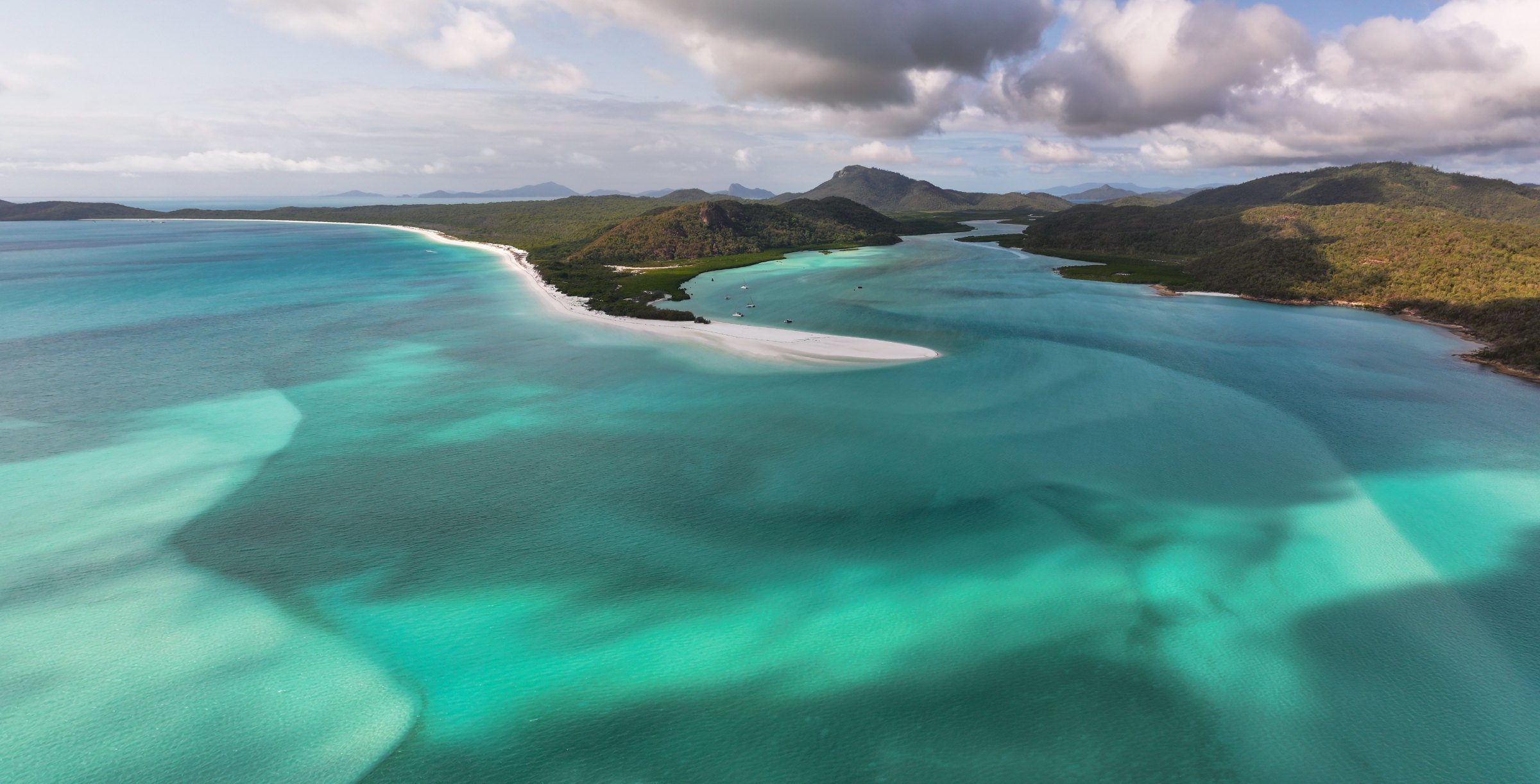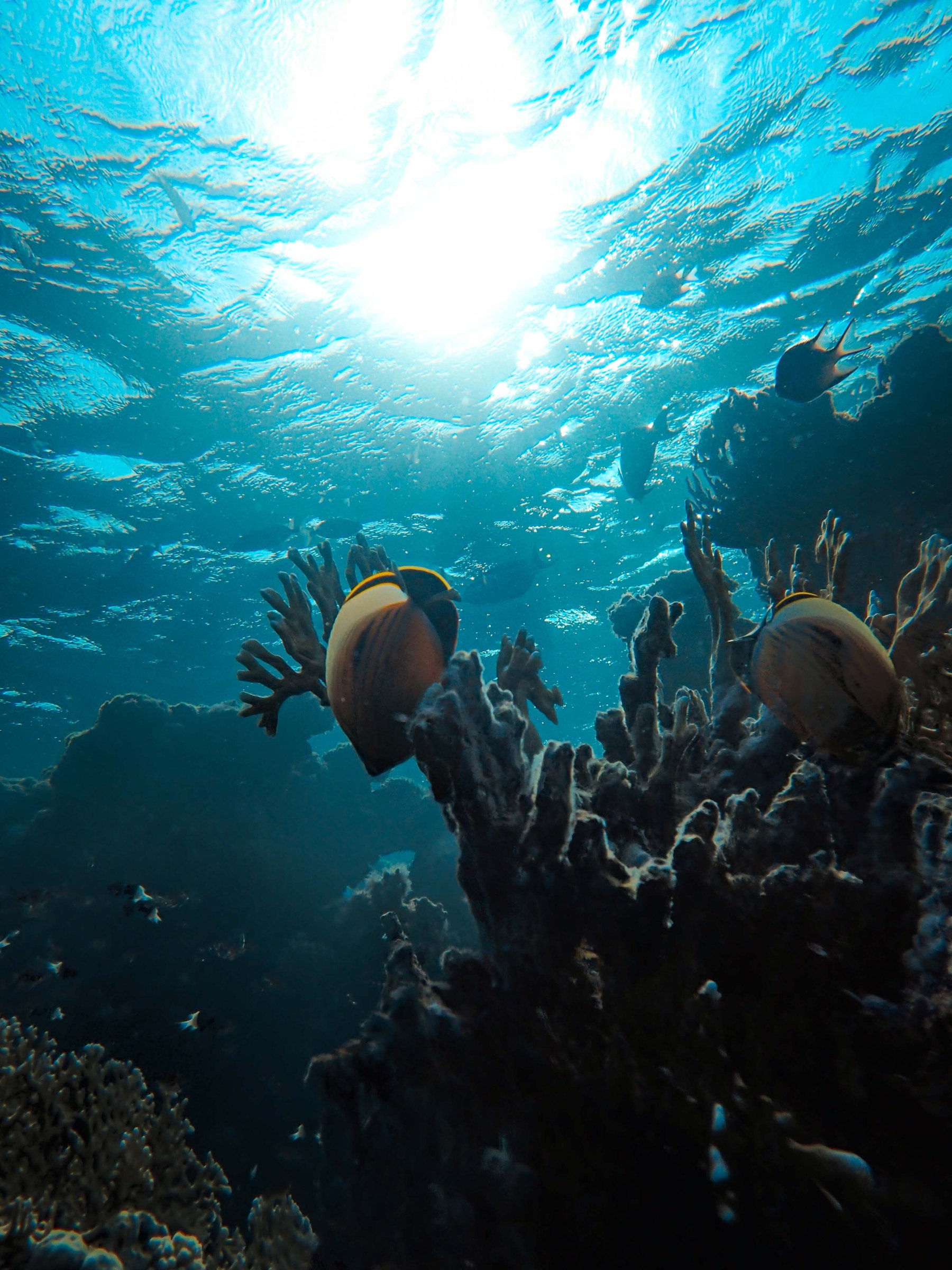
The Whitsundays give you two very different reefs from one base. Sheltered fringing reefs line the island bays within about 30 km of Airlie Beach, while Hardy Reef and Bait Reef sit far out on the edge of the Great Barrier Reef. Here are the five reef sites on our map, how to reach each one, and which suits you.
This guide is about the reef and the water. For island stays, Whitehaven Beach, Hill Inlet tides and sailing, read our Whitsundays guide. For the whole reef from Torres Strait to Bundaberg, start with our Great Barrier Reef guide.
Where are the best places to snorkel in the Whitsundays?
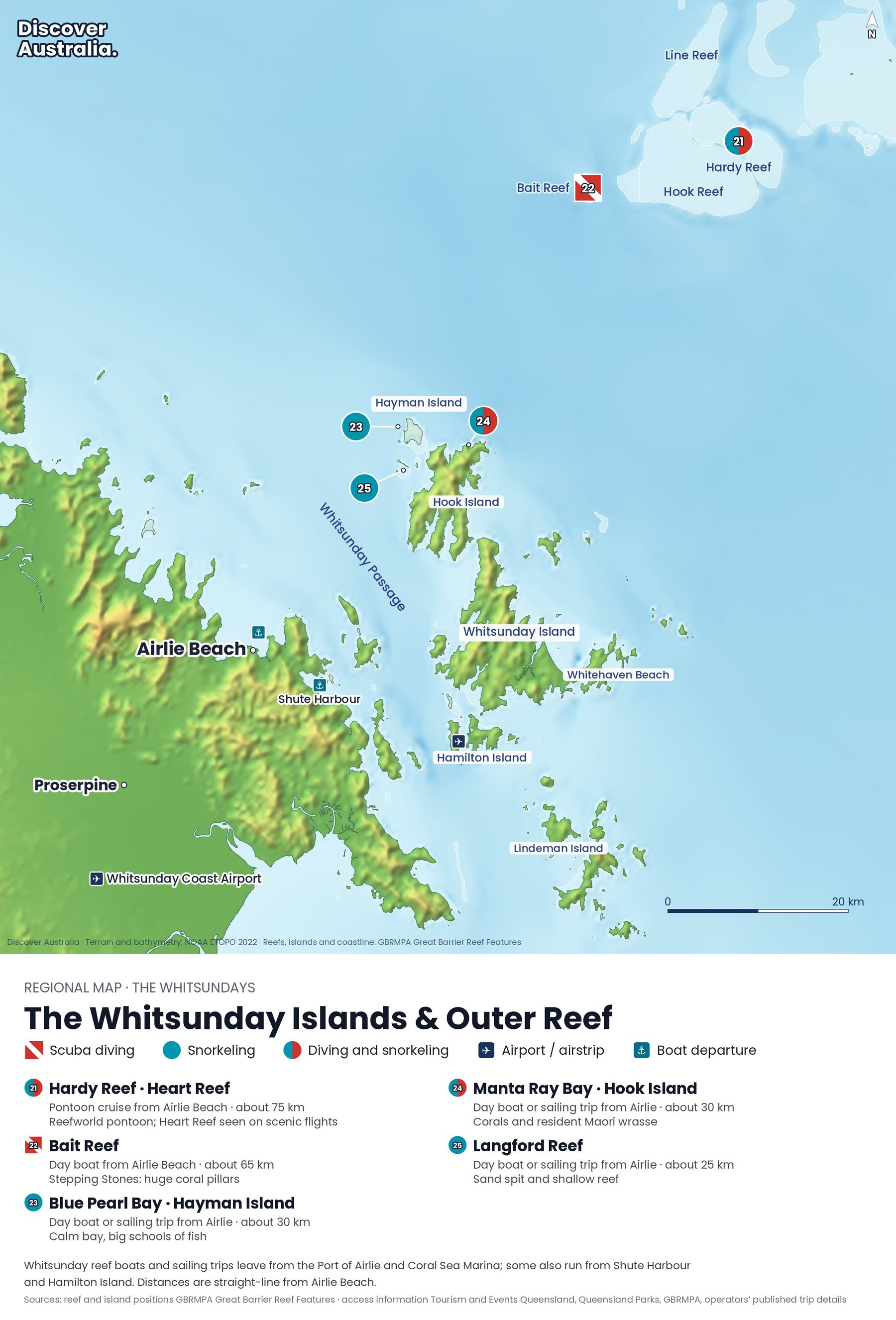
The best places are Hardy Reef and Bait Reef on the outer reef, and three island sites in the north of the group: Blue Pearl Bay, Manta Ray Bay and Langford Reef. They are numbered 21 to 25 on our map, and on our Great Barrier Reef map of all 29 sites.
Reef boats and sailing trips leave from the Port of Airlie and Coral Sea Marina in Airlie Beach, and some run from Shute Harbour and Hamilton Island. Distances below are straight-line from Airlie Beach.
| Map no. | Site | Type | Distance | Best for |
|---|---|---|---|---|
| 21 | Hardy Reef · Heart Reef | Outer reef, pontoon | About 75 km | First-timers, non-swimmers, families |
| 22 | Bait Reef | Outer reef, coral pinnacles | About 65 km | Divers and confident snorkellers |
| 23 | Blue Pearl Bay, Hayman Island | Fringing reef in a calm bay | About 30 km | Beginners, sailing trips |
| 24 | Manta Ray Bay, Hook Island | Fringing reef | About 30 km | Snorkellers and divers on day boats |
| 25 | Langford Reef | Sand spit and shallow reef | About 25 km | A beach stop with easy snorkelling |
How do you get to Hardy Reef and Heart Reef?
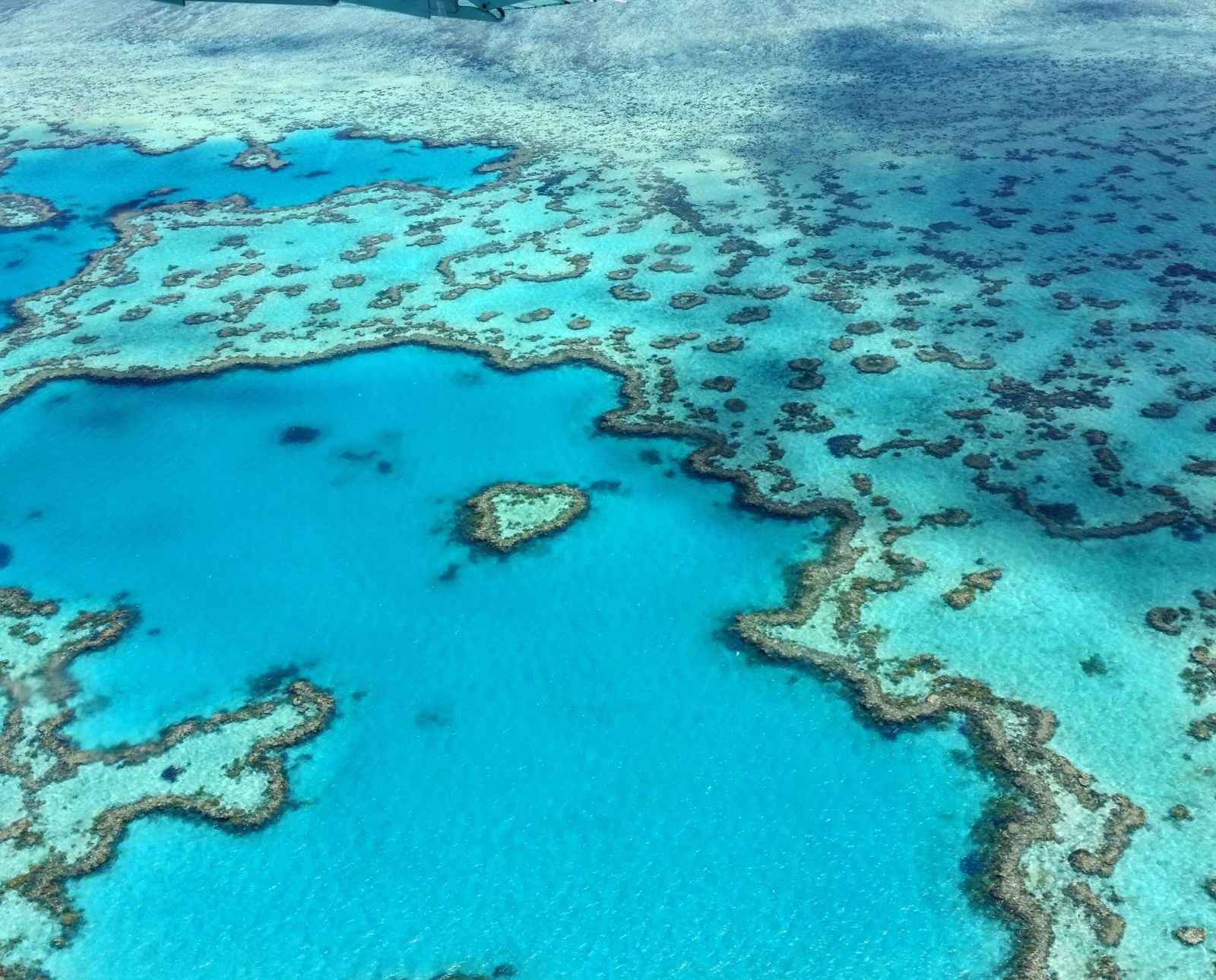
You reach Hardy Reef on a full-day pontoon cruise from Airlie Beach or Hamilton Island, and you see Heart Reef only from the air. Heart Reef is a small heart-shaped coral formation within Hardy Reef, and Tourism and Events Queensland says visitors cannot snorkel or dive there because of its protected status.
The main trip is Cruise Whitsundays' day out to Reefworld, a moored pontoon at Hardy Reef 39 nautical miles offshore. On its 2026 timetable:
- Times: boats leave the Port of Airlie at 8am and return at 6.10pm, or leave Hamilton Island at 9am and return at 5pm. Daydream Island guests connect at no extra cost.
- At the reef: about four hours, with snorkel gear and stinger suits, an underwater observatory, a semi-submarine tour and meals included.
- Price: from about A$295 per adult in 2026, rising with season and demand.
- Heart Reef: helicopter flights over Heart Reef can be booked on board, subject to minimum numbers and weight limits.
Reefworld also offers two ways to stay overnight. Reefsleep puts a small group in swags on the pontoon's top deck, with dinner, breakfast and the reef to yourselves after the day boats leave. Reefsuites, described by the operator as Australia's first underwater accommodation, has just two suites below the pontoon.
If you only want to see Heart Reef, helicopter, seaplane and light-plane flights from Airlie Beach and Hamilton Island fly over it, often together with Whitehaven Beach and Hill Inlet.
What are the Stepping Stones at Bait Reef?
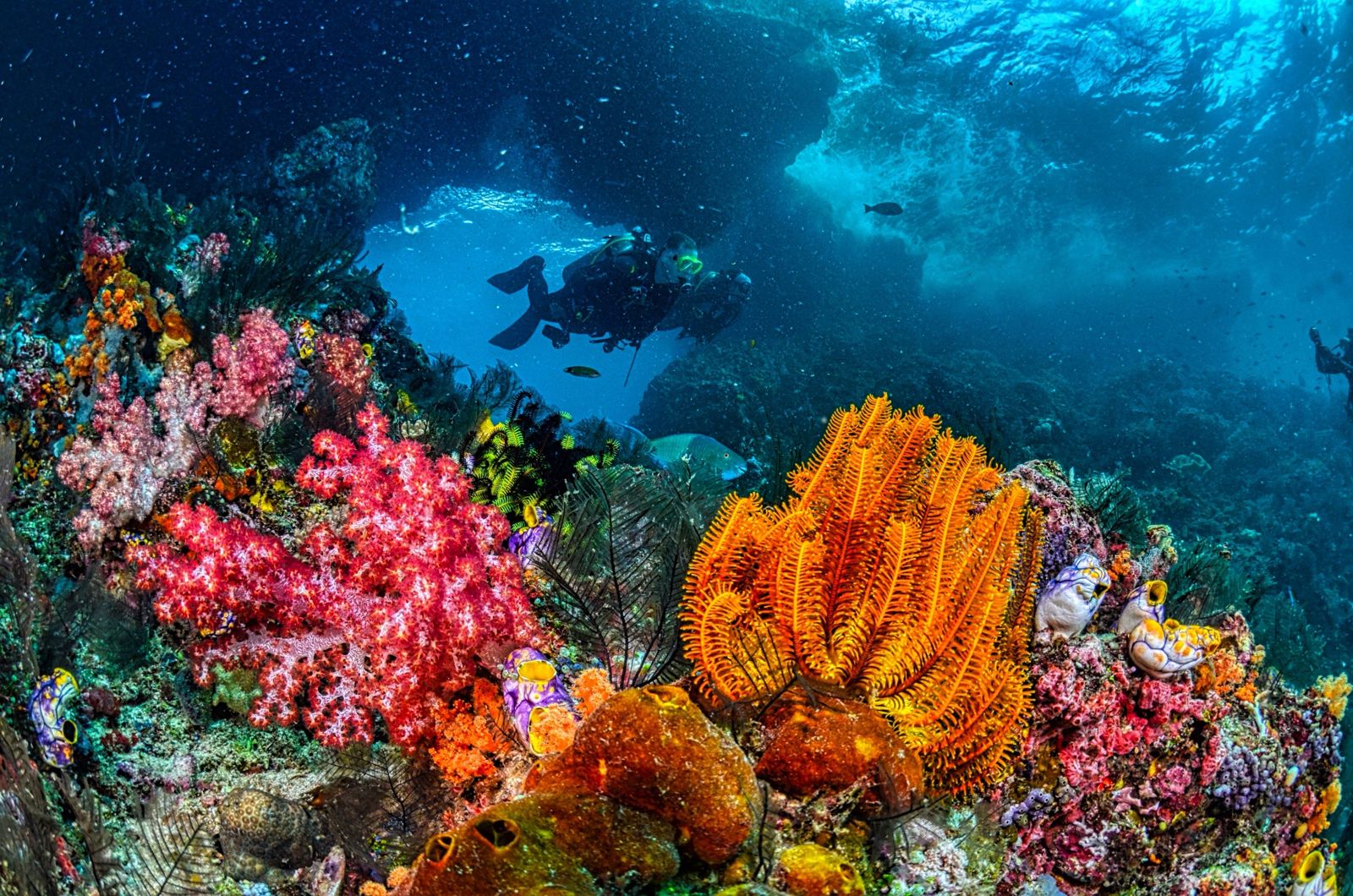
The Stepping Stones are a field of more than 18 flat-topped coral pinnacles on Bait Reef (site 22), which look like stepping stones from above. Channels and caves run between them, and their tops are covered in hard coral gardens.
Tourism and Events Queensland lists gorgonians, sea whips and soft corals on the pinnacles, and batfish, groupers, sweetlips, giant Maori wrasse, trevally, coral trout, turtles, reef sharks and moray eels among the regulars. Snorkellers can float over the pinnacle tops, while divers drop down the walls and through the channels.
Bait Reef sits about 65 km from Airlie Beach, so it is a full day out. Explore Group runs a dive and snorkel day to Bait Reef from Hamilton Island Marina, leaving at 8am and returning at 4pm with about three and a half hours on site. It includes stinger suits or wetsuits and lunch, and is recommended for children aged five and over. Day boats from Airlie Beach vary their outer reef sites, so ask which reef a trip visits before you book.
Bait Reef is an unmarked no-anchoring area. Boats tie up to public moorings instead, which protects the pinnacles from anchor damage.
Which island bay is best for snorkelling?
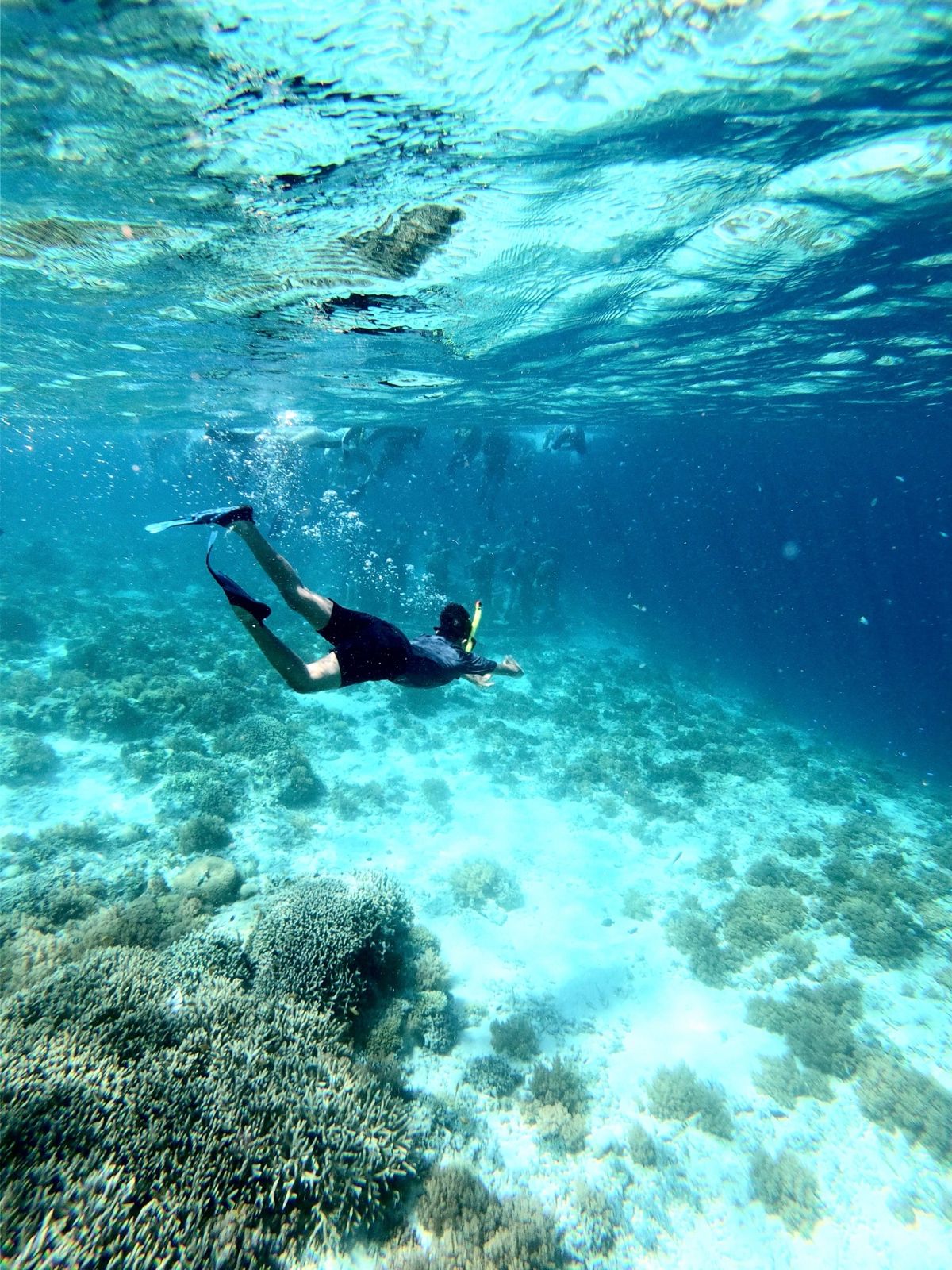
For calm water and lots of fish, Blue Pearl Bay on Hayman Island is the easiest choice, but Manta Ray Bay and Langford Reef are just as good on a calm day. All three sit in the northern Whitsundays, about 25 to 30 km from Airlie Beach, and are visited by day boats, sailing trips and bareboat charters.
- Blue Pearl Bay, Hayman Island (site 23): a sheltered bay on Hayman's north-west side with bright coral, big schools of fish and a resident Maori wrasse. Tourism Whitsundays gives depths of 3 to 18 metres and visibility of 3 to 15 metres. Most people jump straight off their boat or land by tender on the coral beach at the south end.
- Manta Ray Bay, Hook Island (site 24): a fringing reef on Hook Island's northern tip with good corals and its own resident Maori wrasse. It suits both snorkellers and divers, and is an unmarked no-anchoring area, so boats use public moorings.
- Langford Reef (site 25): best known for a long, narrow sand spit off Langford Island that appears at low tide and almost disappears at high tide. Tourism Whitsundays says the best snorkelling is among scattered bommies at the north-western end of the beach, with shallow walls at the eastern end.
Visibility in the island bays can drop after strong winds, and currents can run between the islands. Snorkel where your crew tells you to, and stay with your group.
Hayman also has the luxury InterContinental resort; see our Great Barrier Reef islands guide for where to stay.
Should you choose the outer reef or an island reef?
Choose the outer reef for clearer water and the classic Great Barrier Reef experience, and an island reef if you want less time at sea and a beach day as well. The trade-off is travel time: Reefworld means about three hours on the boat each way from Airlie Beach, while the northern island bays are much closer.
- First-timers, non-swimmers and families: the Hardy Reef pontoon, with its stable platform, observatory and semi-submarine.
- Confident snorkellers and certified divers: Bait Reef for the Stepping Stones.
- Travellers short on time: a day boat or day sail to Blue Pearl Bay, Manta Ray Bay or Langford, often combined with Whitehaven Beach.
- Anyone prone to seasickness: the island bays, which are more sheltered than the open water out to Hardy and Bait reefs.
- Divers wanting more: the outer reef is a longer boat ride from Airlie Beach than from Cairns or Port Douglas. Compare our Cairns reef guide and Port Douglas reef guide, or read Cairns vs Port Douglas vs Airlie Beach.
Our guide on how to choose a Great Barrier Reef tour explains pontoons, smaller boats and liveaboards in more detail.
Is the coral in the Whitsundays still good?
There is still plenty of living coral and fish to see, but the island reefs are recovering slowly from Cyclone Debbie and the whole reef has been hit by repeated mass bleaching. Expect a mix of healthy patches and damaged areas.
Category 4 Cyclone Debbie stalled over the Whitsunday Islands in 2017 and snapped off large corals. A James Cook University study published in 2026 surveyed 43 sites from 2012 to 2023 and found most were severely affected. Six years after the cyclone, coral cover was still up to 69% lower than before it at some sites, and many damselfish and butterflyfish species had not recovered.
Across the reef, the Australian Institute of Marine Science's August 2026 report found average hard coral cover rose in the northern and central regions over the past year, from 30.0% to 35.1% and from 28.6% to 31.6%, and dipped slightly in the south, from 26.9% to 26.4%. AIMS calls this the start of recovery after the 2024 bleaching. For the full picture, read the 2024 mass bleaching and is the Great Barrier Reef dying?
When is the best time to snorkel in the Whitsundays?
You can snorkel all year, so pick your month by what else you want: June to September for humpback whales, and the cooler, drier months for comfortable days on deck. Reef trips can be cancelled in strong winds at any time of year, so leave a spare day.
- Stingers: WorkSafe Queensland says marine stinger season typically runs from November to May. Queensland Parks warns stingers can be in the sea at any time, so wear the full-body Lycra stinger suit your tour provides whenever you snorkel.
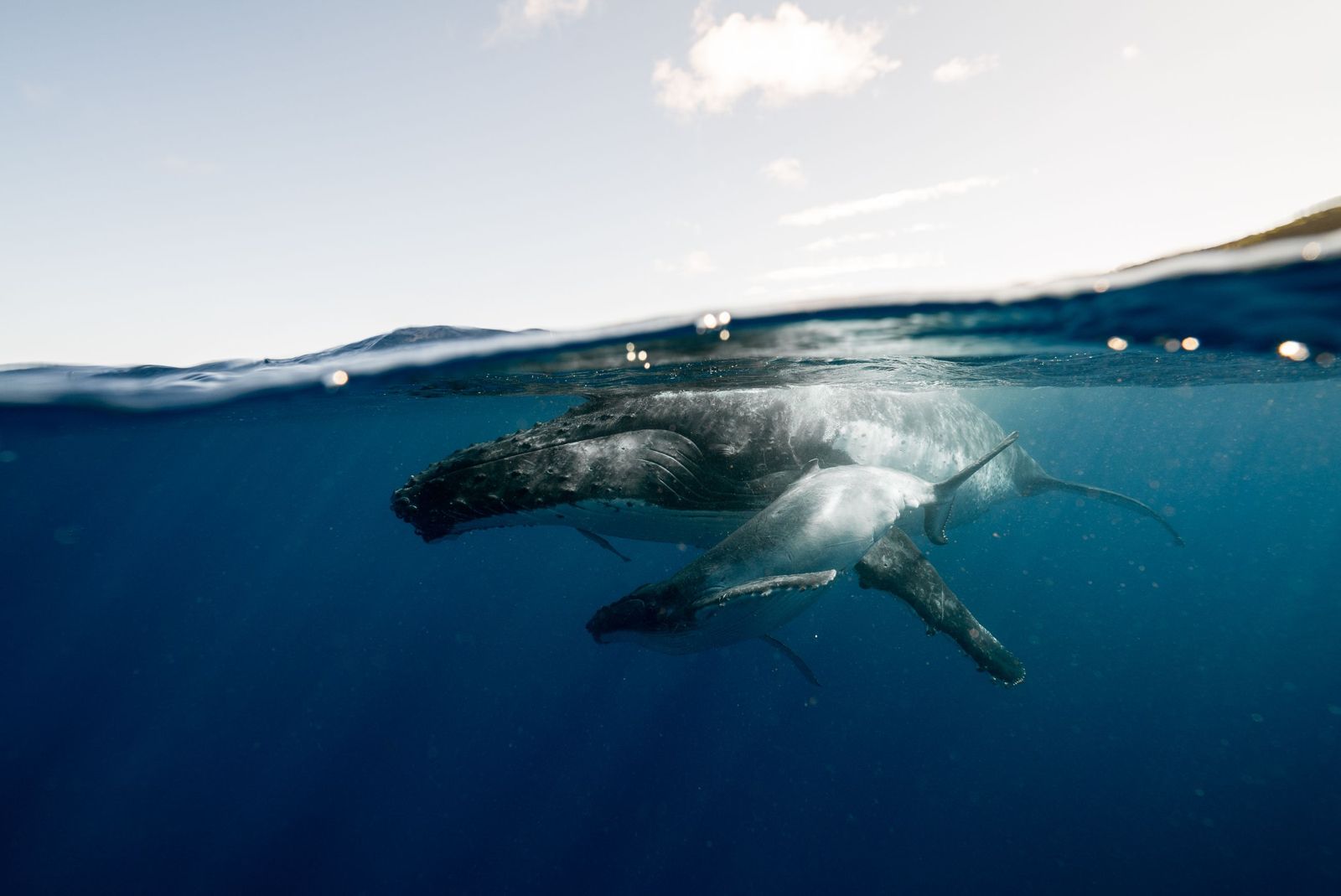
- Whales: Hamilton Island puts whale season at June to September, and the Reef Authority says humpbacks travel through the Marine Park until September, with some sighted as early as May. The Whitsundays are a calving ground, so calves are often seen.
- Weather: see our best time to visit the Great Barrier Reef for month-by-month wind, rain and water conditions.
What rules apply on the reef in the Whitsundays?
The Whitsundays sit inside the Great Barrier Reef Marine Park, so tour boats follow the operators' permits and you mainly need to know a few rules, especially if you hire your own boat.
- Environmental management charge: reef tour tickets include a Reef Authority charge of A$8.50 a person for a full day or A$4.25 for a part day. It rises to A$9.00 and A$4.50 from 1 April 2027.
- Whale Protection Area: most of the Whitsundays is a whale protection area, where boats and jet skis must stay 300 m from whales. Do not enter the water within 100 m of a whale, and if one approaches, keep at least 30 m away.
- No-anchoring areas: Blue Pearl Bay, Langford Island and many other bays are marked with white pyramid-shaped buoys with blue labels. Bait Reef and Manta Ray Bay are unmarked, so check the official maps. Use the blue public moorings instead and keep to the time limit on the buoy's band.
- Safety: never snorkel alone, and watch tides and currents. Queensland Parks warns that large saltwater crocodiles live in the waters around the Whitsundays and names Cid Harbour, on the west side of Whitsunday Island, as a known site for shark attacks.
- If stung: leave the water, rinse the area with vinegar, or sea water if you have none, and get urgent medical help. In an emergency call 000.
Our guides to ocean safety in Australia and dangerous animals cover stingers, sharks and crocodiles in more depth.
Heading further along the coast? Our regional reef guides cover the Ribbon Reefs and far north, Mission Beach to Townsville and the southern Great Barrier Reef, all in Queensland.
Facts checked October 2026. Tour times, prices and reef conditions change often; confirm with your operator, Queensland Parks and the Reef Authority before you go.
- Great Barrier Reef brochure 2026 (Cruise Whitsundays)
- Reefsleep vs Reefsuites (Cruise Whitsundays)
- Heart Reef (Tourism and Events Queensland)
- Stepping Stones Dive Site, Bait Reef (Tourism and Events Queensland)
- Explore: dive or snorkel Bait Reef (Hamilton Island)
- Blue Pearl Bay, Hayman Island (Tourism Whitsundays)
- Langford Island (Tourism Whitsundays)
- Moorings and no-anchoring areas (Great Barrier Reef Marine Park Authority)
- What are the charges? Environmental management charge (Great Barrier Reef Marine Park Authority)
- Have a whale of a time this season (Great Barrier Reef Marine Park Authority)
- Whale season in the Whitsundays (Hamilton Island)
- Whitsunday Islands: visiting safely (Queensland Parks and Wildlife Service)
- Marine stingers (WorkSafe Queensland)
- Reef winners and losers after cyclone devastation (James Cook University)
- Great Barrier Reef condition summary 2025–26 (Australian Institute of Marine Science)