There are hundreds of Great Barrier Reef trips, and they are not all the same. Where you leave from, how far out the boat goes and what you do in the water decide the day you get. Here is how to match a tour to your budget, your swimming and the season.
Where is the best place to start a Great Barrier Reef tour?
For a first visit, Cairns or Port Douglas give the widest choice of outer reef trips, while Airlie Beach suits travellers who want islands and beaches as well as coral. Each gateway in Queensland leads to a different kind of reef.
- Cairns: the busiest hub, with island trips, outer reef pontoons such as Moore Reef, dive boats and liveaboards.
- Port Douglas: north of Cairns, close to the Agincourt ribbon reefs on the edge of the continental shelf, plus Low Isles.
- Airlie Beach and the Whitsundays: sailing, island bays and Whitehaven Beach, with outer reef trips to Hardy Reef. The outer reef is further away here, so crossings are longer.
- Townsville: ferries to Magnetic Island's snorkel trails, and the permit-only SS Yongala wreck for certified divers.
- Bundaberg, Hervey Bay and 1770: fly-in day trips to Lady Elliot Island, about 40 minutes by plane, and boat trips from the Town of 1770 to Lady Musgrave Island.
- Gladstone: the ferry to Heron Island, an island resort sitting right on the reef.
Is the outer reef better than an island trip?
For clear water and big coral, usually yes; for families, weak swimmers and tight budgets, an island can be the better day. Outer reefs are flushed by ocean water, so visibility tends to be better than near the coast. From Cairns, the crossing to an outer pontoon takes about 1 hour 45 minutes each way; from Airlie Beach, the trip to Hardy Reef takes about three hours.
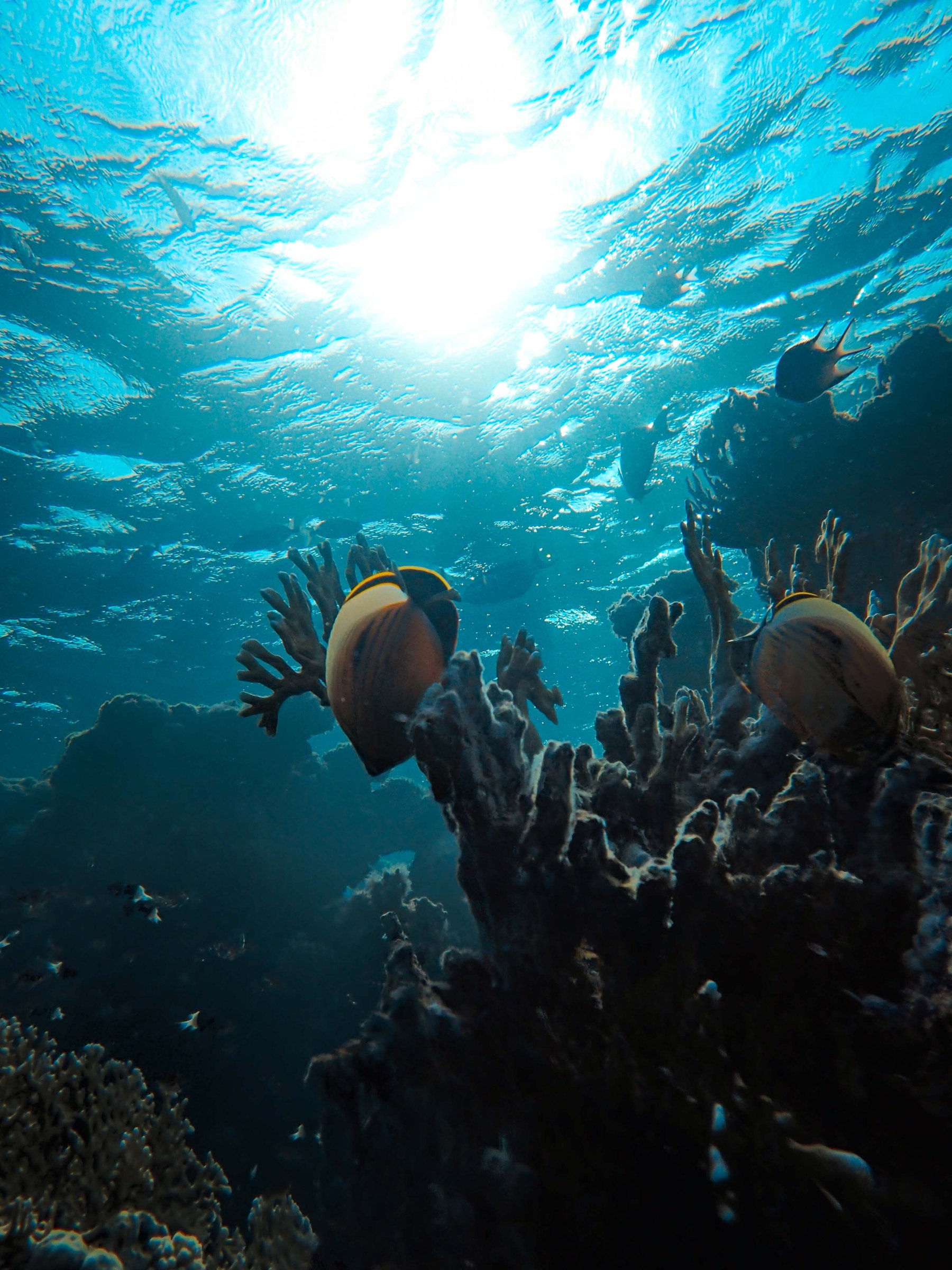
Inner reefs and coral cays are closer and calmer. Green Island is about 45 minutes from Cairns, has a beach to swim from and suits anyone who wants to spend less time on a boat. In the south, Lady Elliot and Heron islands are coral cays where you can snorkel straight from the sand. Our guide to Great Barrier Reef snorkelling and diving maps the best sites at each.
| Trip type | Travel time | Best for | Adult price from |
|---|---|---|---|
| Island or cay day trip | About 45 min (Green Island) | Families, beach time, short boat rides | About A$110 |
| Outer reef pontoon day | About 1 h 45 min (Cairns) to 3 h (Airlie Beach) | First-timers, mixed groups, non-swimmers | About A$295 to A$320 |
| Intro or certified dive add-on | Same day as your reef trip | Trying scuba, or divers on a day trip | About A$135 to A$175 extra |
| Fly-in island day (Lady Elliot) | About 40 min flight | Turtles, mantas, snorkelling off the beach | About A$595 |
| Scenic flight | About 40 min in the air | Seeing the reef's scale, non-swimmers | About A$290 |
| Dive liveaboard (Cod Hole, Coral Sea) | 3 to 5 nights or more | Certified divers, remote reefs | About A$2,500 |
Should you choose a pontoon or a smaller reef boat?
Choose a pontoon if comfort and variety matter most, and a smaller boat if you want fewer people and more than one reef. A pontoon is a large platform moored at one outer reef. A typical day includes snorkel gear, a lycra suit, a buffet lunch, a semi-submersible or glass-bottom boat, an underwater observatory and talks from a marine biologist, with about four hours at the reef.
Pontoons are stable, shaded and easy for children and people who do not want to swim. The trade-off is crowds: big boats carry many passengers to the same patch of reef. Smaller dive and snorkel boats usually visit two or three sites in a day and keep groups tighter, but they move more in a swell and have fewer facilities.
Can you scuba dive on a reef day trip without a licence?
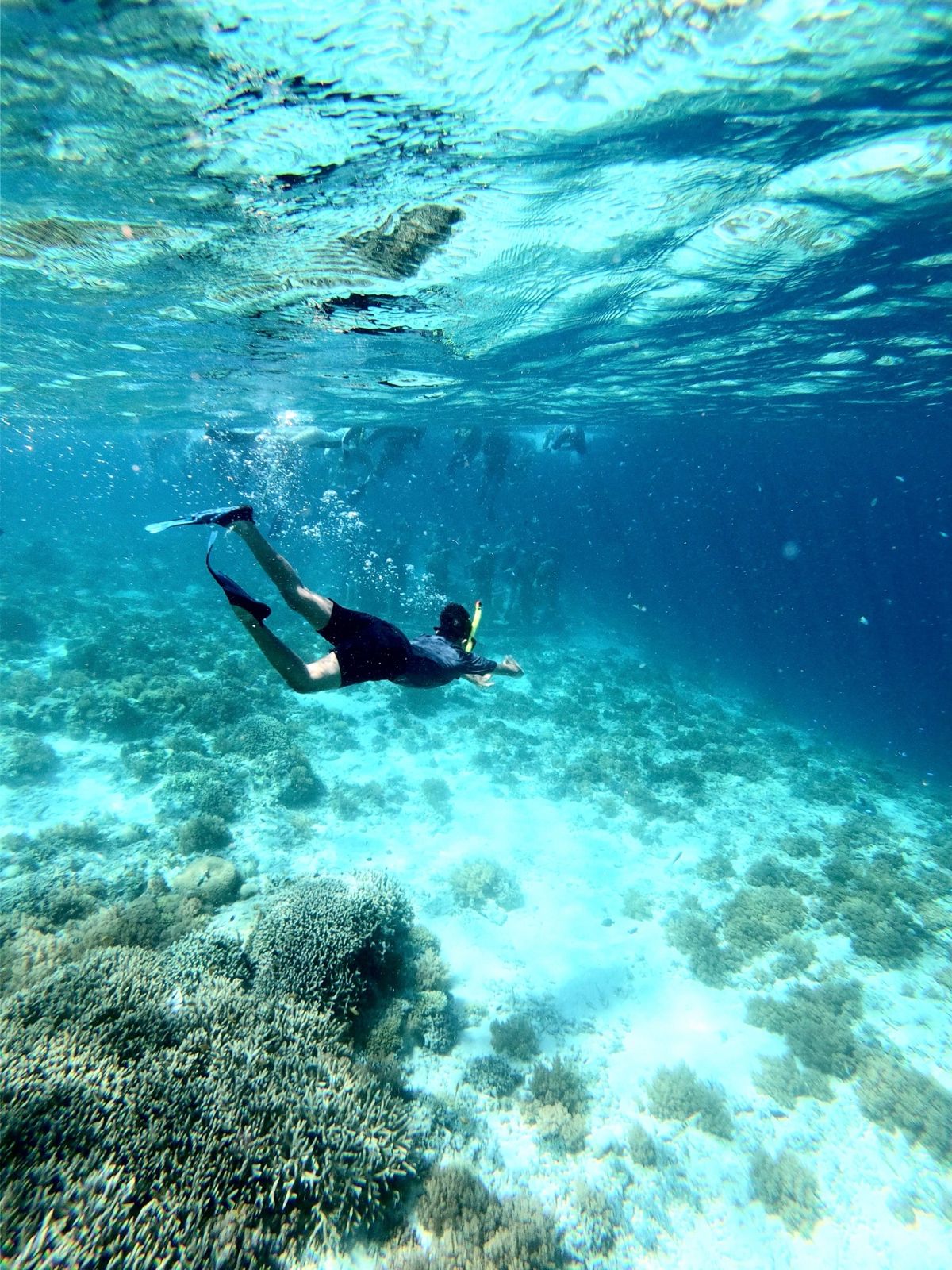
Yes. Most outer reef day trips offer an introductory dive, a shallow, guided dive with an instructor that needs no certification. It is sold as an add-on, from about A$150 to A$175, and on some trips the minimum age is 12. Certified divers can usually add one or two guided or buddy dives for about A$135 to A$150 each; bring your certification card and logbook.
Snorkelling needs no training, but take it seriously. WorkSafe Queensland says people aged 45 and over, those with heart conditions or high blood pressure, and inexperienced swimmers are at higher risk. Tell the crew about any medical condition, wear a flotation vest if you are unsure, and stay close to the lookout.
Is a Great Barrier Reef liveaboard worth it?
For keen certified divers, yes: a liveaboard reaches reefs that day boats cannot, and lets you dive at dawn and night. From Cairns, trips run north to the Ribbon Reefs and the Cod Hole, famous for its giant potato cod, and out into the Coral Sea to Osprey Reef, whose walls drop to about 1,000 metres.
Some itineraries fly you one way and sail the other. On the 2026/27 rates, three-night fly-dive trips to the Cod Hole started at about A$2,500 per person in a budget cabin, with longer Coral Sea trips costing more. Check what is extra: reef charges, fuel levies, nitrox and equipment hire are often added on top. In June and July, some Ribbon Reefs trips offer snorkel encounters with dwarf minke whales.
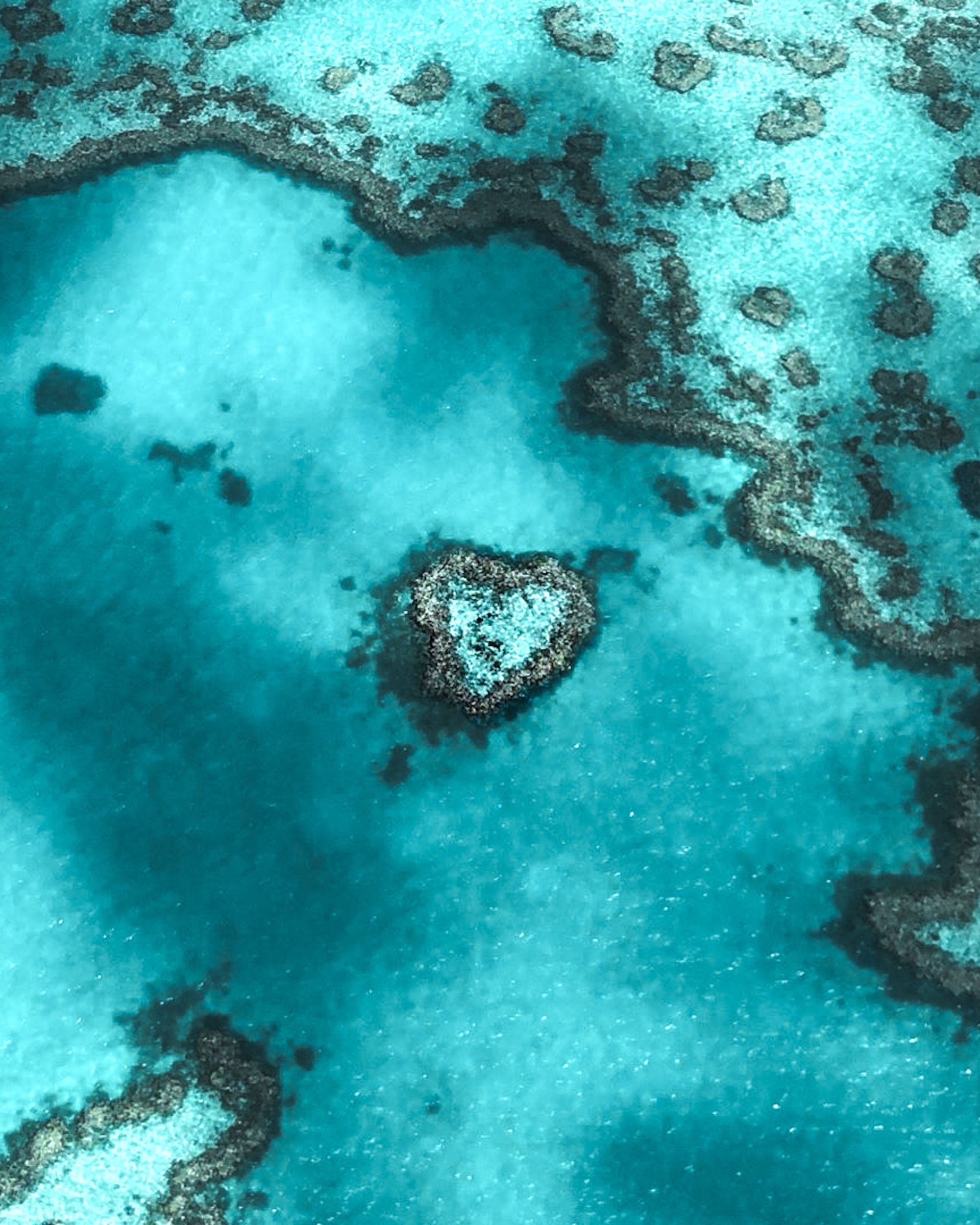
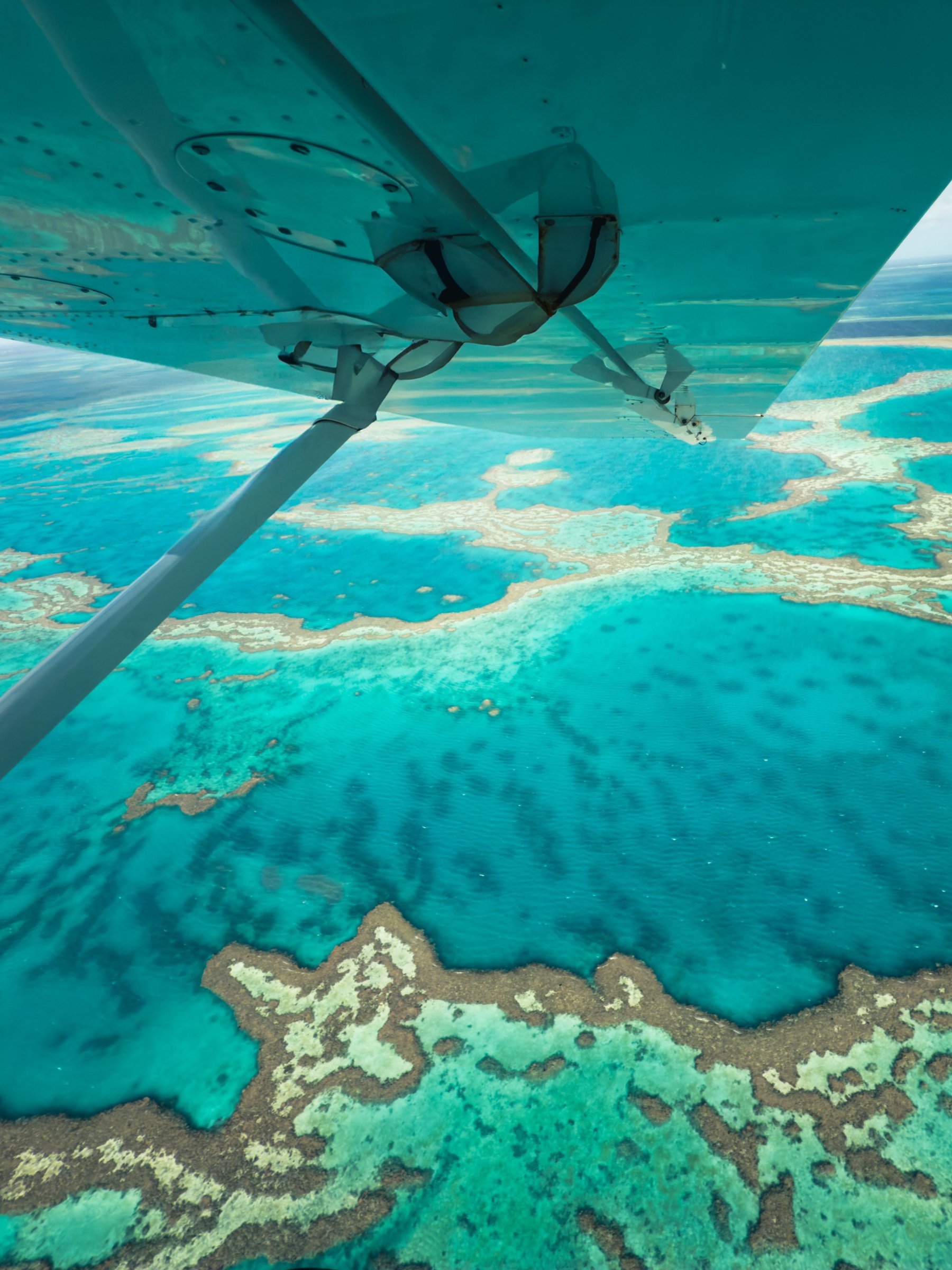
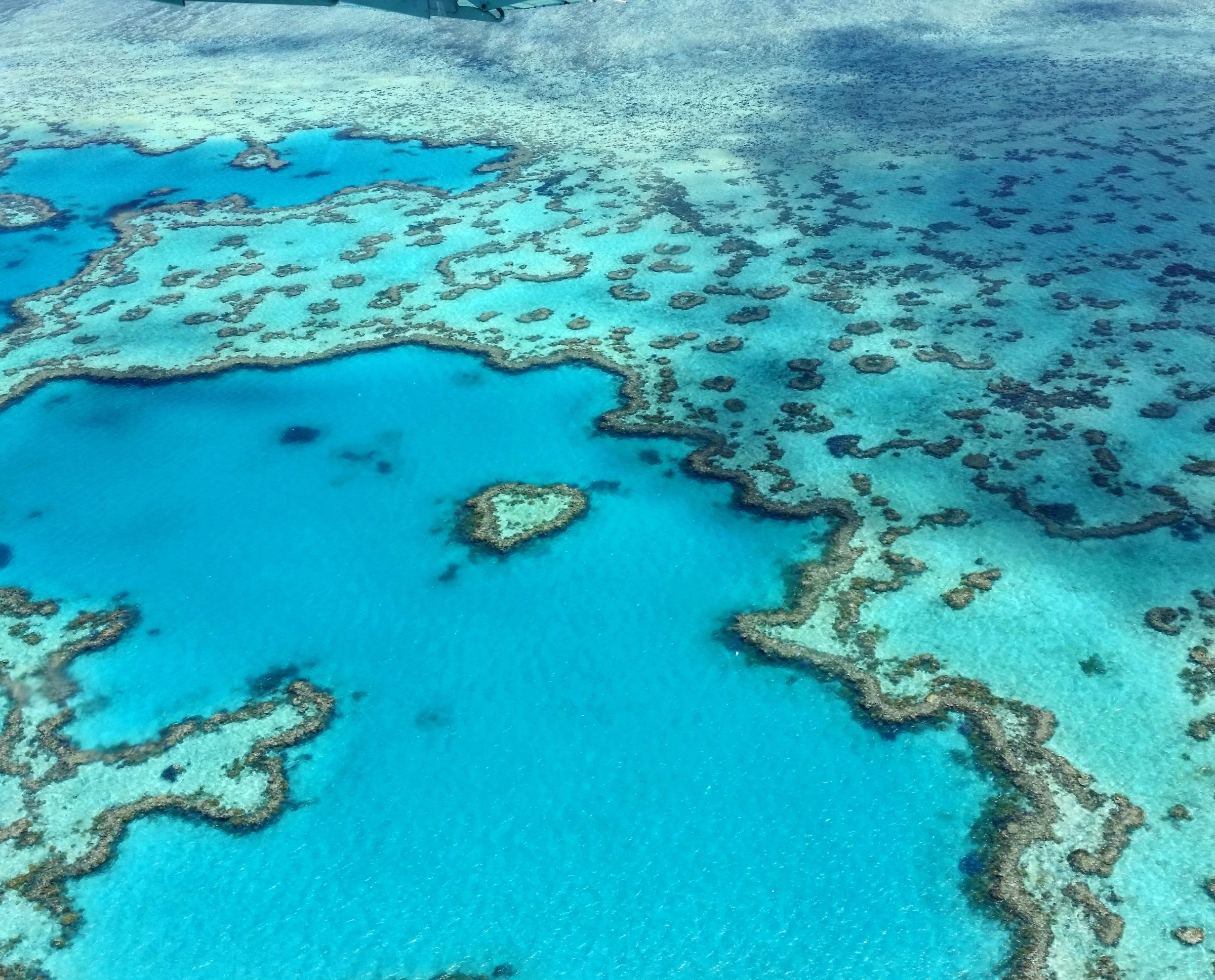
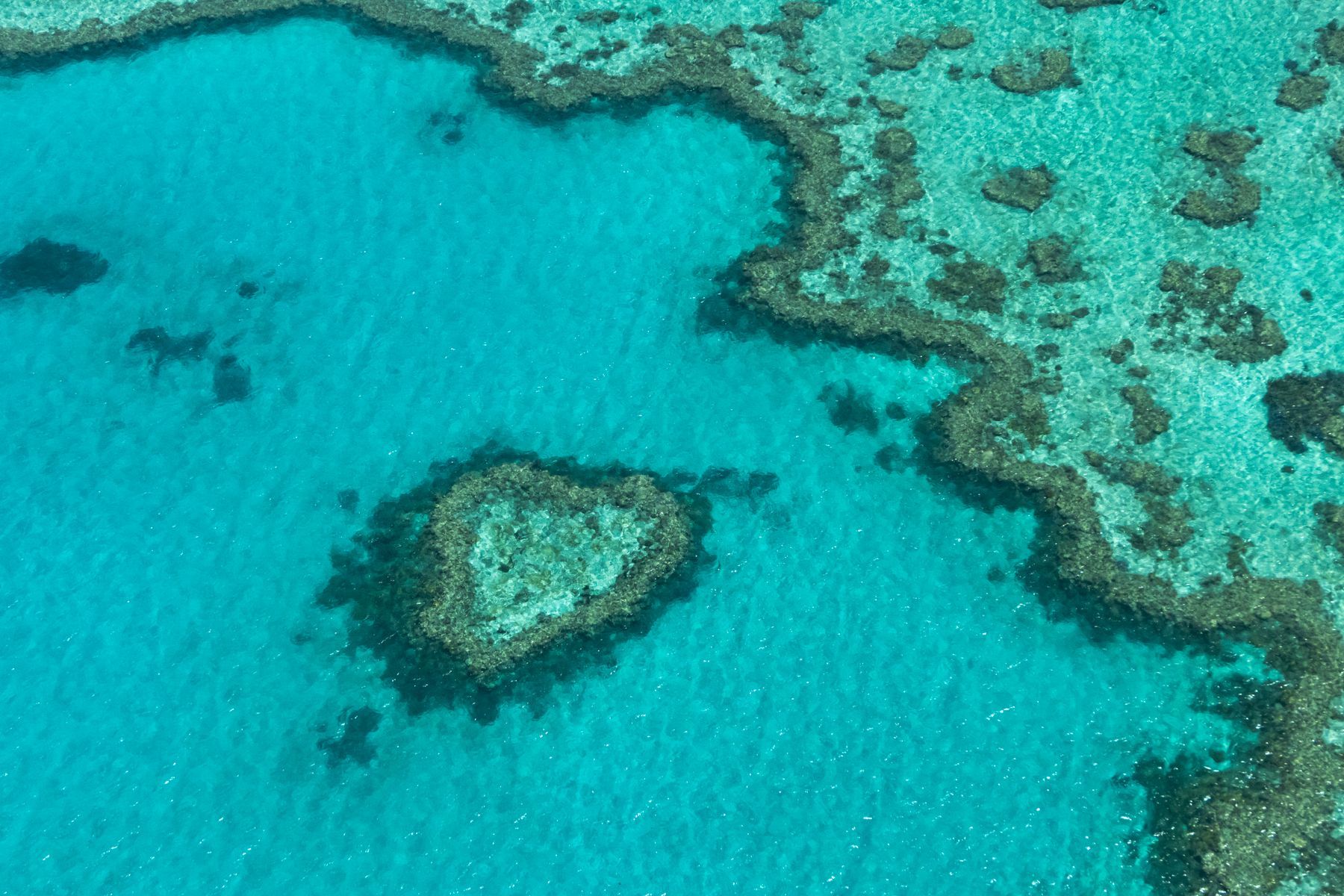
Not a diver? A scenic flight shows you the reef's scale in under an hour. Flights from Cairns start at about A$290 per person for 40 minutes, and Whitsundays flights pass over Heart Reef.
When is the best time to take a reef tour?
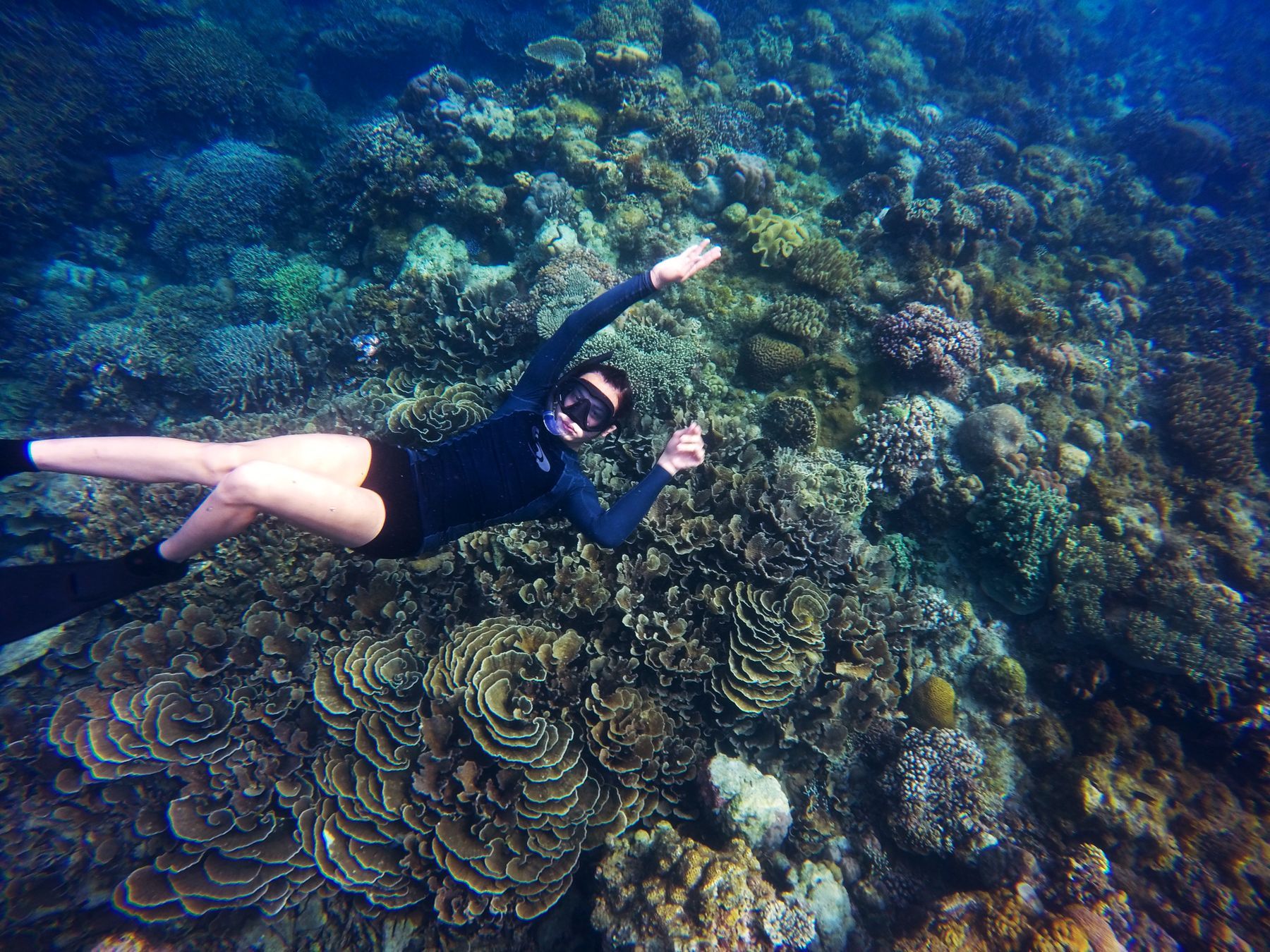
Reef tours run all year, and each season has a trade-off. Surf Life Saving Queensland says the marine stinger season typically runs from November to May, when box jellyfish and Irukandji are most likely. Wear the full-length lycra suit your tour provides; it also protects you from sunburn.
- May to August: the coolest water, around 24°C, and generally great visibility, but south-easterly trade winds can be stronger and crossings rougher.
- September to December: generally clear, sunny days and lighter winds, with water warming to about 28°C.
- January to April: the hot, wet season, with water around 29°C, more rain and a higher chance of storms.
If you get seasick, book a big, stable boat or a pontoon, sit low and towards the back, look at the horizon and avoid a heavy breakfast. Ask a pharmacist about seasickness tablets well before the trip. Leave a spare day in your plans, as rough weather can cancel trips. See our best time to visit Australia guide for the wider picture, and what to book ahead for school-holiday timing.
How much does a Great Barrier Reef tour cost?
Expect to pay from about A$110 for an island day trip and from about A$295 to A$320 for an outer reef pontoon day. A fly-in day to Lady Elliot Island costs about A$595 per adult on its 2026/27 rates, and the Heron Island ferry from Gladstone is A$99 each way. Prices change with season and demand, so compare the final price, not the headline.
Every visitor also pays the Reef Authority's environmental management charge, collected by the operator and usually built into the fare. It is A$8.50 for a full day (three hours or more) and A$4.25 for a part day. From 1 April 2027 it rises to A$9.00 and A$4.50. Children under four travelling free do not pay it, and on longer trips with one operator it is capped at A$24.00.
How do you choose a responsible reef operator?
Look for an operator in the Reef Authority's High Standard Tourism Operator program. To qualify, a business must be independently certified by Ecotourism Australia (whose ECO Certification has Ecotourism and Advanced Ecotourism levels) or EarthCheck. The Reef Authority lists these operators by area, from Cairns and Port Douglas to the Whitsundays and the Capricorn Coast.
Before you book, ask:
- How long is the crossing, and how many hours will we have at the reef?
- How many passengers does the boat carry, and how many sites do we visit?
- Are stinger suits, snorkel gear, lunch and the reef charge included?
- Is there a guided snorkel tour or flotation for weaker swimmers?
- What happens if the trip is cancelled for weather?
In the water, follow the Reef Authority's responsible reef practices. Avoid touching coral, which is easily damaged; take no shells or animals, which is illegal in protected areas; and watch wildlife from a distance without chasing or feeding it. Our guides to Australia's marine parks and coral bleaching on the reef explain why this matters. In an emergency, call 000.
Facts checked October 2026. Fares, reef charges and schedules change, often each April; confirm prices and inclusions with your operator and the Reef Authority before you book.
- What are the charges: environmental management charge (Great Barrier Reef Marine Park Authority)
- Choosing a high standard tourism operation (Great Barrier Reef Marine Park Authority)
- Responsible reef practices fact sheet (Great Barrier Reef Marine Park Authority)
- ECO Certification (Ecotourism Australia)
- Marine stingers (Surf Life Saving Queensland)
- Snorkelling incidents alert (WorkSafe Queensland)
- Moore Reef full-day pontoon tour fares and inclusions (Sunlover Reef Cruises)
- Great Barrier Reef brochure 2026, Hardy Reef (Cruise Whitsundays)
- Lady Elliot Island day trip (Lady Elliot Island Eco Resort)
- Getting to Heron Island (Heron Island Resort)
- Liveaboard prices 2026/27: Cod Hole and Coral Sea (Mike Ball Dive Expeditions)
- Dive seasons and weather (Spirit of Freedom)