A living wall in the sea
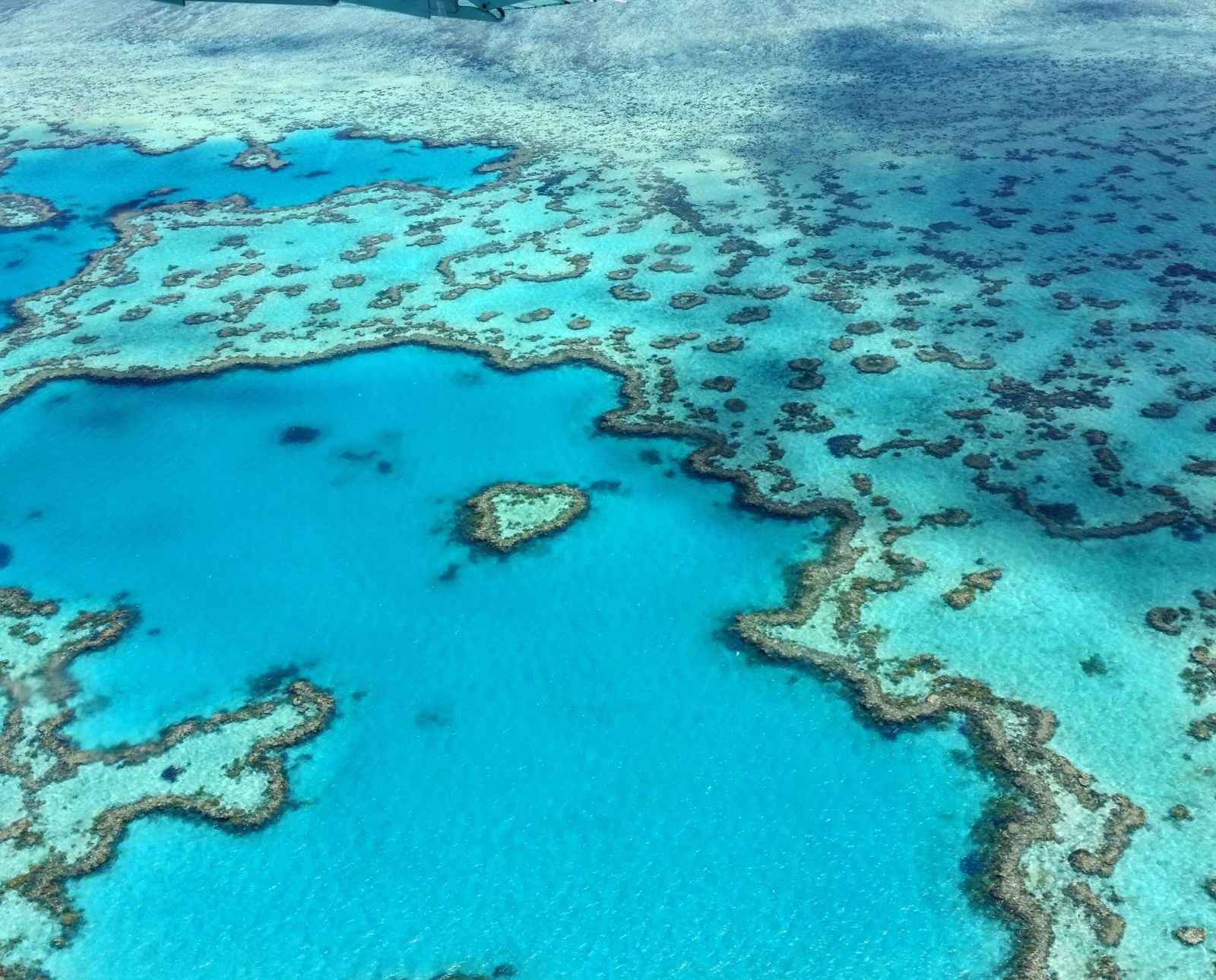
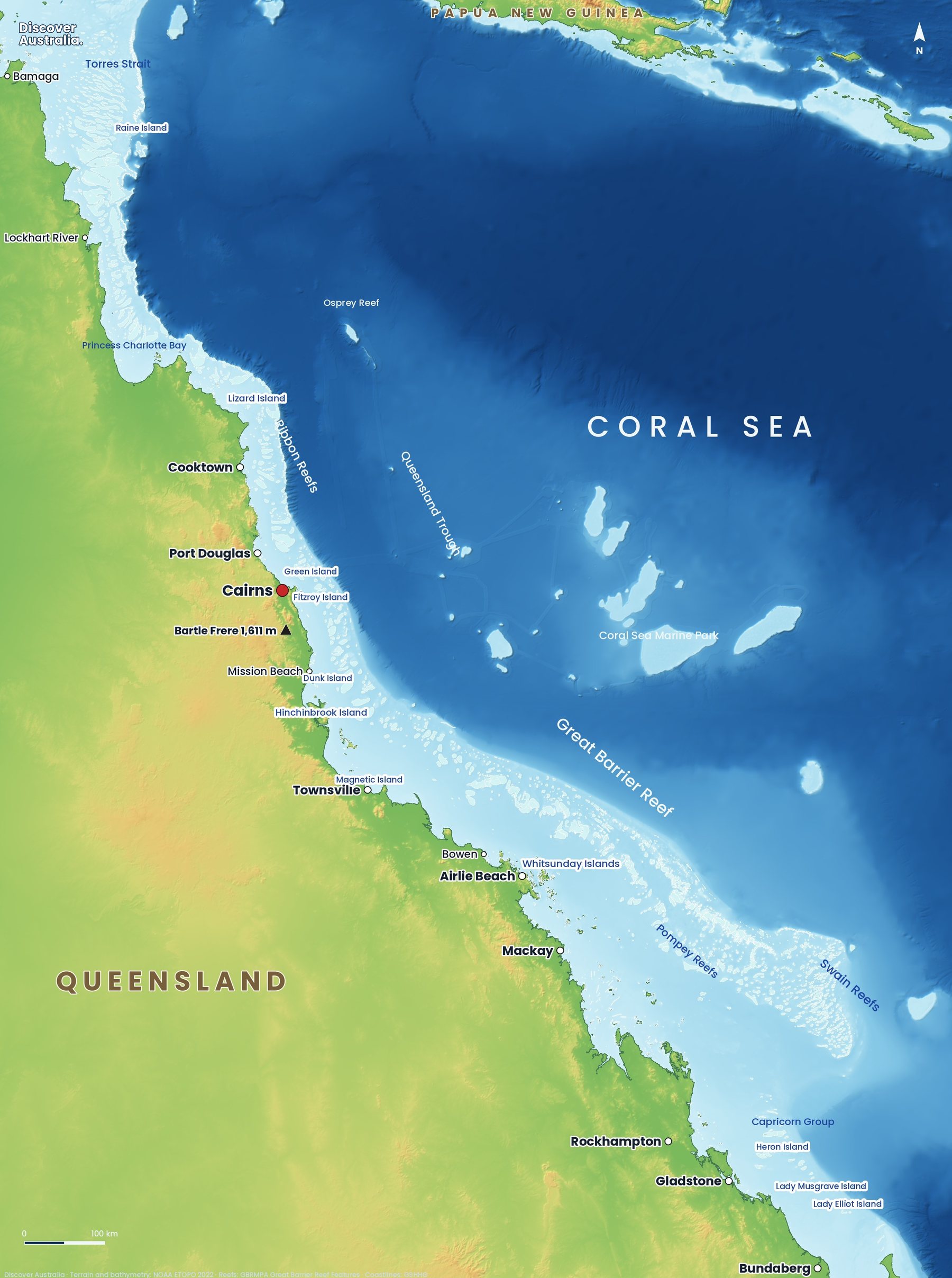
From the air, the Great Barrier Reef looks like turquoise brushstrokes on a dark blue ocean. Underwater, it is a city: about 3,000 separate reefs, around 600 continental islands and some 300 sandy coral cays, spread across the continental shelf from the Torres Strait, near Papua New Guinea, to just north of Bundaberg. The Great Barrier Reef Marine Park covers 344,400 square kilometres, an area larger than Italy.
All of it was built by animals smaller than a fingernail. Reefs have grown and drowned on this coast for around half a million years as sea levels rose and fell, and the reef you swim over today began to take its present shape only about 8,000 years ago, after the last ice age, when the sea flooded the shelf. In 1981 almost the whole ecosystem was inscribed on UNESCO's World Heritage List.
Inside the Great Barrier Reef
What corals are, how the reef reproduces, who lives on it, how it is changing, and who has looked after it the longest.
What a coral really isTiny animals, ancient cities
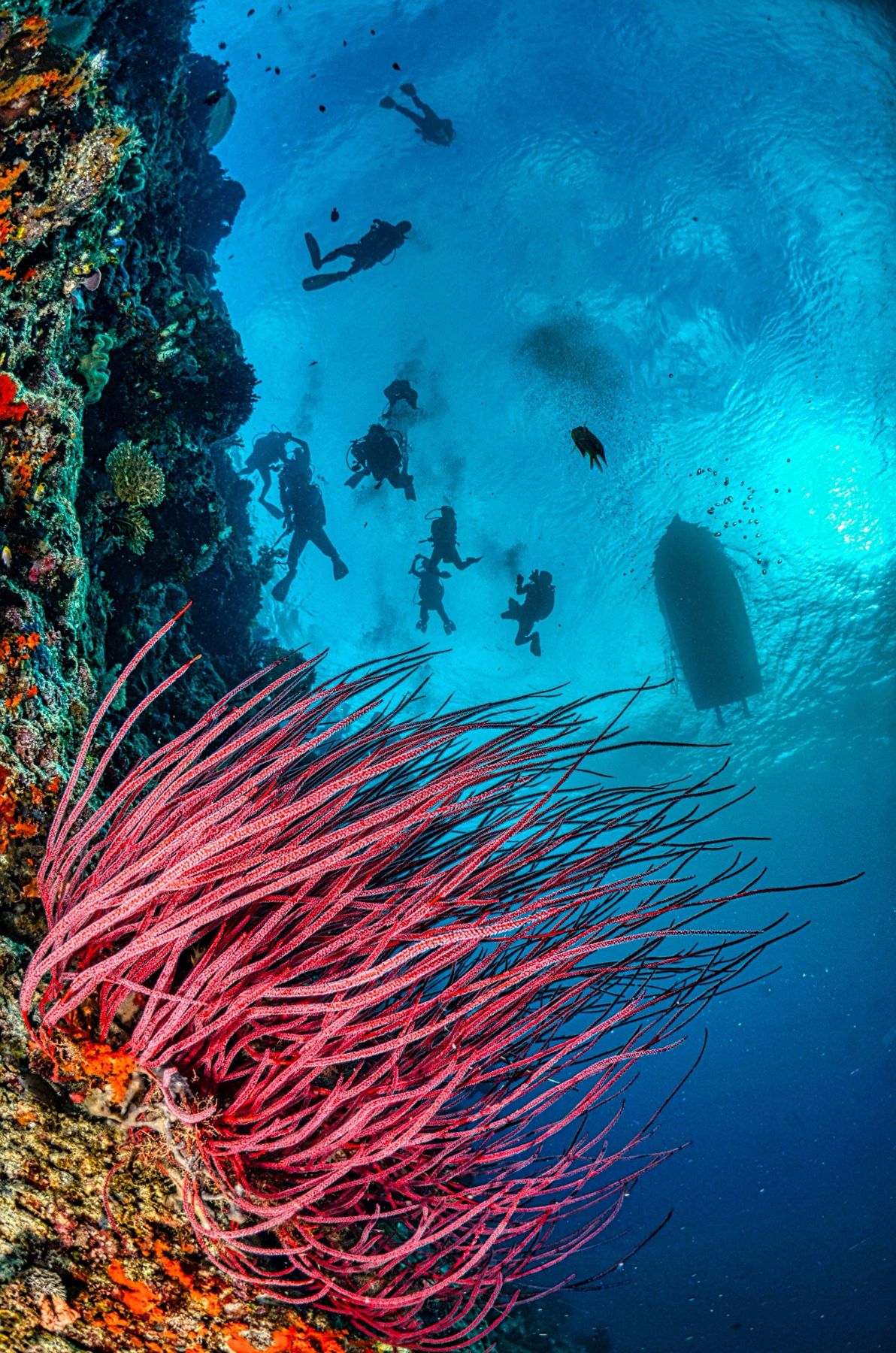
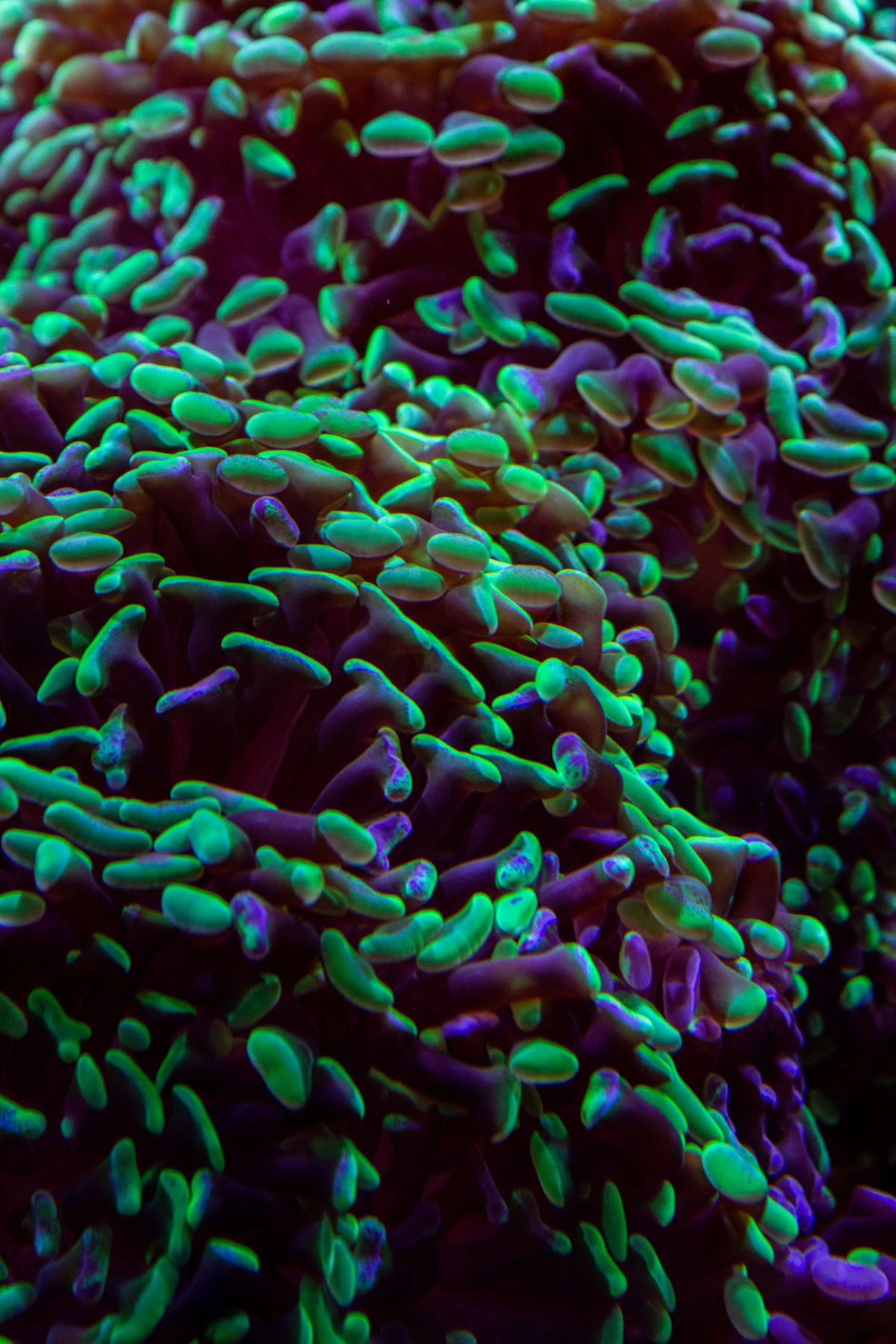
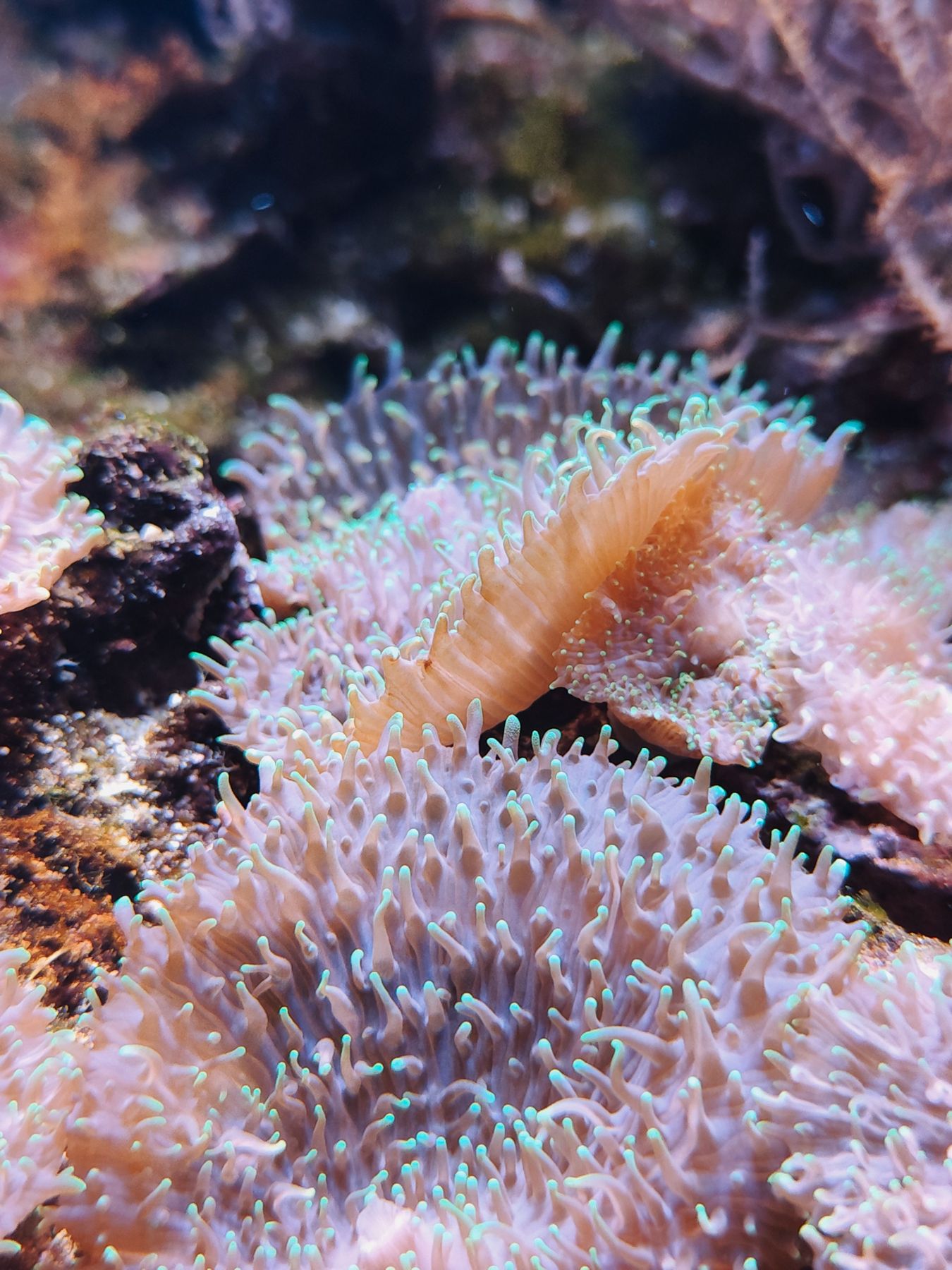
A coral looks like a rock and behaves a little like a plant, but it is an animal. Each coral is a colony of hundreds or thousands of polyps, soft tube-shaped creatures with a ring of stinging tentacles, closely related to sea anemones and jellyfish. Every polyp lays down a cup of limestone beneath itself, and generation after generation those cups stack into the boulders, branches and tables that make a reef.
The secret is a partnership. Microscopic algae called zooxanthellae live inside the coral's tissue, turn sunlight into sugar and pass most of it to their host. That is why reef-building corals only grow in clear, warm, shallow water.
Growth is slow: a big boulder coral can be several centuries old, and one careless kick of a fin can break decades of growth.
The corals of the reefTables, antlers, brains and fans
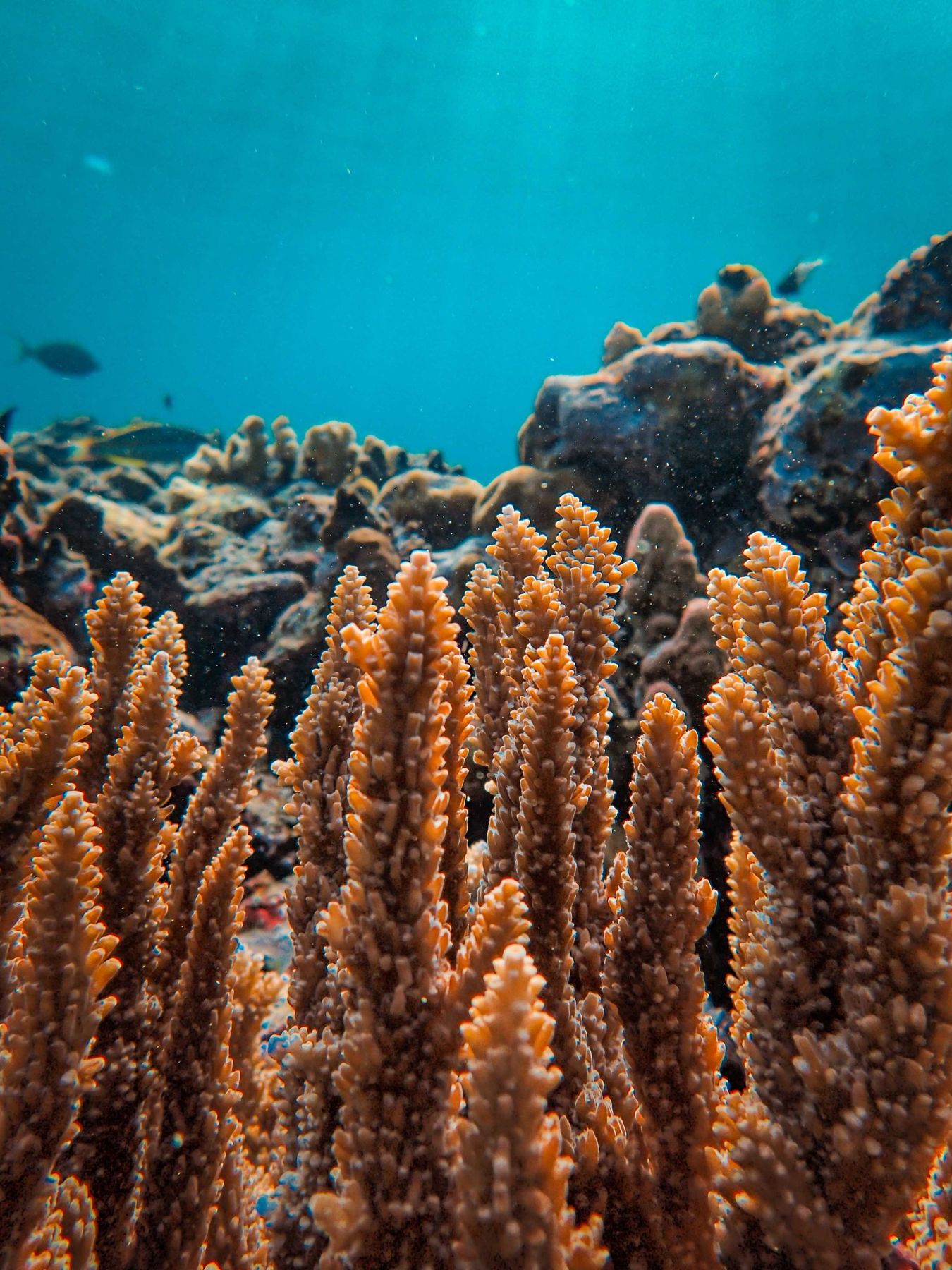
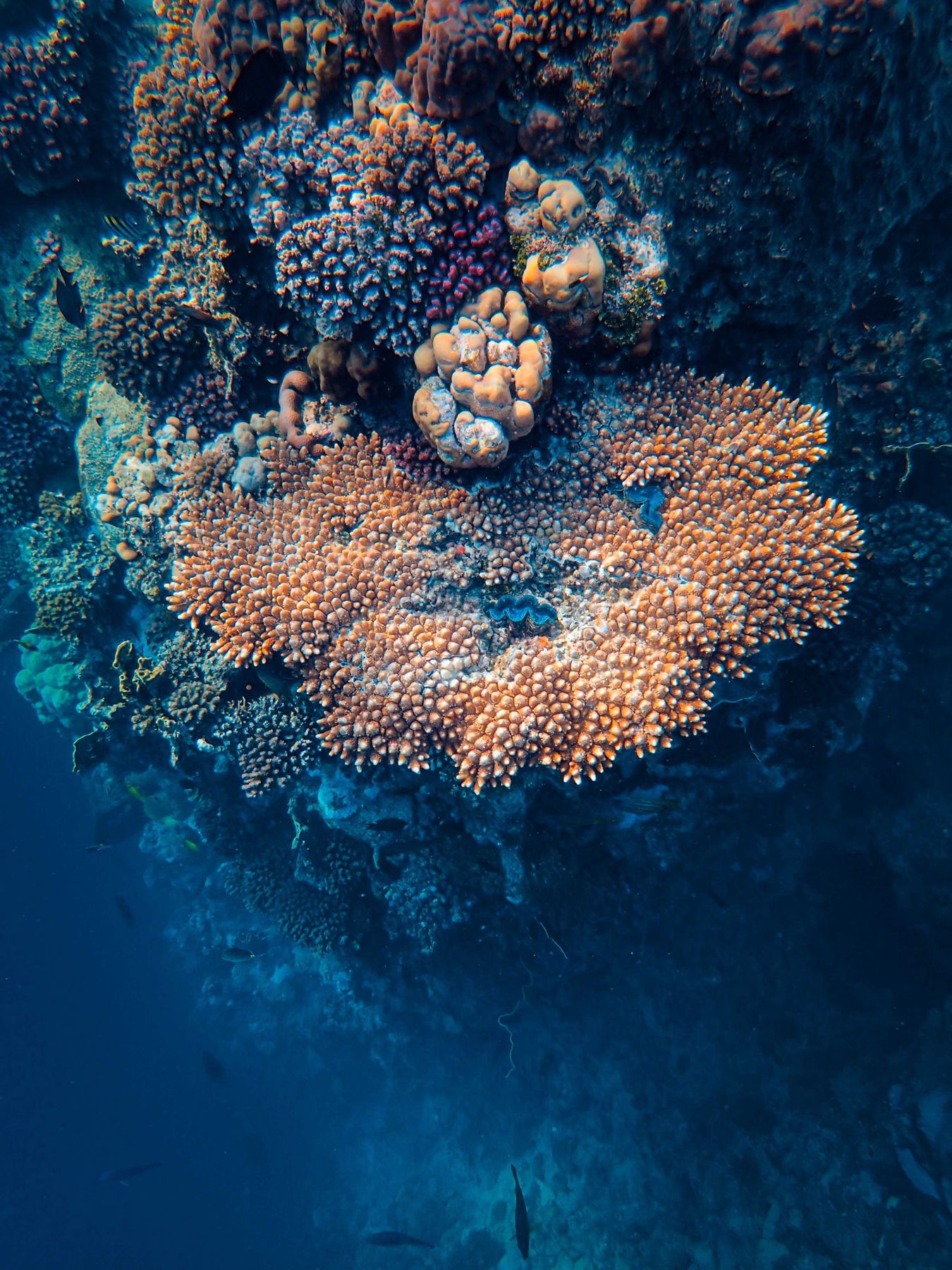
Swim over an outer reef and the shapes tell you how hard the water works. In calm lagoons, staghorn corals grow in thickets of antlers, and wide table corals spread flat plates towards the light. On wave-swept edges you find tough, rounded boulder and brain corals. Between them sway the soft corals, which have no stony skeleton, from leathery fingers to bright sea fans.
Once a year the reef puts on one of nature's great shows. A few nights after a full moon in late spring, when the water has warmed enough, many corals release bundles of eggs and sperm at the same time, and the water fills with a pink and white blizzard drifting up towards the surface. Inshore reefs usually spawn around October, outer reefs in November or December.
A reef full of localsClownfish, giant cod and the sand makers
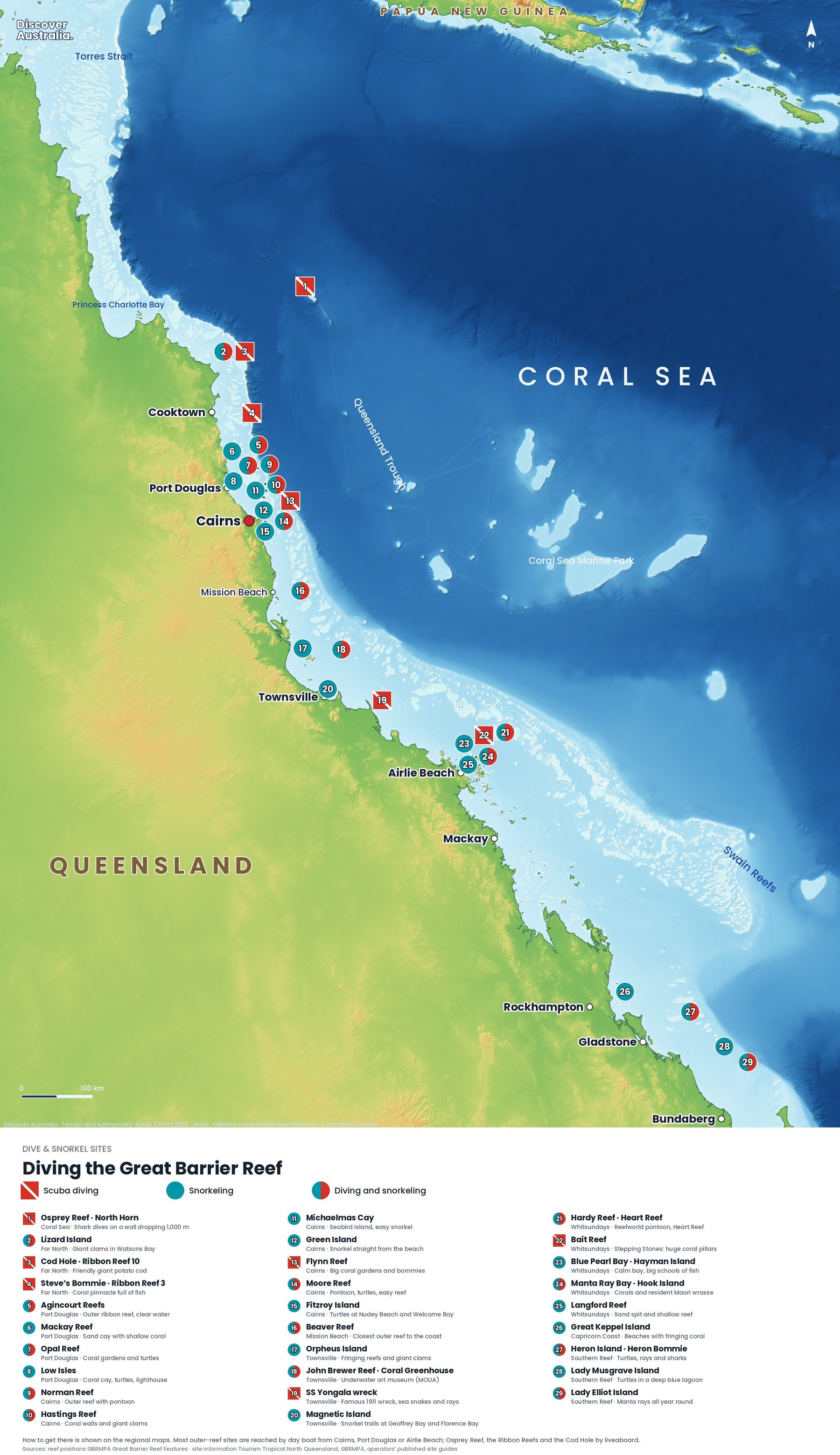
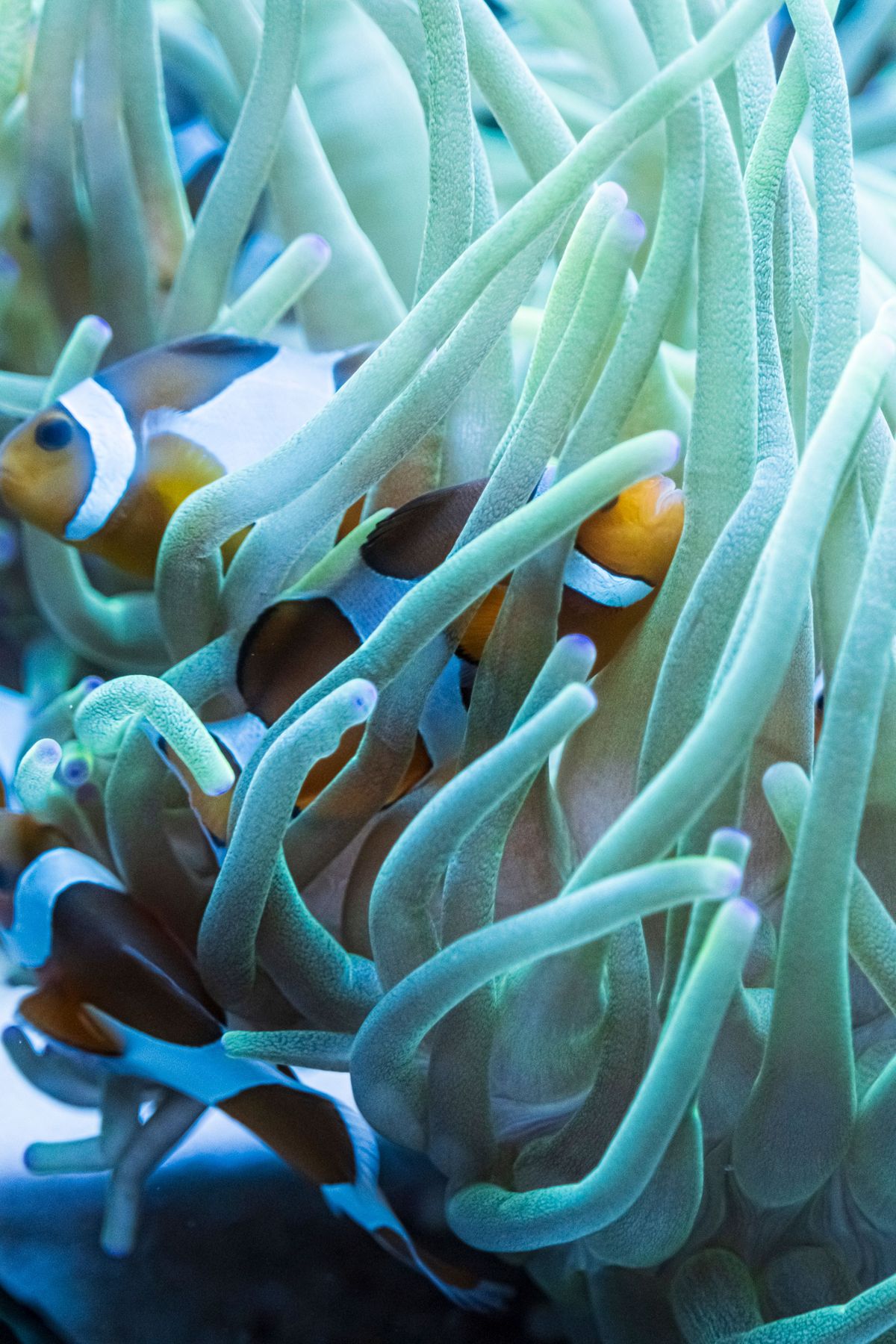
More than 1,600 kinds of fish live on the Great Barrier Reef, and on a good snorkel you will meet dozens in an hour. Clownfish hide among the stinging tentacles of their anemones, protected by a layer of mucus. At Ribbon Reef 10 giant potato cod drift up to divers at the famous Cod Hole. In the Whitsundays, big humphead Maori wrasse cruise the bays like curious dogs.
Some of the most useful animals are the least glamorous. Parrotfish scrape algae off dead coral with beak-like teeth, clearing space for young corals to settle, and grind limestone into fine white sand as they feed. And in the cracks live the night shift: moray eels, octopus, spiny lobsters, and slow, spectacular lionfish, their venomous fins spread like a feathered fan.
Turtles, sharks and raysThe reef's great travellers
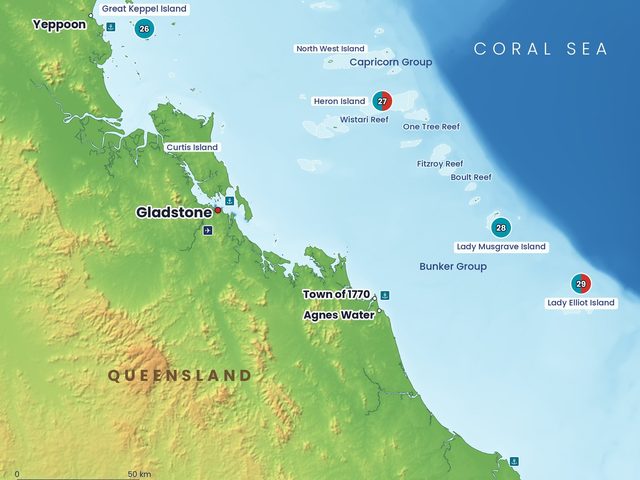
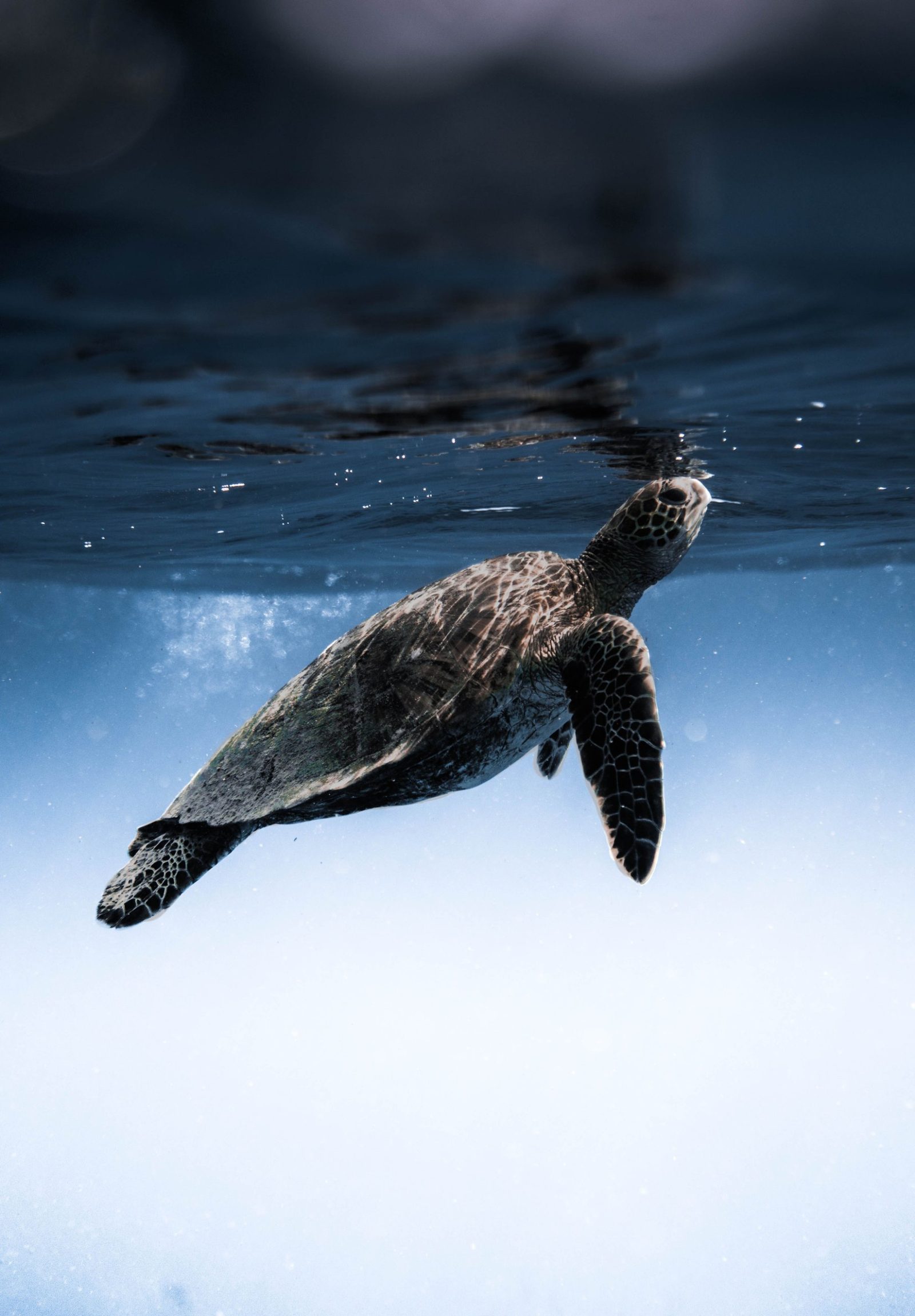
Six of the world's seven species of sea turtle live in the Great Barrier Reef. Each summer they crawl ashore to nest on coral cays and beaches. Tiny Raine Island, in the far north, is the largest green turtle rookery on Earth: in a single season tens of thousands of females gather offshore waiting to nest. In the south, hatchlings scramble down the sand at Heron Island, Lady Elliot Island and Mon Repos near Bundaberg from January to about April.
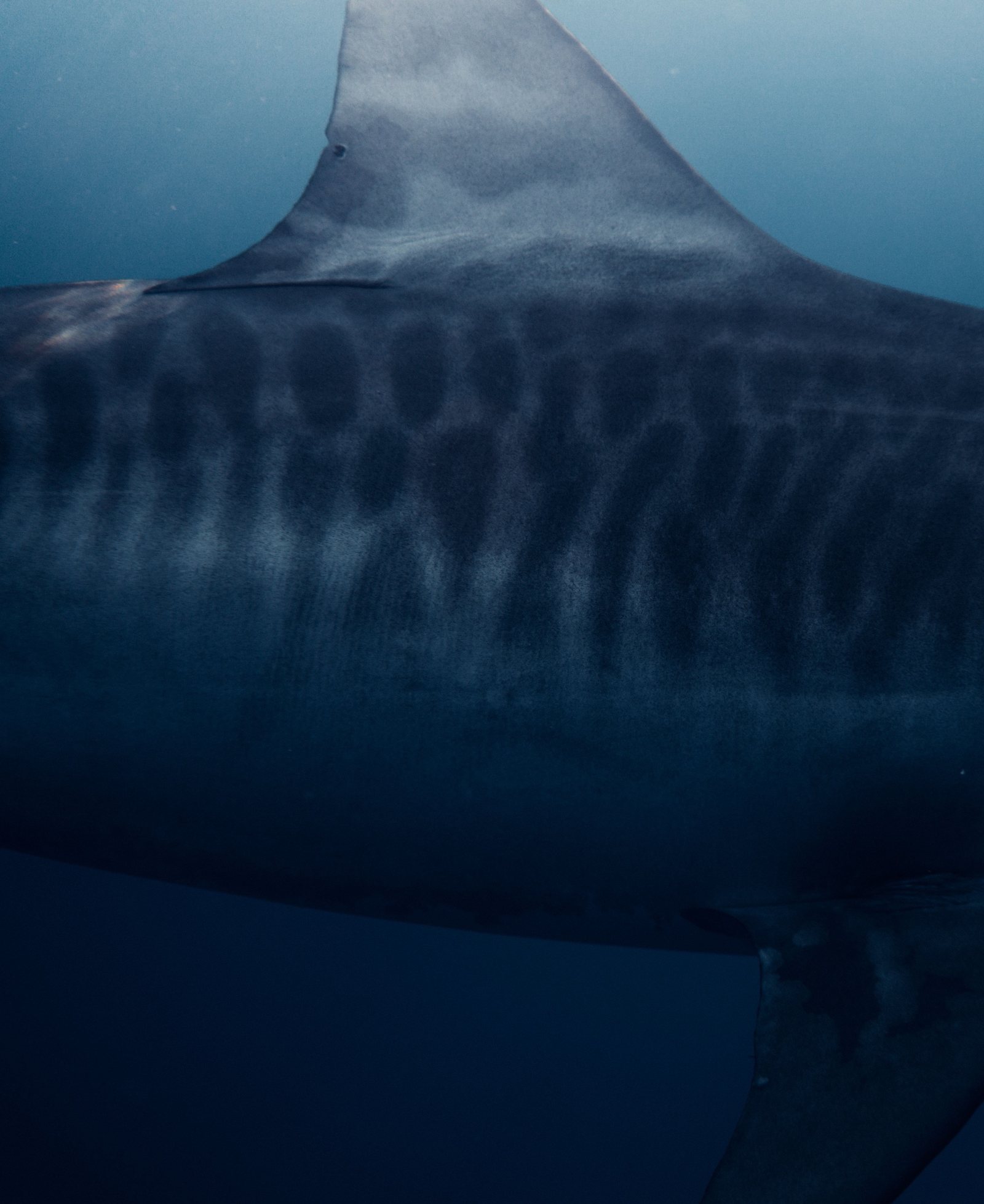
Sharks are everywhere, and almost all of them are harmless to swimmers. Whitetip and blacktip reef sharks patrol the reef edges and wobbegongs lie camouflaged on the bottom. The tiger shark, with its faded stripes, is the reef's great generalist, travelling hundreds of kilometres between reefs and the open ocean.
In the south, Lady Elliot Island is famous for reef manta rays, which glide in to be cleaned by small wrasses on the reef.
Whales on the reefHumpbacks and dwarf minkes
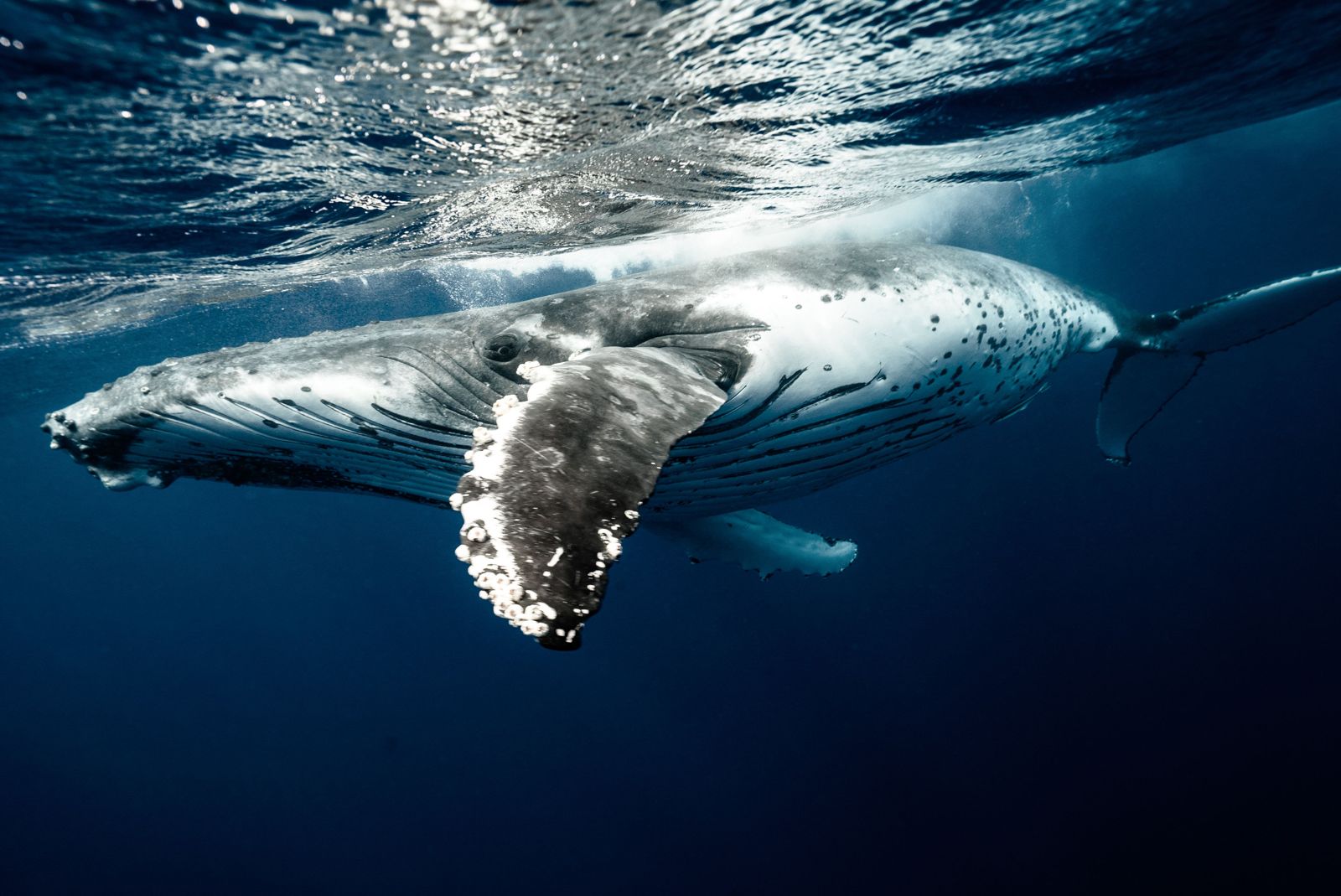
Every winter, humpback whales swim north from Antarctica to the warm, sheltered water inside the reef to give birth and raise their calves. From about June to September they are seen from the Whitsundays to the far north, often breaching beside day boats in the Whitsundays.
In June and July, the Ribbon Reefs off Port Douglas and Cairns host something found almost nowhere else: dwarf minke whales that come to investigate snorkellers. Permitted liveaboards run swims on a surface rope, and the whales choose how close to come.
One reef, many reefsFrom the Ribbon Reefs to the coral cays
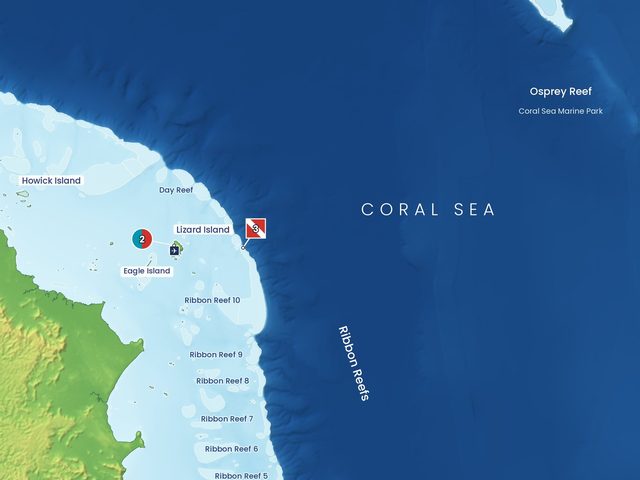
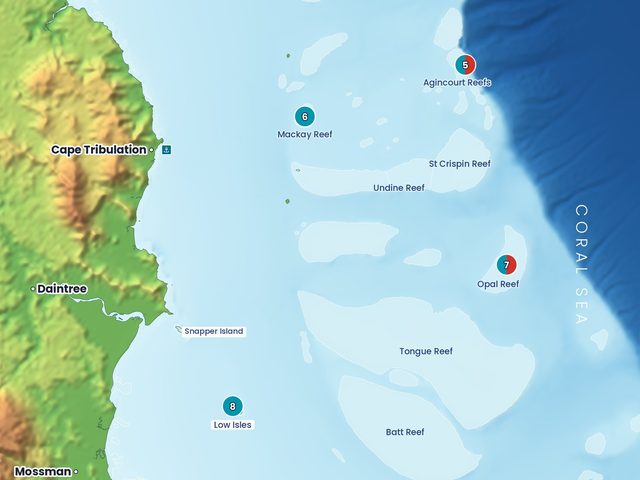
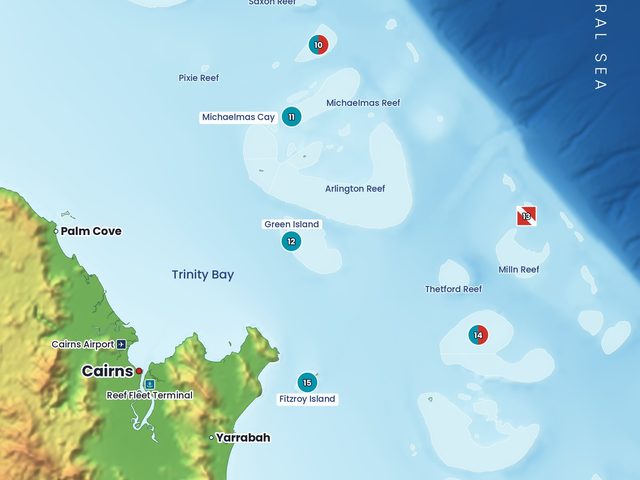
The reef changes as you travel south. In the far north, a wall of long, narrow Ribbon Reefs lines the edge of the continental shelf, where it drops into the deep Coral Sea, and remote atolls like Osprey Reef rise from a thousand metres of water. Off Port Douglas and Cairns, the outer reef comes closest to the coast, which is why most first visits start there.
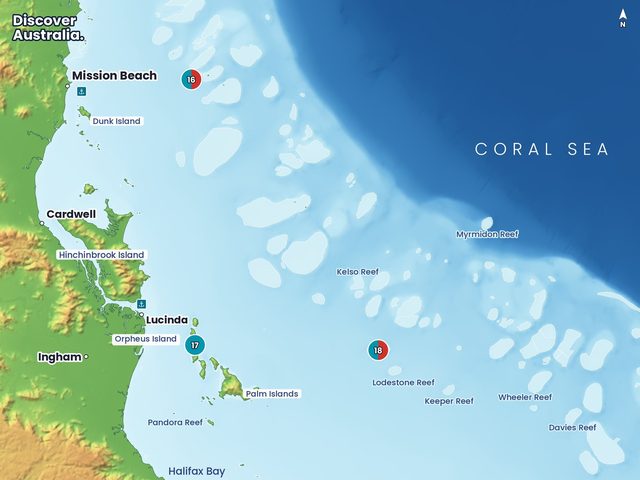
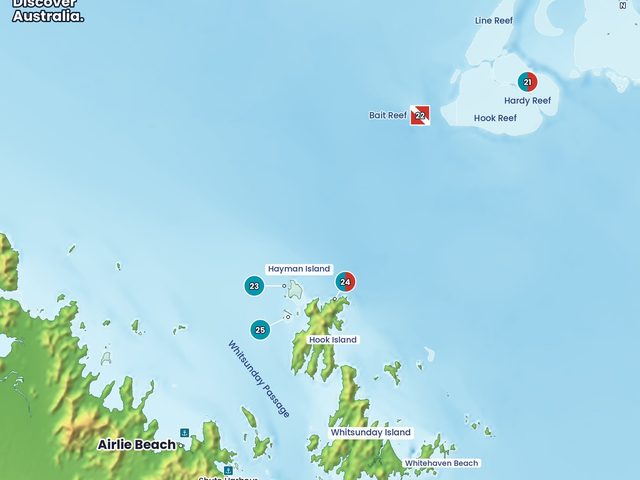
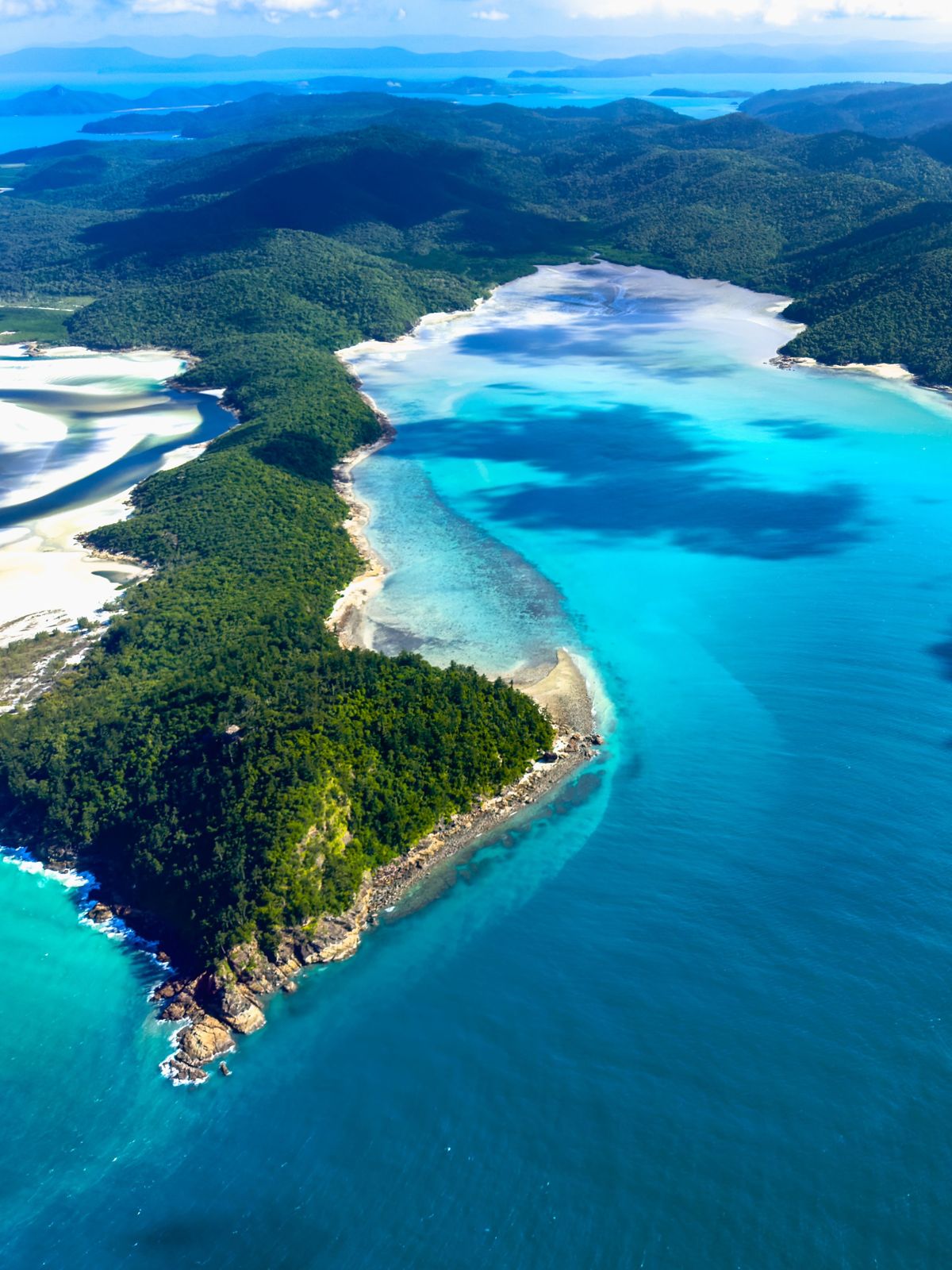
In the centre, between Townsville and Mackay, the reef lies far offshore and the inshore water is greener, with the SS Yongala wreck and Magnetic Island closer in. The Whitsundays trade outer reef for sheltered island bays, white silica beaches and Heart Reef seen from the air. And in the south, the Capricorn and Bunker groups are true coral cays, small islands made of reef sand, where you can walk off the beach straight onto the coral at Heron, Lady Musgrave and Lady Elliot islands.
Heat, bleaching and recoveryWhen the ocean runs a fever
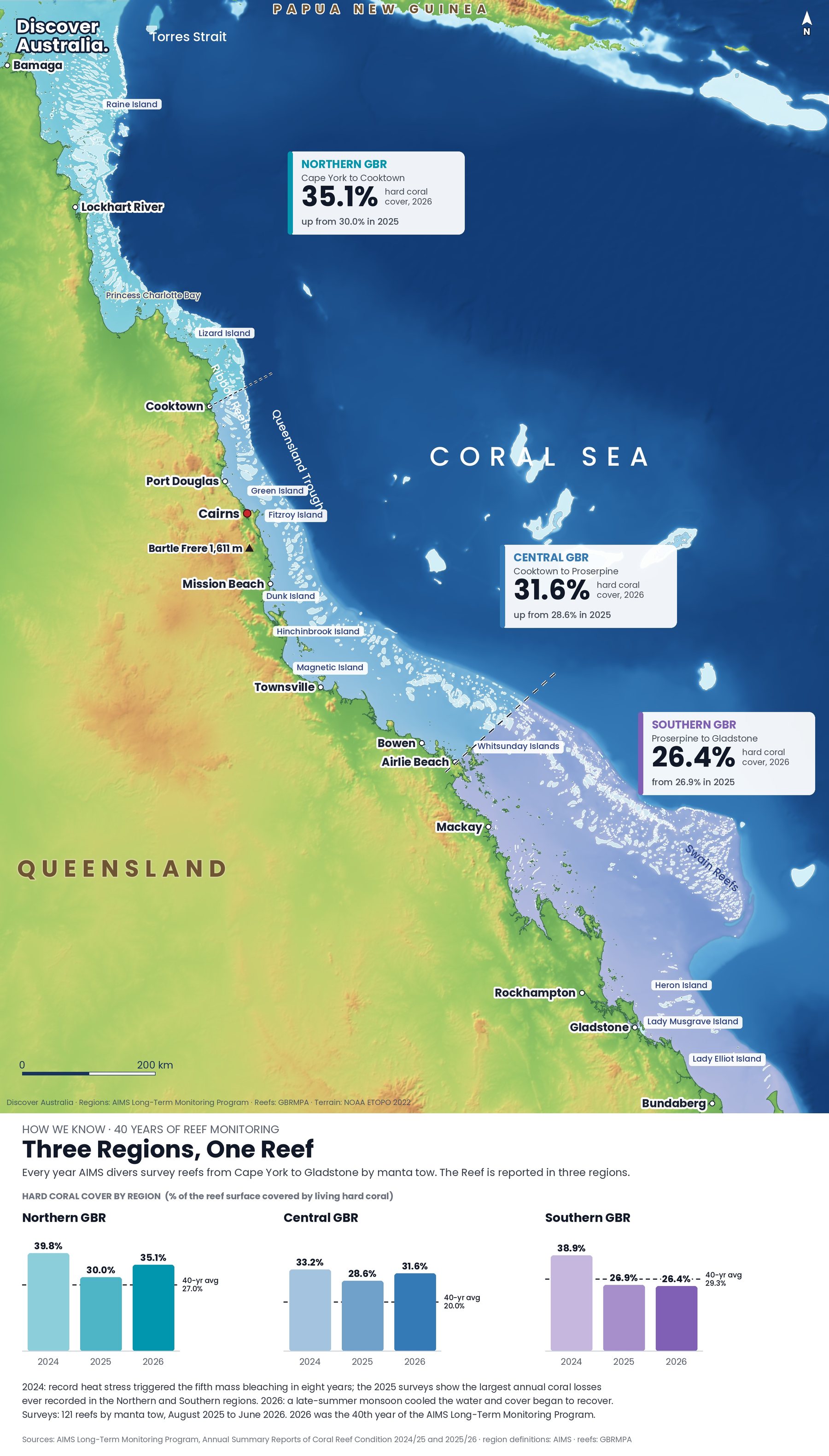
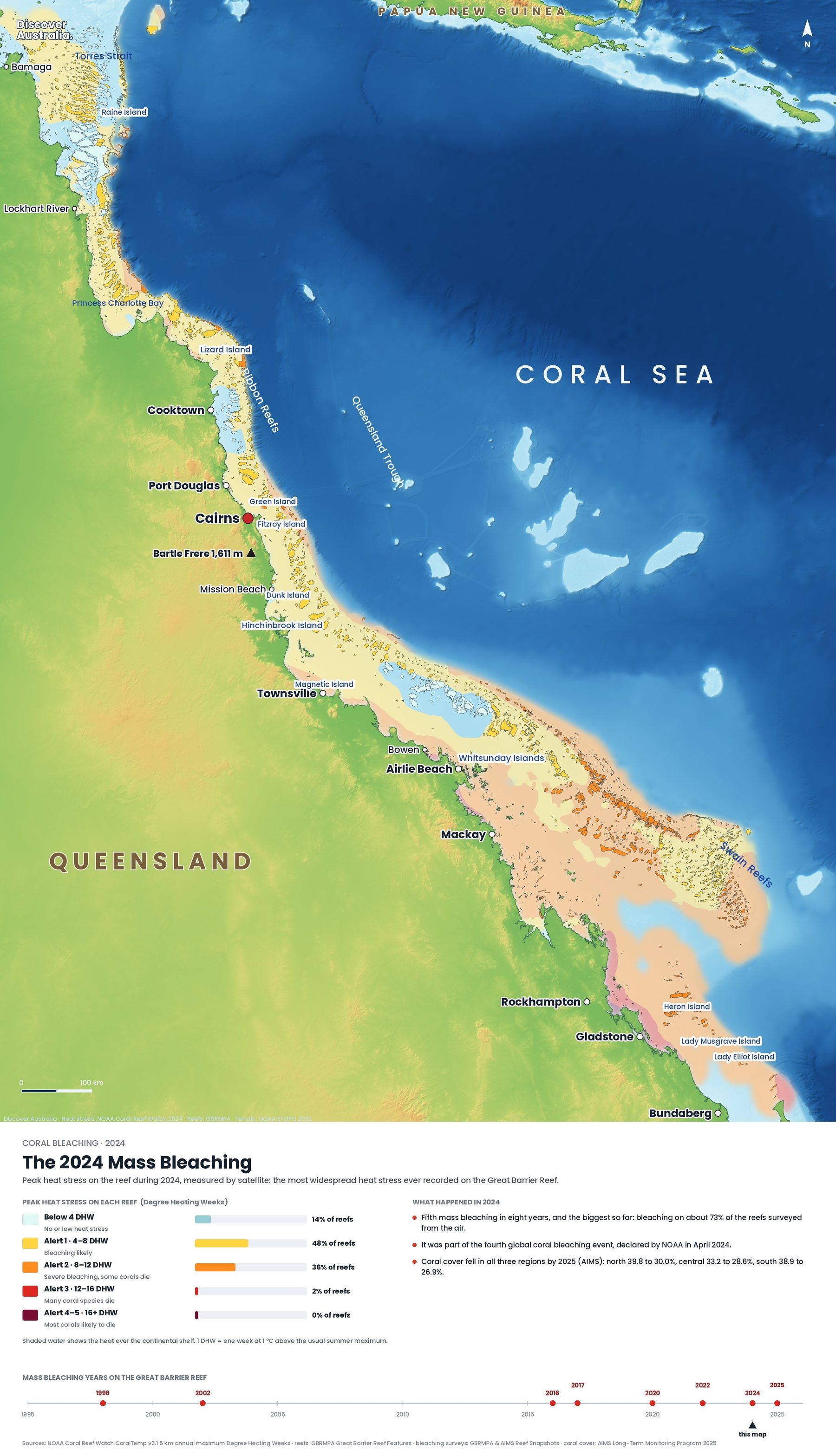
When the sea stays too warm for too long, corals expel the algae that feed them and turn ghostly white. A bleached coral is not yet dead, but it is starving, and if the heat lasts it dies. The Great Barrier Reef has now been through mass bleaching in 1998, 2002, 2016, 2017, 2020, 2022, 2024 and 2025. In 2024 the heat stress was the most widespread ever recorded on the reef, and bleaching was seen on about three quarters of the reefs surveyed from the air.
The reef is also remarkably good at bouncing back. The Australian Institute of Marine Science has surveyed it for 40 years, and its 2026 surveys found coral cover rising again in the north (35.1%) and centre (31.6%), while the south held at 26.4%. But much of the regrowth is fast-growing coral that is the first to die in the next heatwave.
Sea CountryTens of thousands of years of care
Long before it had an English name, the reef was fished, travelled and looked after. More than 70 Aboriginal and Torres Strait Islander Traditional Owner groups have Sea Country within the Great Barrier Reef, each with its own language, laws and stories, and a connection to the sea that reaches back tens of thousands of years.
That care continues. Traditional Owners hold agreements with the Great Barrier Reef Marine Park Authority on how they hunt, fish and manage their Sea Country, and Indigenous rangers patrol reefs and islands and monitor turtles and dugongs. The best way to learn is from Traditional Owners themselves, on a First Nations-led tour.
How to visit the reef well
A few simple habits keep the reef as you found it.
- Never stand on coral.Standing, kneeling or resting a fin on coral crushes living polyps. Wear a flotation vest if you are unsure, and stand only over sand.
- Look, but don't touch.Not the coral, not the fish, not the turtles. Keep your distance from turtles, rays and whales in the water, and never chase them.
- Wear a stinger suit in summer.Box jellyfish and tiny Irukandji jellyfish drift along the Queensland coast, mainly from November to May. A full-length lycra suit protects you.
- Go easy on sunscreen.Cover up with a rash vest and hat, and apply sunscreen at least 20 minutes before swimming so less of it washes off onto the reef.
- Respect the zones.About a third of the Marine Park is a green zone where fishing and collecting are banned. Take nothing, including shells and coral, and pack out all rubbish.
- Choose operators who care.Look for eco-certified boats that use public moorings instead of dropping anchor.