At its southern end, the Great Barrier Reef changes character. Instead of long boat rides to a pontoon, you can fly or sail to small coral cays that sit right on the reef and wade in from the sand. This guide covers the four numbered sites on our southern reef map, how to reach each one, what it costs, and which trip suits you.
Where is the southern Great Barrier Reef?
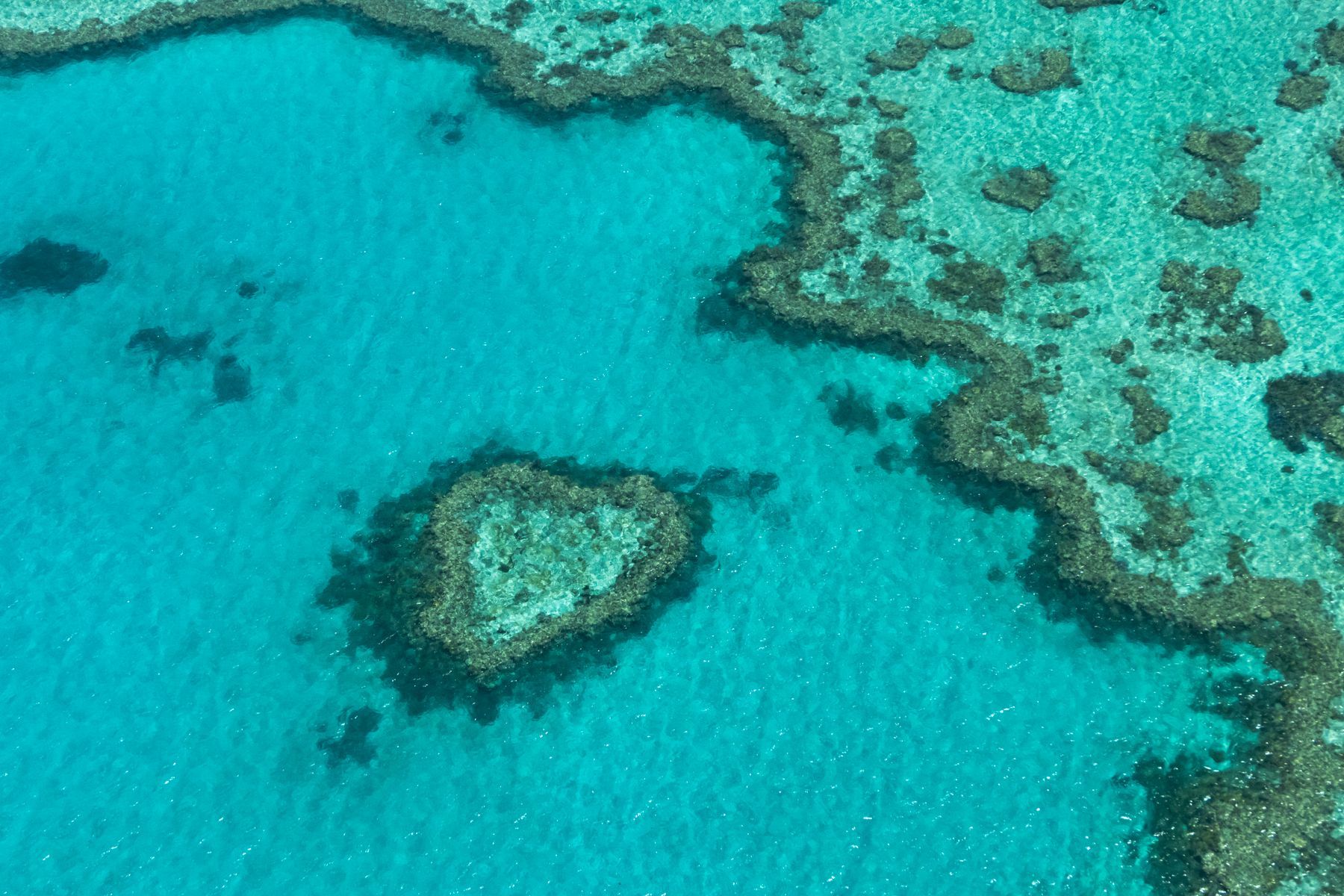
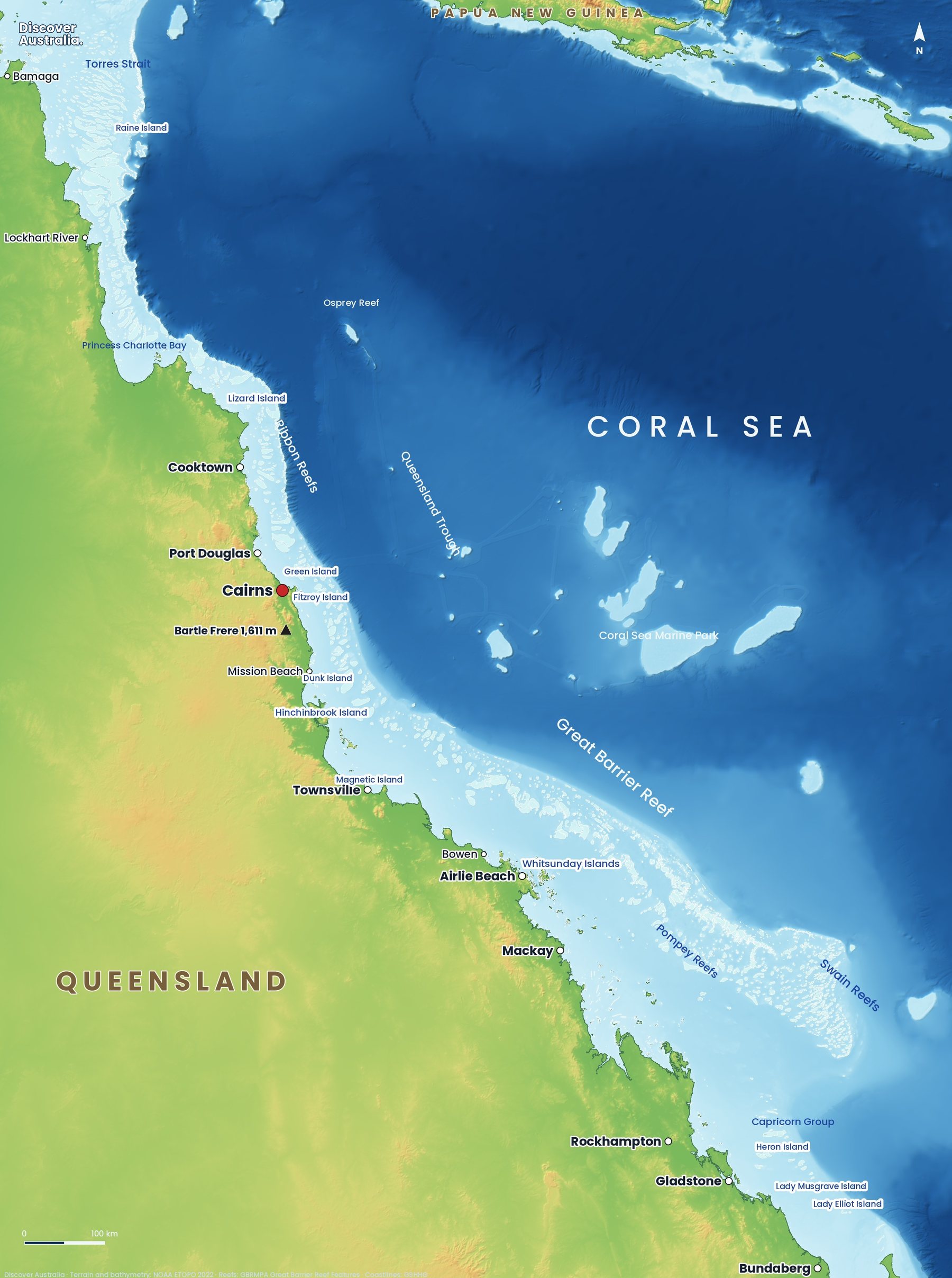
The southern Great Barrier Reef is the stretch off the central Queensland coast between Yeppoon and Bundaberg, where the reef ends. Its heart is two clusters of coral cays and reefs: the Capricorn Group (including Heron Island, Wistari Reef, One Tree Reef and North West Island) and the Bunker Group further south (including Lady Musgrave Island, Fitzroy Reef and Boult Reef). Lady Elliot Island sits alone at the southern tip.
The gateway towns are Yeppoon, Gladstone, Agnes Water and the Town of 1770, and Bundaberg. Further south, Hervey Bay is a launch point for Lady Elliot flights and the ferry to K'gari.
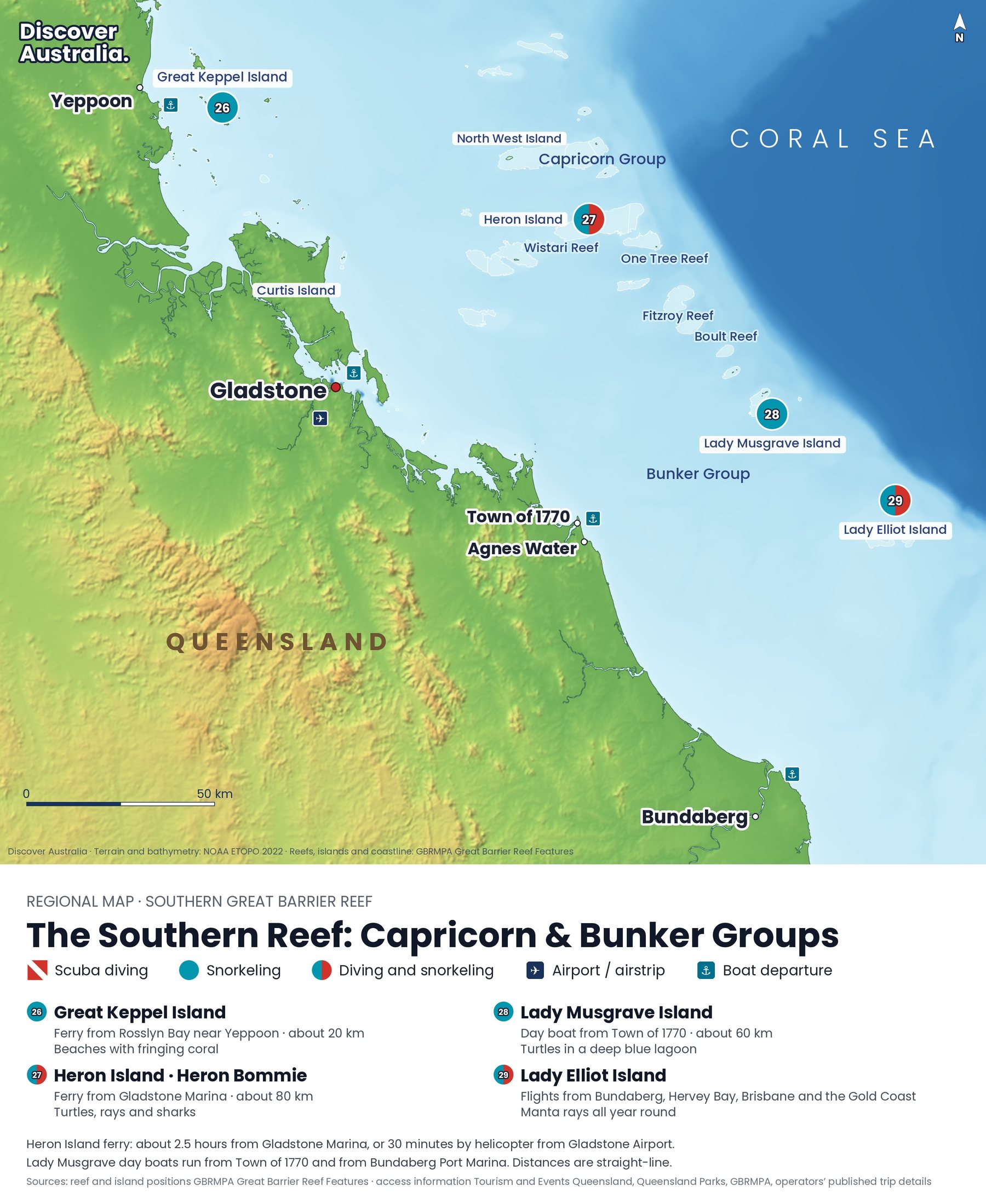
The map shows four sites, numbered 26 to 29 to match our Great Barrier Reef map and dive site series:
- 26 Great Keppel Island: ferry from Rosslyn Bay near Yeppoon, about 20 km; beaches with fringing coral.
- 27 Heron Island and Heron Bommie: ferry from Gladstone Marina; turtles, rays and sharks.
- 28 Lady Musgrave Island: day boat from the Town of 1770, about 60 km; turtles in a deep blue lagoon.
- 29 Lady Elliot Island: flights from Bundaberg, Hervey Bay, Brisbane and the Gold Coast; manta rays all year round.
What makes the south different is the coral cays. Heron, Lady Musgrave and Lady Elliot are low sand islands built on top of their own reefs, so the coral starts a few steps from the beach. Further north, around Cairns or the Whitsundays, most visitors reach the reef by boat to a pontoon or mooring far offshore. If you are still choosing a region, compare this guide with our Cairns reef guide and Whitsundays reef guide, or start with our Great Barrier Reef guide.
The southern reef has had a rough few years. The Australian Institute of Marine Science (AIMS) measured average hard coral cover in its southern region, which runs from Proserpine to Gladstone, at 26.4% in 2026, against 26.9% in 2025. AIMS says that change is within the margin of error, so cover is effectively stable, but the 2024 heat stress damaged deeper reefs as well as shallow ones. Our article on the 2024 bleaching explains what happened.
How do you get to Lady Elliot Island?
You fly: Lady Elliot Island (site 29 on the map) is reached only by small aircraft, which land on the island's own airstrip. Tourism and Events Queensland gives these flight times:
| Departure | Airport | Flight time |
|---|---|---|
| Bundaberg | Bundaberg Regional Airport | About 30 minutes |
| Hervey Bay | Hervey Bay Airport | About 40 minutes |
| Brisbane | Redcliffe Aerodrome (not Brisbane Airport) | About 80 minutes |
| Gold Coast | Hangar 1.5 km north of Gold Coast Airport | Just under 2 hours |
Flights are booked through Lady Elliot Island Eco Resort, the only place to stay on the island. Its reservations team arranges flights and rooms together. The island runs on renewable energy and has programmes to remove invasive species.
Day trips leave from Hervey Bay and Bundaberg. On the resort's 1 April 2026 to 31 March 2027 rates, a day trip costs A$595 per adult and A$445 per child aged 3 to 12. That includes the return scenic flight, about seven hours on the island, a glass-bottom boat or guided snorkel tour, snorkel gear and a short wetsuit, lunch, an afternoon activity and the reef charge. It is expensive, but it is the only way to see the island without staying overnight.
The island lies in a Green Zone of the Marine Park, the highest level of protection, so no fishing or collecting is allowed. You can snorkel straight off the beach, and divers head for Lighthouse Bommies, where manta rays visit cleaning stations. The resort says average visibility is over 20 metres.
How do you get to Heron Island?
Take the resort ferry from Gladstone, which takes about 2.5 hours, or a 30-minute helicopter flight. Heron Island (site 27) is a coral cay in the Capricorn Group with one resort and a University of Queensland research station, and it is a place to stay rather than a day stop.
- Ferry: leaves from the Heron Island Ferry Terminal at the Gladstone Marina Parklands. In October 2026 it departed Gladstone at 9:30am and left the island at 12:45pm, with no sailings on Tuesdays, Thursdays or Christmas Day. Check-in runs from 7:45am to 9am.
- Fare: A$99 each way per adult and A$80 per child aged 3 to 12.
- Helicopter: about 30 minutes, daily if weather allows; listed at about A$766 one way per adult including the fuel levy, with a minimum of four adults for return flights.
Because the ferry turns around at lunchtime, there is no practical day trip. Plan at least two nights, and more if you want to dive. The crossing is in open water, so take seasickness precautions if you are prone to it.
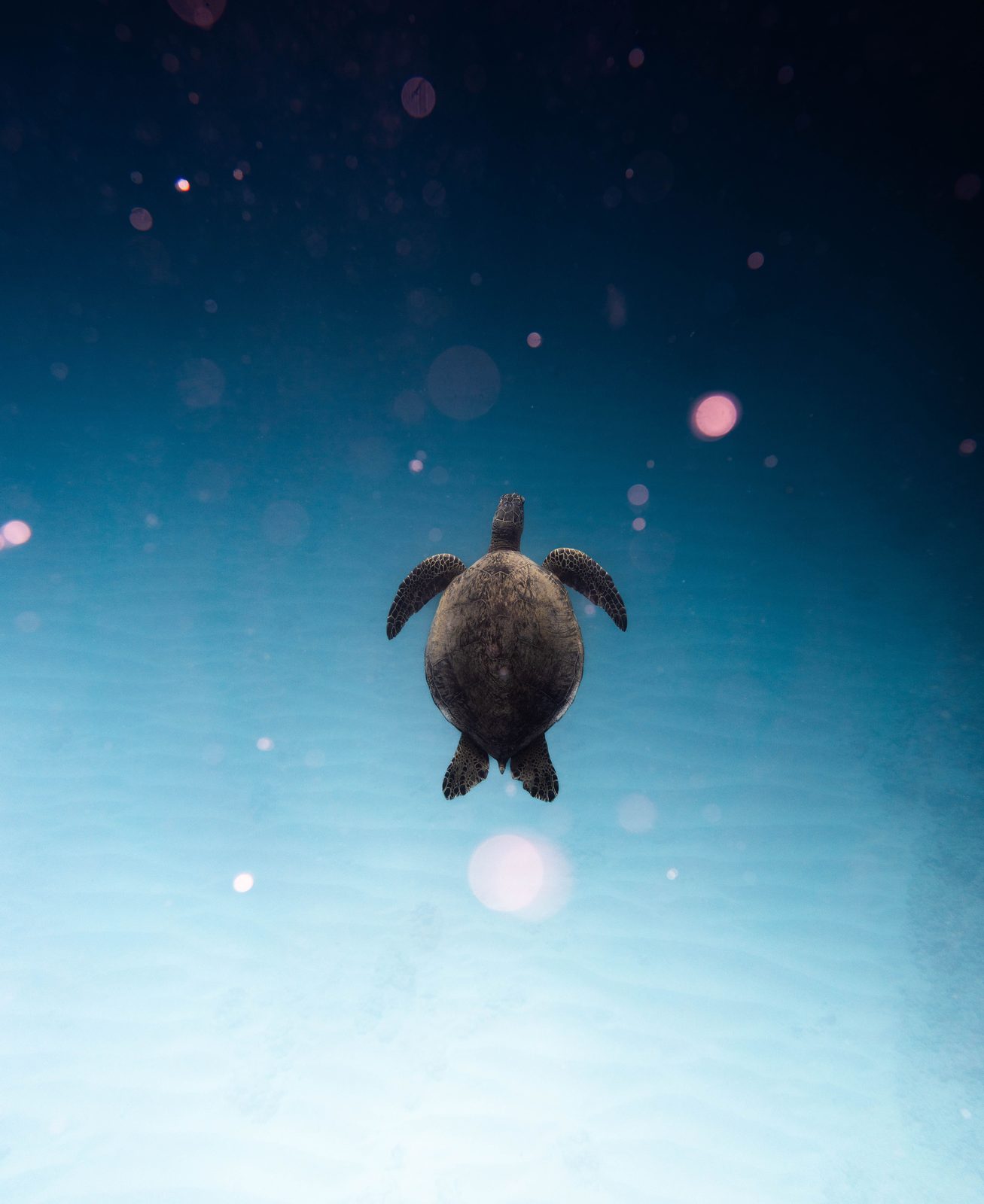
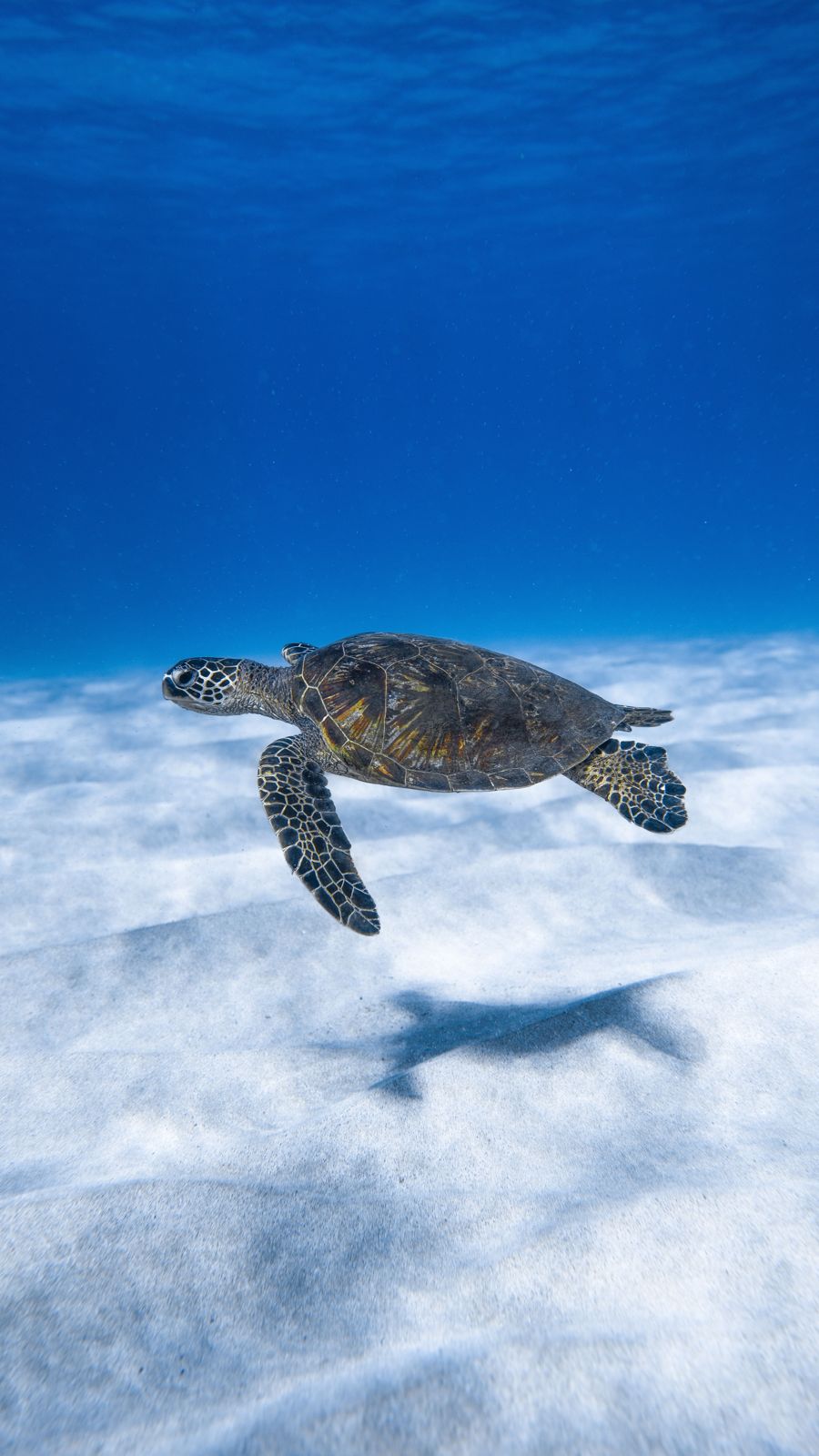
Heron's reputation is built on what you see without going far. Heron Bommie is an easy dive site where turtles, rays and reef sharks are regular sights, and you can snorkel straight off the beach. The resort says more than 4,000 turtles live on the reef year round. Between about October and March, the pisonia forest is loud with nesting seabirds; in January and February the resort counts around 200,000 birds on the island.
Can you visit Lady Musgrave Island on a day trip?
Yes. Lady Musgrave Island (site 28) is the easiest southern cay to reach by boat, with daily cruises from the Town of 1770 and from Bundaberg Port Marina at Burnett Heads, weather permitting.
Its draw is the lagoon: a ring of reef encloses a large, sheltered body of deep blue water that boats can enter, so you snorkel in calm conditions even when the open sea is choppy. Green turtles are common.
- From the Town of 1770: about 90 minutes each way on a day of about nine hours. On 2025–26 fares, trips including a glass-bottom boat tour, a guided island walk, snorkel gear and lunch started from about A$260 per adult.
- From Bundaberg: a longer day of about 10 hours, with check-in at 7am and return at about 5:30pm. The current trip uses a pontoon in the lagoon and includes a glass-bottom boat, an underwater observatory and an island walk, from about A$305 per adult.
You can also camp. Lady Musgrave is part of Capricornia Cays National Park, and up to 40 people can camp at once, for a maximum of 21 nights. The campground opens on the first day of the Queensland Easter school holidays and closes the day after the Australia Day long weekend, to protect nesting seabirds and turtle hatchlings. It is tent camping on sand with non-flush toilets and nothing else: bring all your food and drinking water, no fires or generators are allowed, and mobile coverage is unreliable. Permits are released in blocks up to nine months ahead and school holidays sell out early.
North West Island in the Capricorn Group also has national park camping on the same permit system; check access options with Queensland Parks before you book.
Is Great Keppel Island good for snorkelling?
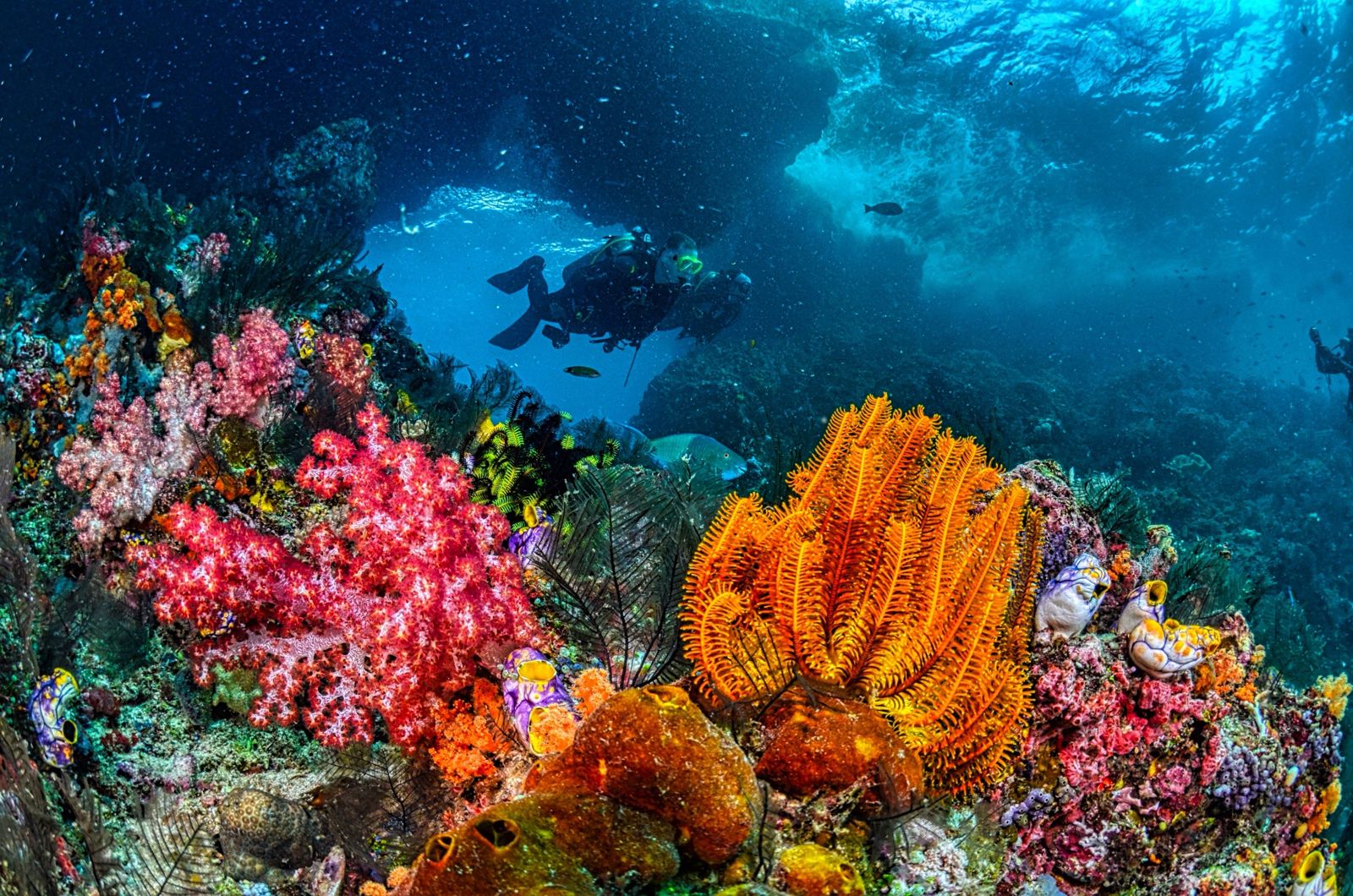
Yes, for easy fringing-reef snorkelling from the beach, though it is not an outer-reef experience. Great Keppel Island (site 26) is a continental island in Keppel Bay, about 30 minutes by ferry from Rosslyn Bay Harbour near Yeppoon. Ferries leave from Rosslyn Bay several times a day; check the current timetable before you go, as it varies.
Visit Capricorn, the regional tourism body, lists these as the best snorkel spots on the island:
- Shelving Point: the closest snorkel site to the island's accommodation, in a protected bay reached from Fisherman's Beach; good for young families.
- Monkey Beach: about a 40-minute walk from Fisherman's Beach, with high coral cover and 38 coral species recorded. It is a no-anchoring area marked by white reef protection buoys.
- Clam Bay and Butterfish Bay: best at mid to low tide and easiest by boat or water taxi.
- Passage Rocks: a deep channel on the north side, popular with kayakers, with more hard coral species than any other Keppel site.
Great Keppel suits travellers driving the coast who want a relaxed beach day with snorkelling thrown in. Visibility near the mainland is usually lower than at the outer cays, so if clear water is your priority, put the budget towards Lady Musgrave, Heron or Lady Elliot instead. Camping in the Keppel Bay Islands National Park is allowed on several smaller islands, such as North Keppel and Humpy, but not on Great Keppel itself.
When can you see turtles, manta rays and whales on the southern reef?
Turtles nest in summer, manta rays peak in winter, and humpback whales pass from about June to September. That means the southern reef has wildlife highlights in every season.
- Turtle nesting: on Heron Island, green and loggerhead turtles nest from about November to March, and hatchlings emerge from early January until about May. On Lady Elliot, Tourism and Events Queensland gives nesting from November to February and hatching from February to April.
- Mon Repos: near Bundaberg, this beach has the most significant loggerhead nesting population in the South Pacific region. Ranger-guided Turtle Encounter tours run from about November to late March and are booked online through Queensland Parks. The beach is closed from 6pm to 6am during the breeding season (15 October to 31 May) except to people on a tour.
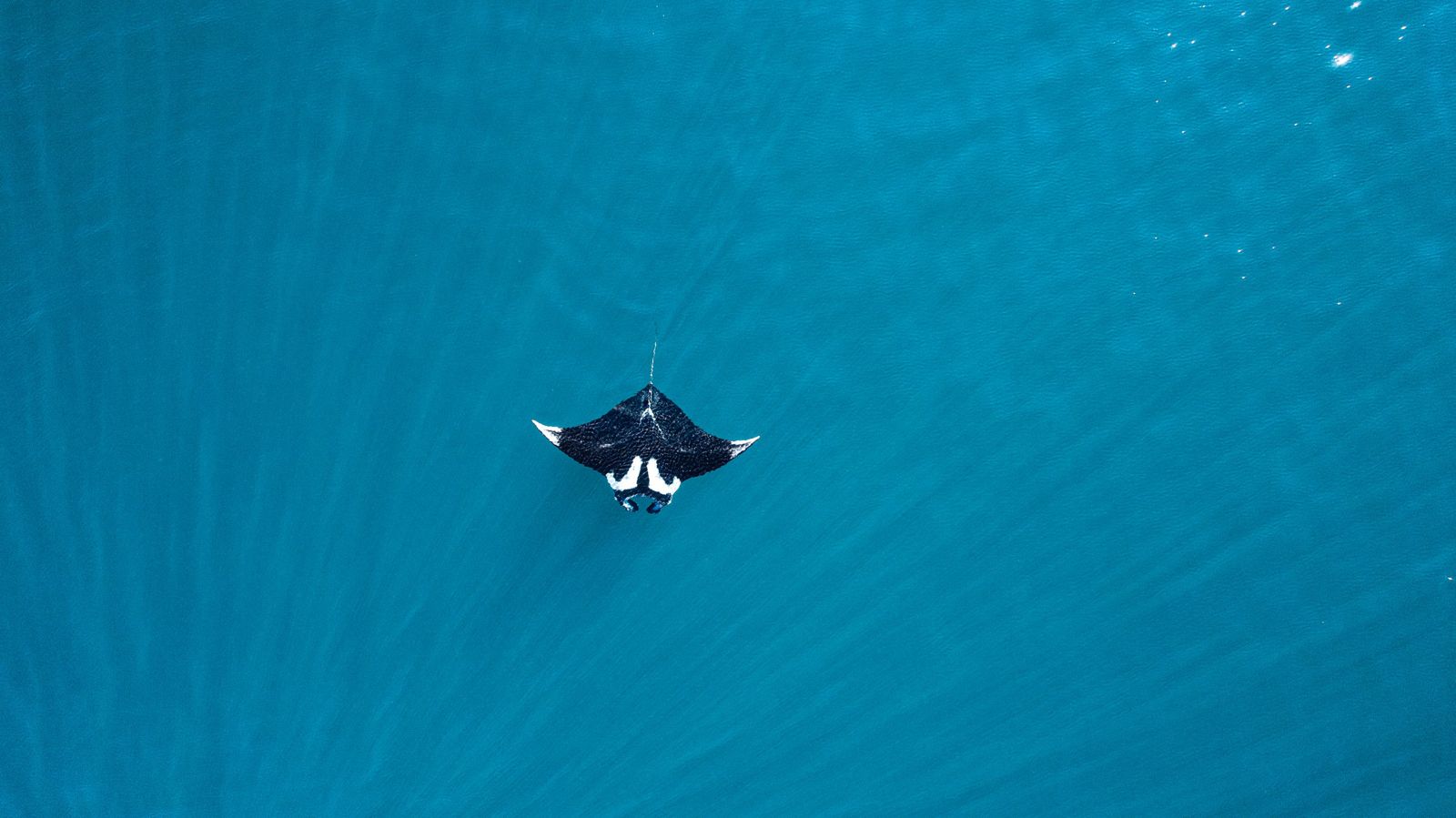
- Manta rays: Lady Elliot's mantas are seen all year, but gather in larger numbers in winter. The resort names May and June as standout months, and Tourism and Events Queensland says numbers peak from June to September.
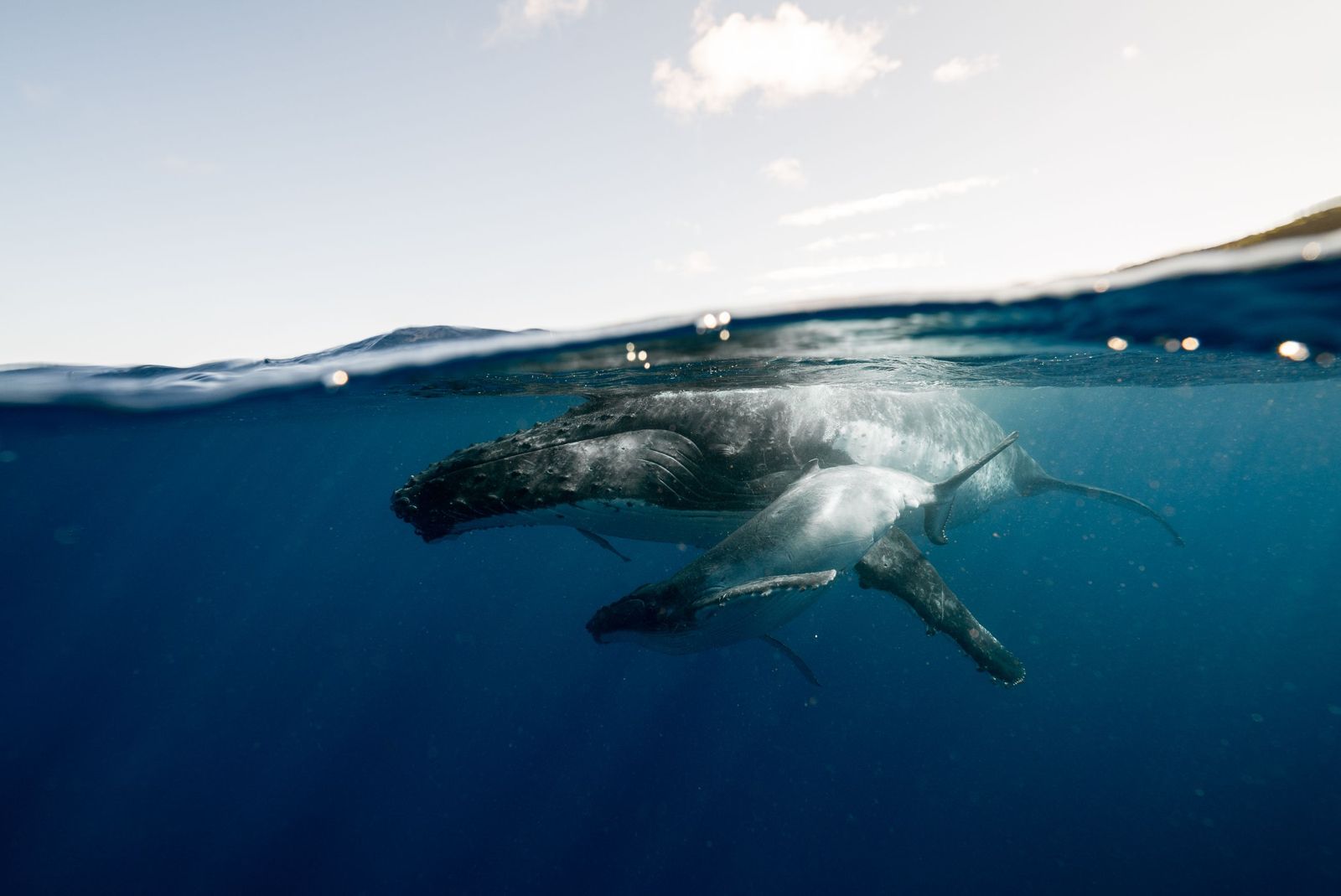
- Humpback whales: Heron Island's wildlife calendar has humpbacks heading north from June and passing south with calves in September.
- Coral spawning: usually around the full moon in November, sometimes December.
On a nesting beach, the rules are simple. Keep lights off and never use a flash. Stay low and at least 10 metres back, behind the turtle, and never touch or pick up hatchlings. Our guide on where to see sea turtles in Australia has more on Mon Repos, and our month-by-month guide compares the south with the north.
Do you need a stinger suit on the southern Great Barrier Reef?
Yes, it is worth wearing one, particularly from November to May. The southern reef is cooler than Cairns in winter, but it is not outside the stinger zone. Surf Life Saving Queensland puts the southern limit of box jellyfish north of Agnes Water and of Irukandji north of southern K'gari, which covers all four sites on our map. The risk is highest from roughly November to May, but stingers can be present all year.
If someone is stung, get them out of the water if it is safe, pour vinegar on the sting for at least 30 seconds and call 000. Irukandji symptoms can be delayed, so keep the person out of the water and watch them for 45 minutes. Sharks are present in the open ocean all year too, and Queensland Parks advises following SharkSmart guidance. Read our guides to ocean safety in Australia and dangerous animals before you go.
Water temperature matters as well. Winter water in the south is noticeably cooler than in the tropical north, so a short wetsuit, like the one included on Lady Elliot day trips, makes a long snorkel more comfortable.
Which southern reef trip should you choose?
Choose by budget, time and how much you want to be on the water. For most visitors, Lady Musgrave is the best-value day trip, Lady Elliot is the best manta experience, and Heron is the best for a longer stay with diving.
| Site | Getting there | Day trip? | Stay overnight | Best for |
|---|---|---|---|---|
| 26 Great Keppel | 30 min ferry from Rosslyn Bay | Yes, short ferry | Island accommodation | Beach days, easy snorkelling, tight budgets |
| 27 Heron Island | 2.5 h ferry or 30 min helicopter from Gladstone | No | Resort only | Divers, turtles, seabirds, longer stays |
| 28 Lady Musgrave | Day boat from 1770 or Bundaberg | Yes, from about A$260 | National park camping | Calm lagoon snorkelling, campers |
| 29 Lady Elliot | Small plane from four airports | Yes, A$595 per adult | Eco resort only | Manta rays, beach snorkelling, scenic flight |
- First-timers and families: Lady Musgrave's lagoon is sheltered, and the Bundaberg trip's pontoon and glass-bottom boat suit non-swimmers.
- Divers: stay on Heron Island or Lady Elliot Island, where the dive sites are minutes from the beach.
- Short on time: fly to Lady Elliot from Bundaberg or Hervey Bay, about 30 to 40 minutes each way, and land beside the reef.
- Combining with K'gari: base yourself in Hervey Bay for the K'gari guide and a Lady Elliot day trip.
Reef trips can be cancelled in strong winds, so leave a spare day. For a wider comparison of islands from Lizard to Lady Elliot, see our guide to the best Great Barrier Reef islands. To explore the rest of the coast, the other regional guides cover the Ribbon Reefs and far north, Port Douglas and Mission Beach to Townsville.
Facts checked October 2026. Fares, timetables, camping dates and seasons change; confirm with the operator, the resort or Queensland Parks before you travel.
- Guide to Lady Elliot Island (Tourism Australia / Tourism and Events Queensland)
- Lady Elliot Island day trip (Lady Elliot Island Eco Resort)
- Manta rays at Lady Elliot Island (Lady Elliot Island Eco Resort)
- Lady Elliot Island day trip (Bundaberg Tourism)
- Getting to Heron Island (Heron Island Resort)
- Turtles at the Great Barrier Reef (Heron Island Resort)
- Heron 365 wildlife calendar (Heron Island Resort)
- Lady Musgrave Island camping area (Queensland Parks and Wildlife Service)
- Camping in Capricornia Cays National Park (Queensland Parks and Wildlife Service)
- Keppel Bay Islands National Park (Queensland Parks and Wildlife Service)
- 8 snorkelling spots at Great Keppel Island (Visit Capricorn)
- About Mon Repos Conservation Park (Queensland Parks and Wildlife Service)
- Marine stingers (Surf Life Saving Queensland)
- Relief for a recovering Reef as monsoon cools waters (Australian Institute of Marine Science)