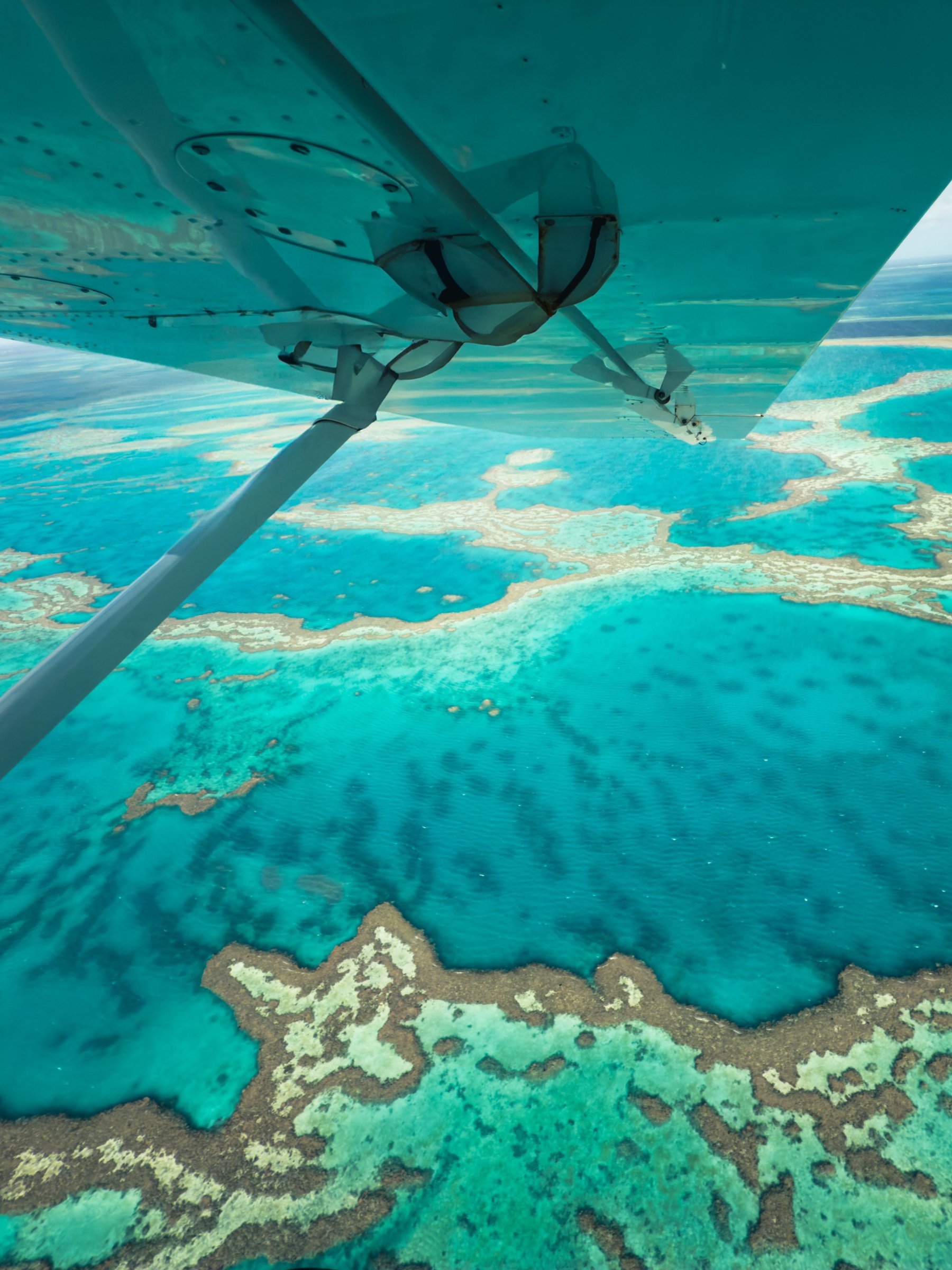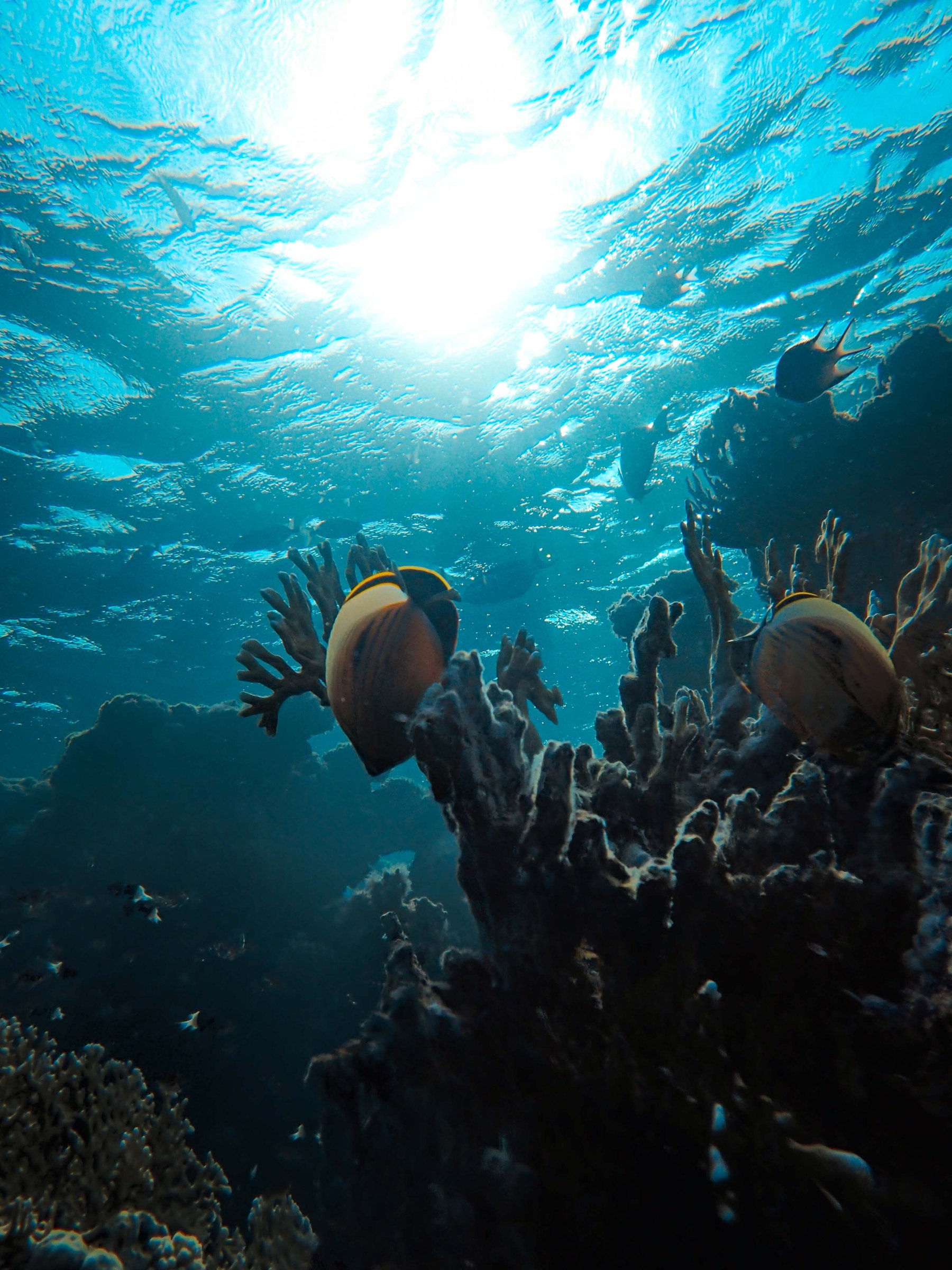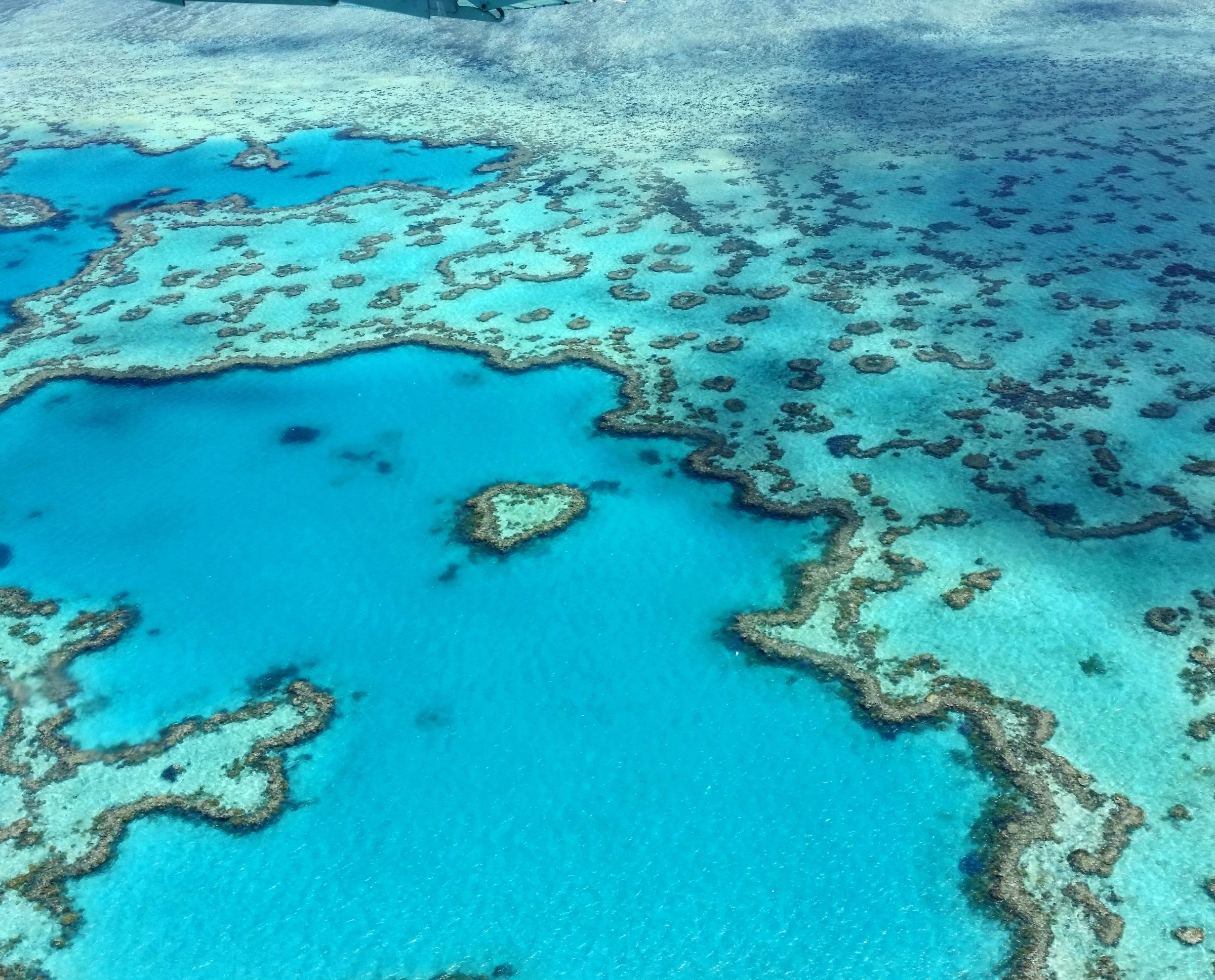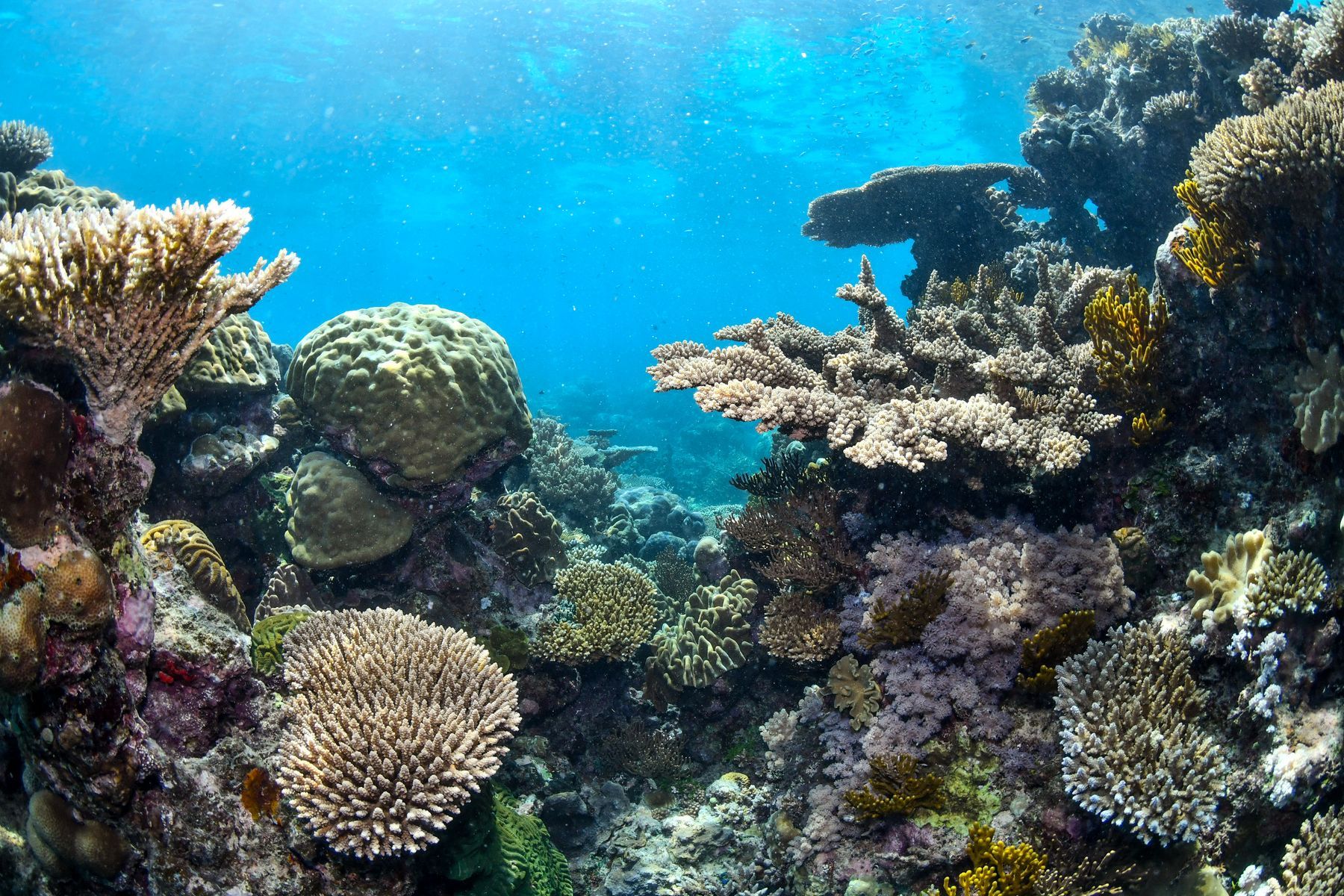
In the summer of 2024 the Great Barrier Reef went through the most widespread bleaching event ever recorded there. Two satellite heat maps, one from a calm year and one from 2024, show what changed. Here is how to read them, what the surveys found, and what it means for a reef trip now.
What happened on the Great Barrier Reef in 2024?
In early 2024 a marine heatwave pushed water temperatures over the reef well above their usual summer maximum, and the corals bleached from the far north to the south. The Australian Institute of Marine Science (AIMS) and the Great Barrier Reef Marine Park Authority (the Reef Authority) confirmed a mass bleaching event in March 2024, the fifth since 2016.
It was not only an Australian event. On 15 April 2024 the US National Oceanic and Atmospheric Administration (NOAA) confirmed the fourth global coral bleaching event on record, and listed the Great Barrier Reef among the reefs where mass bleaching had been confirmed since early 2023. The summer also brought two cyclones and severe floods. For how bleaching works in general, see our explainer on the Great Barrier Reef and mass bleaching.
What are Degree Heating Weeks and how do you read the map?
Degree Heating Weeks (DHW) measure how much heat has built up on a reef over the past 12 weeks, combining how hot the water is and for how long. One DHW is roughly one week at 1°C above the usual summer maximum. NOAA's Coral Reef Watch turns DHW into alert levels, and our maps colour each reef by its peak level that year:
- Below 4 DHW: a possible risk of bleaching at most.
- Alert Level 1 (4 to 8): risk of reef-wide bleaching.
- Alert Level 2 (8 to 12): risk of reef-wide bleaching and death of heat-sensitive corals.
- Alert Level 3 (12 to 16): risk of many coral species dying.
- Alert Levels 4 and 5 (16 and over): risk of severe death, more than 50% of corals at Level 4 and more than 80% at Level 5. NOAA added Levels 3 to 5 in December 2023 because of record heat.
Compare the two maps below. In 2010 almost every reef stays pale blue, and AIMS records no mass bleaching that year. In 2024 the same reefs turn yellow and orange along almost the whole coast, with the hottest water in the south, from the Swain Reefs down to the Capricorn Group.
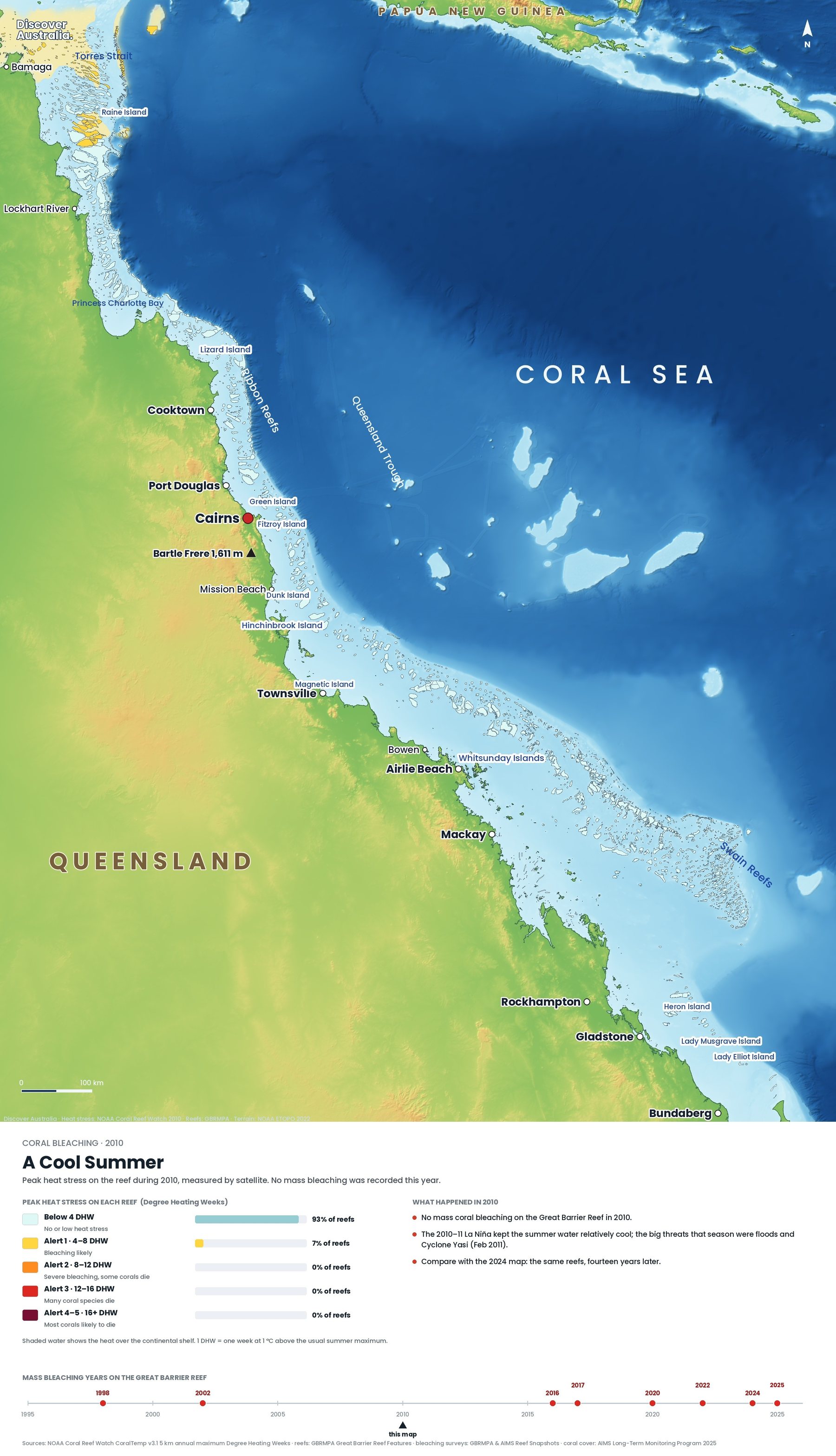
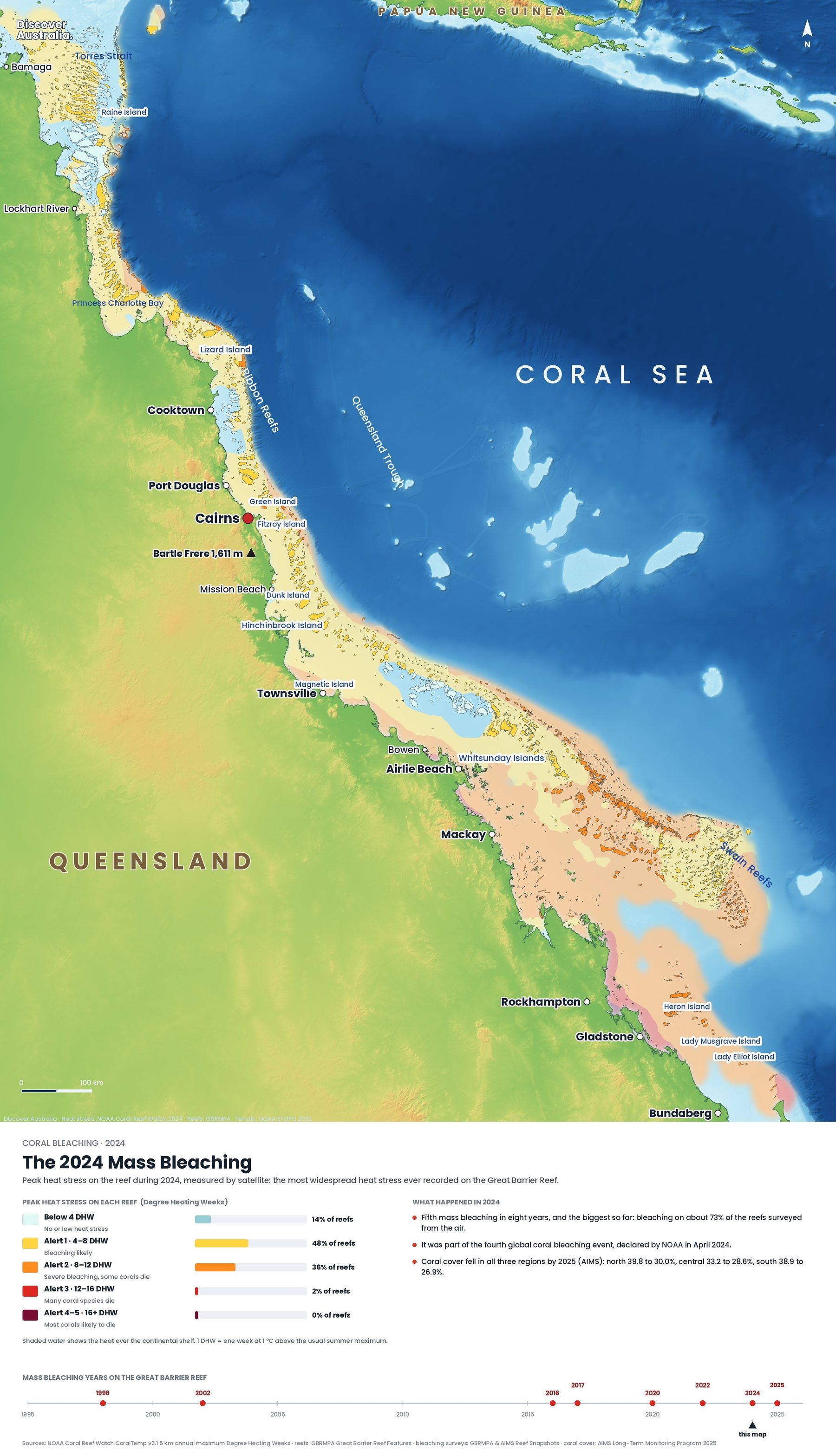
A satellite map shows risk, not damage. Whether corals actually bleach or die is checked from planes and by divers.
How bad was the 2024 bleaching?
It was the largest bleaching footprint ever recorded on the reef. AIMS and Reef Authority teams flew over 1,080 reefs from the Torres Strait to the Capricorn Bunker Group, and found bleaching on 73% of the reefs surveyed in the Marine Park, against 6% in the Torres Strait.
- Severity: AIMS reported that 39% of Marine Park reefs had very high or extreme bleaching, meaning more than 60% of their coral cover was white.
- Heat: 46% of reefs had record heat stress, and nearly 60% were exposed to levels that cause bleaching.
- Reach: for the first time, extreme bleaching (more than 90% of coral cover) was seen in all three regions, north, central and south.
Tourism operators added their own checks: according to the Reef Authority's April 2024 Reef Snapshot, they completed 15,450 reef health surveys at 272 tourism sites that summer.
How did 2024 compare with 2016, 2017, 2020 and 2022?
2024 covered more reefs than any earlier event. Earlier events were measured in different ways, so the figures below are not exactly like for like.
| Year | Mass bleaching? | Extent (AIMS) |
|---|---|---|
| 1998 | Yes, first recorded | 74% of inshore and 21% of offshore reefs bleached (654 surveyed) |
| 2002 | Yes | 54% of 641 surveyed reefs bleached |
| 2010 | No | Cool summer, no mass bleaching recorded |
| 2016 | Yes | Heat able to kill coral over more than 30% of the reef, worst in the north |
| 2017 | Yes | Severe bleaching in the central third; with 2016, two-thirds of the reef hit |
| 2020 | Yes | Severe bleaching on 25% of surveyed reefs; nearly 80% exposed to bleaching heat |
| 2022 | Yes | Severe bleaching on 43% of surveyed reefs, worst in the centre |
| 2024 | Yes | 73% of surveyed Marine Park reefs bleached; 39% very high or extreme |
| 2025 | Yes, mainly north | 9% of 258 surveyed reefs with very high bleaching |
The pattern matters as much as the numbers. Before 2016 the reef had two mass bleachings in 18 years. Since 2016 there have been six in ten years, which leaves little time for corals to recover between them.
Did the corals die after the 2024 bleaching?
Many did. Not every bleaching kills (AIMS found the 2020 event did not cause substantial coral loss), but 2024 did. AIMS divers saw dead coral in every region by April 2024, and the AIMS Long-Term Monitoring Program, which surveyed 124 reefs between August 2024 and May 2025, named the bleaching as the main cause of coral death that year.
- North: hard coral cover fell from 39.8% to 30.0%, the largest yearly drop recorded there.
- Central: from 33.2% to 28.6%.
- South: from 38.9% to 26.9%.
Fast-growing Acropora corals, the branching and plate corals that usually rebuild reefs quickly after damage, were among the hardest hit. Cyclones, flood water and crown-of-thorns starfish added to the losses, and some single reefs lost up to 70.8% of their coral.
Was 2024 the worst bleaching for the southern reef?
Yes, by the measures AIMS uses. The southern reef had escaped the worst of 2016 and 2017, but in 2024 the Reef Authority reported that the southern region had the highest levels of bleaching. AIMS later recorded a 30.6% relative fall in coral cover there, the largest region-wide yearly decline yet recorded on the reef, leaving it below its long-term average of 29.3%. This includes the reefs around Heron, Lady Musgrave and Lady Elliot islands at the southern end of Queensland's reef.
What happened on the reef in 2025?
The reef bleached again in 2025, the sixth mass bleaching since 2016, but less severely. Water was 1°C to 2.5°C above average, peaking in March, and the bleaching was mostly in the north. AIMS aerial surveys found medium to high bleaching on 41% of 162 inshore and mid-shelf reefs, but only 9% of the 258 reefs surveyed had very high bleaching.
AIMS surveys from August 2025 to June 2026 found only limited coral death from it. Coral cover rose to 35.1% in the north and 31.6% in the centre, both above their long-term averages, while the south held at 26.4%. AIMS says the 2025 heat likely stopped cover from rising further.
Can you still visit the Great Barrier Reef after the bleaching?
Yes. Bleaching does not close the reef, and day trips, island stays and liveaboards run as normal. What you see depends on where and when you go:
- Live coral: in 2026 AIMS found 106 of 121 surveyed reefs had 10% to 50% hard coral cover, and cover in the north and centre was above its long-term average.
- Dead patches: on some reefs you will see grey, algae-covered coral skeletons beside healthy colonies, and new small corals settling on top.
- Bleaching season: bleaching shows late in summer, when heat stress peaks (March in 2025, February in 2026, according to AIMS). In years without a heatwave, living corals keep their normal colour.
Your ticket includes the Reef Authority's environmental management charge, which helps fund reef management, and you can report what you see through its Eye on the Reef program. To pick a trip, read our guides to choosing a Great Barrier Reef tour and snorkelling and diving sites, or start with our Great Barrier Reef guide. For why green zones matter for recovery, see Australia's marine parks explained.
Facts checked October 2026. Figures come from AIMS, the Reef Authority and NOAA; survey methods differ between years, and new results are published each year, so check the latest AIMS reef condition report for current coral cover.
- Coral bleaching events (Australian Institute of Marine Science)
- Report: Aerial surveys of the 2024 mass coral bleaching event on the Great Barrier Reef (AIMS, data.gov.au)
- Reef Snapshot details widespread coral bleaching on the Great Barrier Reef (Great Barrier Reef Marine Park Authority)
- Aerial surveys confirm widespread bleaching across Great Barrier Reef (Great Barrier Reef Marine Park Authority)
- NOAA confirms fourth global coral bleaching event, 15 April 2024 (NOAA, via ICRI)
- Coral Bleaching Alert Area and alert levels (NOAA Coral Reef Watch)
- Degree Heating Week product explained (NOAA Coral Reef Watch)
- Annual Summary Report on Coral Reef Condition 2024–25 (Australian Institute of Marine Science)
- Annual Summary Report on Coral Reef Condition 2025–26 (Australian Institute of Marine Science)