The Whitsundays are a cluster of forested islands off the Queensland coast, ringed by calm water, white sand and the Great Barrier Reef. Here is how to choose a base, how to get there, when the Hill Inlet swirls look best, and how to swim and camp safely.
How many islands are in the Whitsundays?
There are 74 islands in the Whitsundays, according to the regional tourism body. Most are uninhabited and protected within Whitsunday Islands National Park, which starts about 25 km east of Airlie Beach and is reached only by boat or air.
Only a few islands have resorts, including Hamilton, Daydream and Hayman. The largest, Whitsunday Island, has no resort: it is home to Whitehaven Beach, Hill Inlet, national park campsites and the new Ngaro Track.
Should you stay in Airlie Beach or on Hamilton Island?
Stay in Airlie Beach for choice and value, or on Hamilton Island for an island holiday with less travel. Both are good bases for Whitehaven and the reef.
- Airlie Beach: a mainland town with the widest range of beds, restaurants and tours. Most day trips, sailing boats and bareboat charters leave from the Port of Airlie or nearby Shute Harbour. The Airlie Beach Lagoon, open to everyone, is patrolled by lifeguards from 5:30am, until 9pm from September to May and 7pm from June to August.
- Hamilton Island: an inhabited resort island with its own airport, marina, shops and restaurants, where most visitors get around by hired buggy. Reef boats leave from here too, and the trip to Hardy Reef is about an hour shorter than from Airlie.
You can combine both. A ferry between the Port of Airlie and Hamilton Island costs A$74.50 per adult each way on the current Cruise Whitsundays fares.
How do you get to the Whitsundays?
Fly into either Whitsunday Coast Airport near Proserpine or Hamilton Island Airport. There is no international airport, so most overseas visitors connect through Brisbane, Sydney or Melbourne.
- Whitsunday Coast Airport (Proserpine): about 12 km south of Proserpine and around 30 minutes by road from Airlie Beach. Jetstar, Virgin Australia and Skytrans fly direct from Brisbane, Sydney, Melbourne and Cairns. A coach and ferry combination to Hamilton Island costs A$94.50 per adult.
- Hamilton Island Airport: also called the Great Barrier Reef Airport, with direct Qantas and Virgin Australia flights from Sydney, Melbourne and Brisbane. The resort area is about five minutes away.
Driving up the coast is also popular, but distances in Queensland are long. Allow at least two nights to make the trip to the islands worthwhile.
When is the best time to see Hill Inlet and Whitehaven Beach?
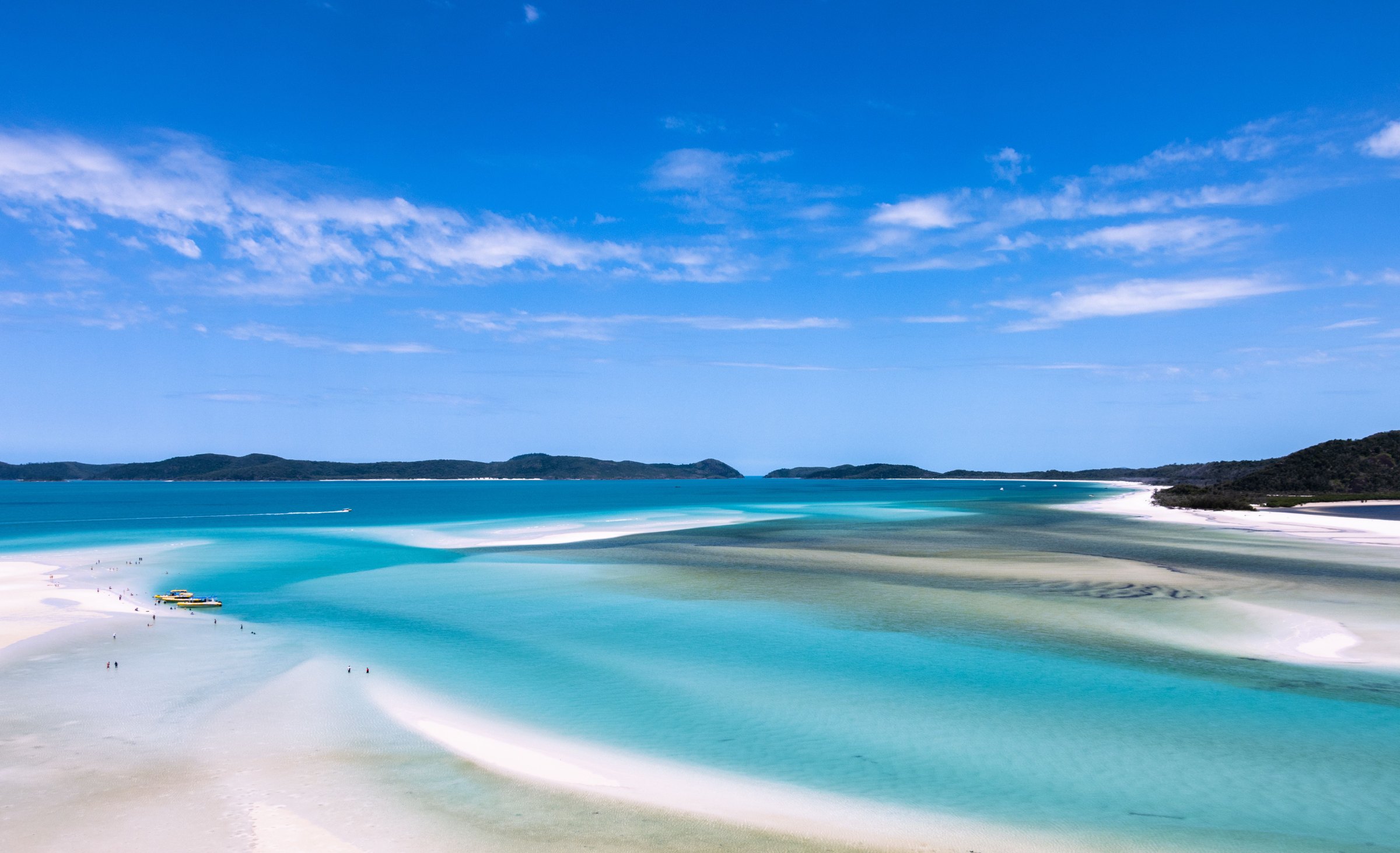
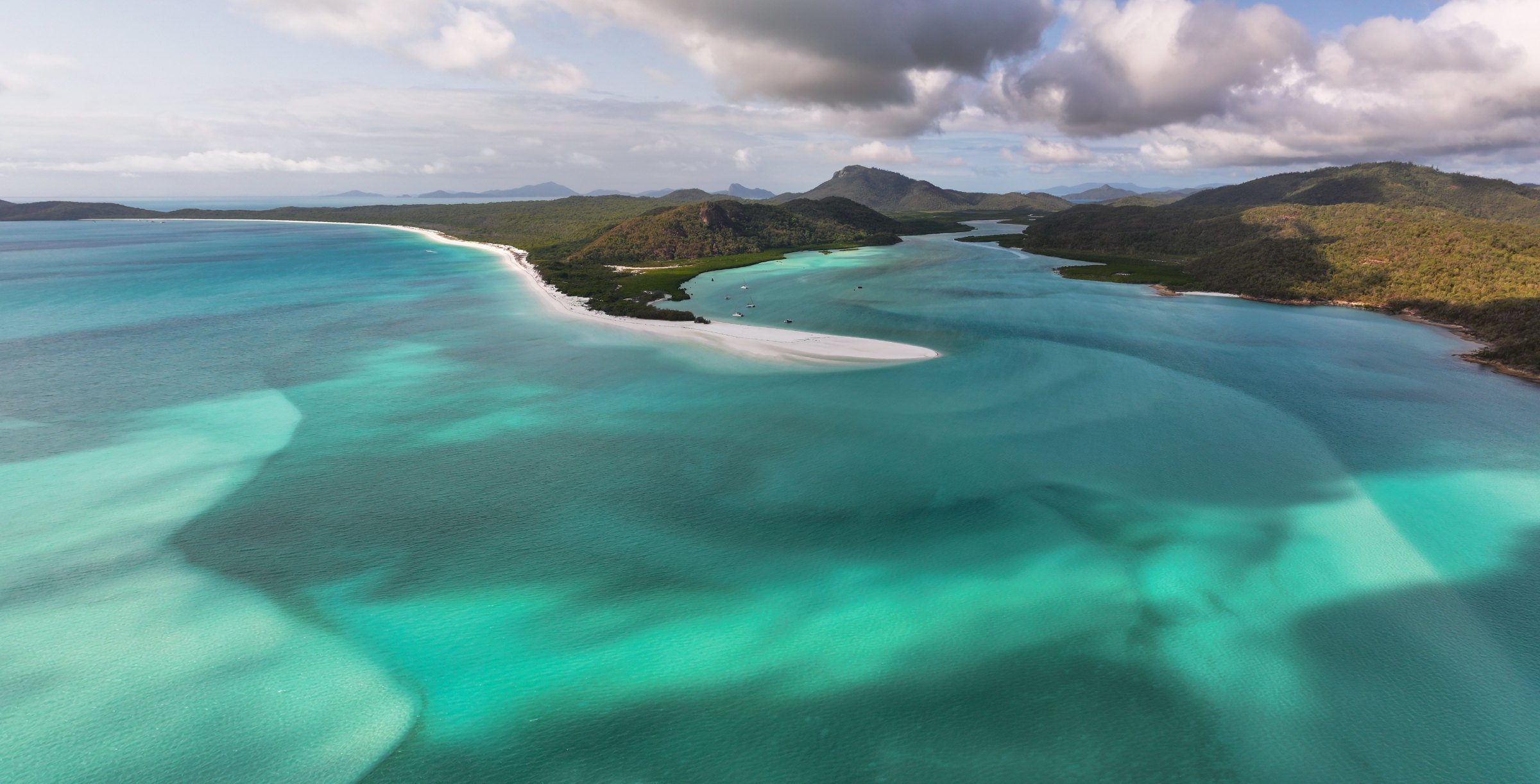
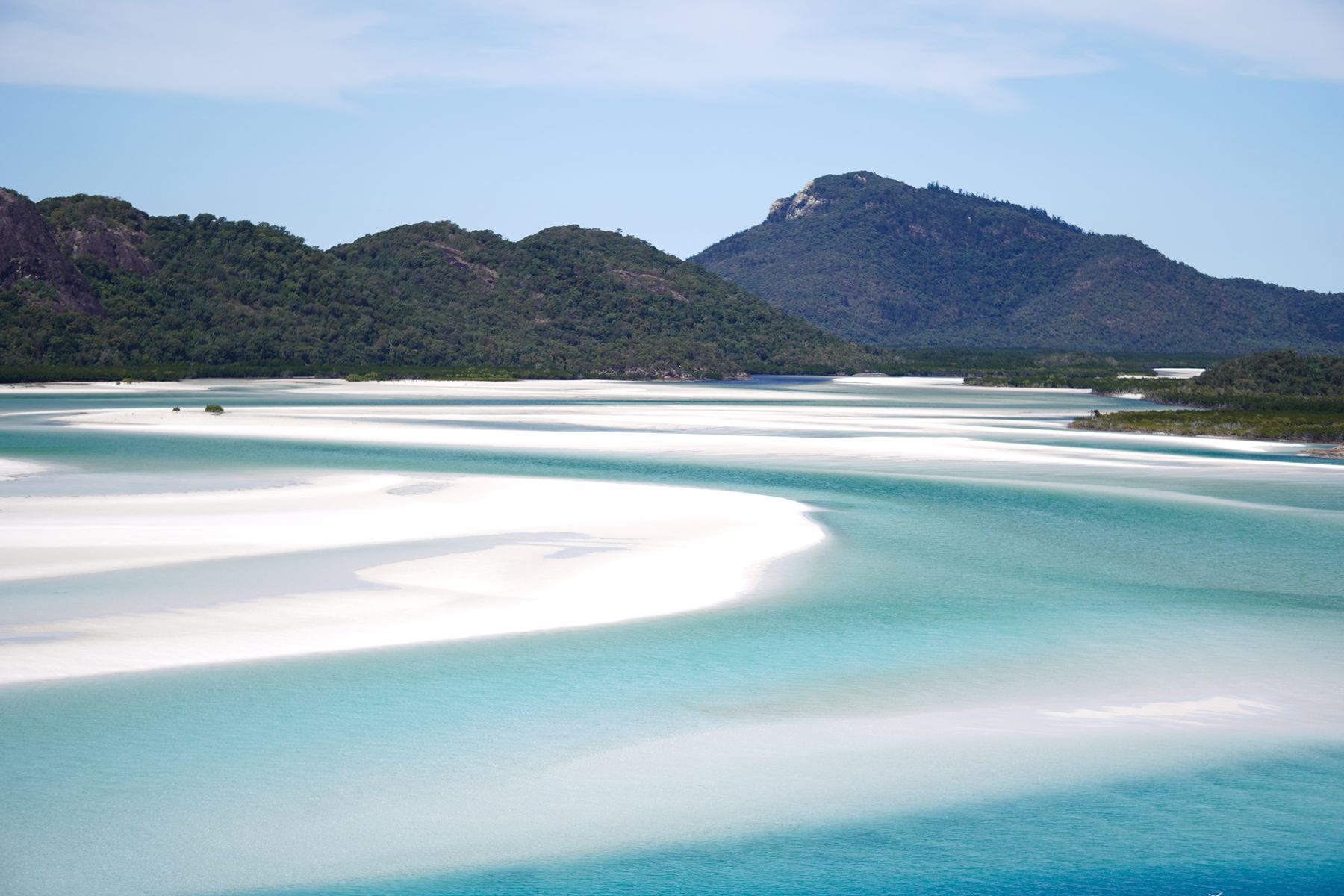
Go at mid to low tide for the classic Hill Inlet swirls, when more white sand shows through the water. Early morning brings softer light, cooler walking and fewer people at the lookout. Most tour operators time their visits around the tide for you.
Whitehaven Beach runs for about 7 km along the eastern side of Whitsunday Island. Its sand is 98% pure silica, so it stays cool underfoot even on hot days. Our guide to the best beaches in Australia compares it with Bondi, Noosa and Cable Beach.
To see Hill Inlet from above, tours land at Tongue Bay for the Hill Inlet Lookout Track. It is a moderate, uphill walk of 1.3 km return, and Queensland Parks says to allow 40 minutes. Boats can anchor in Tongue Bay and Hill Inlet, but access is possible only from mid to high tide, so private boaters need to plan carefully. There is no mobile reception at Whitehaven Beach or Tongue Point.
Should you do a day trip, an overnight sail or a bareboat charter?
A day trip suits most visitors with limited time, an overnight sail suits travellers who want quiet anchorages, and a bareboat suits groups with real boating experience.
- Day trips: half-day and full-day cruises visit Whitehaven, Hill Inlet or both, often with snorkelling and lunch. They leave from Airlie Beach, Hamilton Island and some resort islands.
- Overnight sailing: multi-day trips on sailing boats reach bays that day boats skip and let you see Whitehaven early or late, when it is quiet. Group sizes and comfort vary a lot, so compare cabins, meals and how many people share the boat.
- Bareboat charters: you hire the yacht and skipper it yourself. Queensland does not require a formal boat licence for bareboating, but operators assess your skills and may ask for proof of experience. Expect a briefing on navigation, weather, anchorages and radio use before you leave the marina.
| Base or trip type | Best for | From price (adult) |
|---|---|---|
| Whitehaven Southern Lookout cruise (half day) | A short first look at Whitehaven | From A$139 |
| Whitehaven Beach and Hill Inlet cruise | The beach plus the Hill Inlet lookout | From A$255 |
| Day sail on a sailing catamaran | Sailing, Whitehaven and snorkelling in one day | From A$235 |
| Full-day trip to Reefworld, Hardy Reef | Outer reef snorkelling, non-swimmers welcome | From A$295 |
| National park camping | Self-sufficient campers on a budget | A$7.75 per person per night |
| Ferry, Port of Airlie to Hamilton Island | Splitting your stay between two bases | A$74.50 each way |
Cruise prices are Cruise Whitsundays "from" fares checked in October 2026 and change with season and demand. Camping fees are the 2026–27 Queensland rate.
Can you see Heart Reef and the outer reef from the Whitsundays?
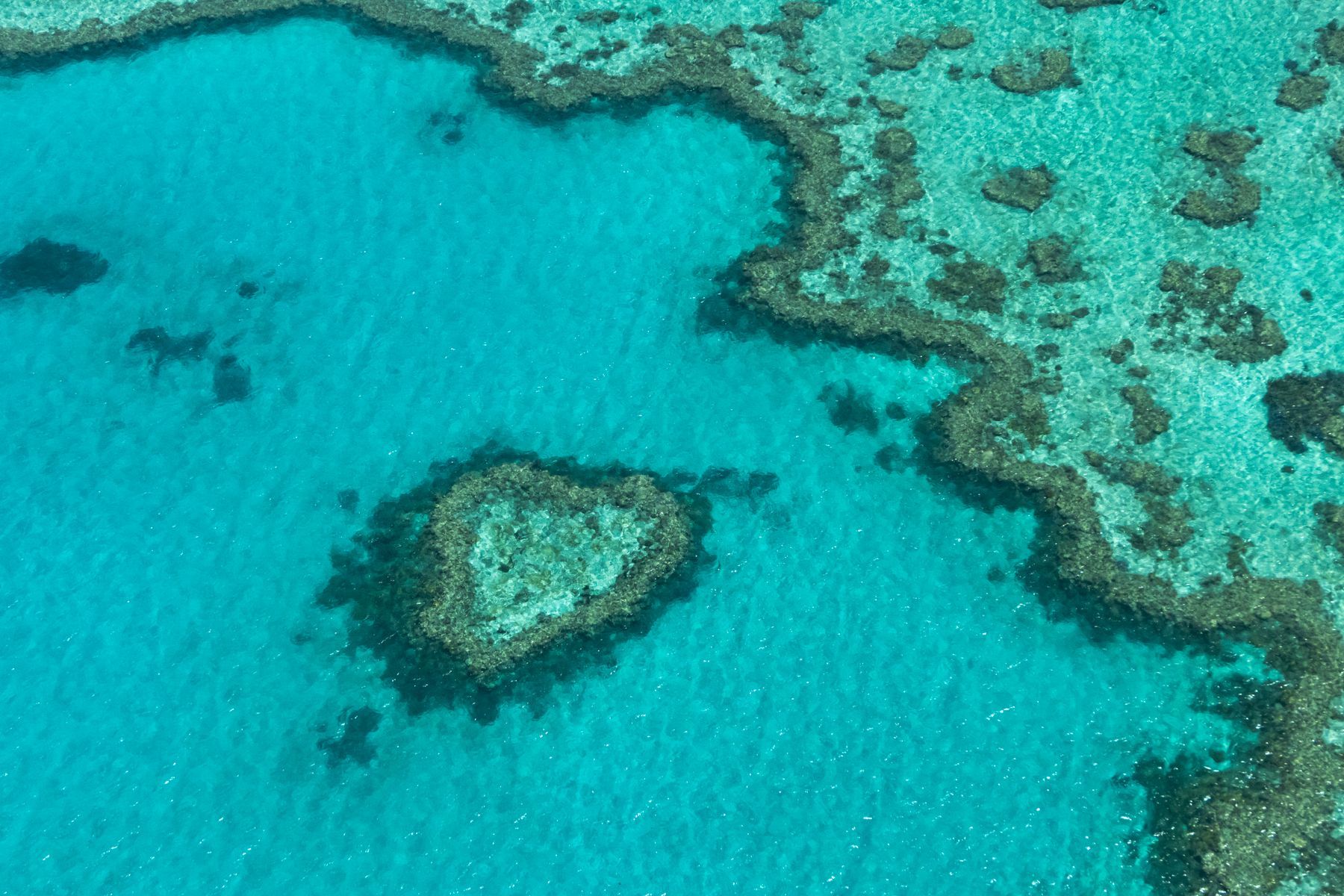
Yes, but you can only see Heart Reef from the air. This small heart-shaped reef sits within Hardy Reef, and its protected status means visitors cannot snorkel or dive there. Helicopter, seaplane and light-plane flights from Airlie Beach and Hamilton Island fly over it, often with Whitehaven and Hill Inlet on the same route.
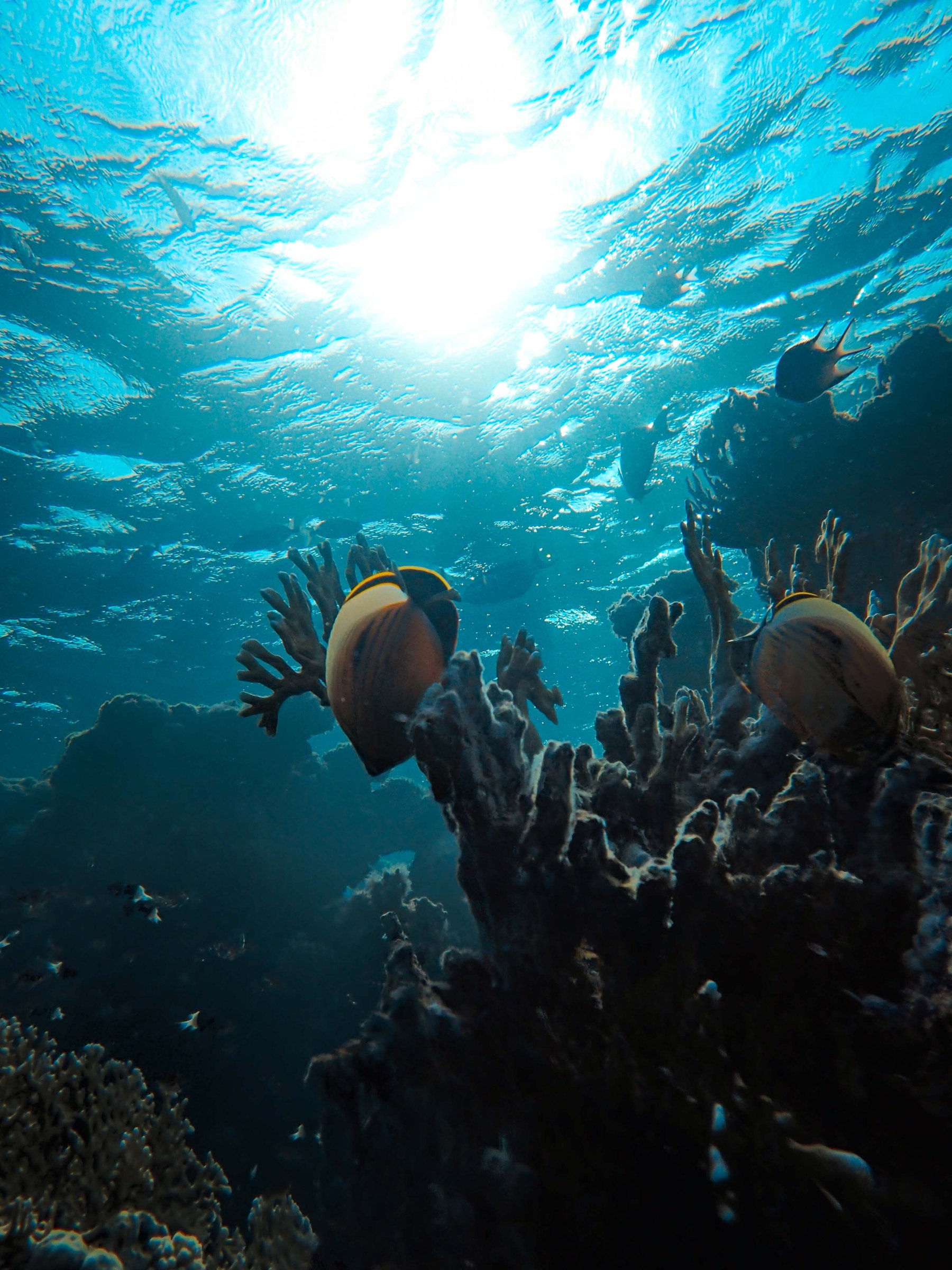
For the outer reef in the water, the main day trip goes to Reefworld, a moored pontoon at Hardy Reef about 39 nautical miles offshore. The boat takes about three hours from Airlie Beach or about two from Hamilton Island, and you get around four hours at the reef. Snorkel gear, stinger suits, lunch, a semi-submarine and an underwater observatory are included, and a helicopter flight over Heart Reef can be added on board.
Our guide on how to choose a Great Barrier Reef tour compares pontoons, smaller boats and liveaboards, and Great Barrier Reef snorkelling and diving covers the best sites.
When is the best time to visit the Whitsundays?
The Whitsundays are a year-round destination, and the right month depends on what you want to do.
- Stinger season: in tropical Queensland it typically runs from November to May. Stinger suits are standard on tours, and Queensland Parks warns that dangerous stingers can be present at any time of year.
- Whales: humpback whales come to the Whitsundays to give birth and raise calves. The Reef Authority says the migration runs through to September, with early sightings as soon as May. Most of the Whitsundays is a whale protection area where boats must stay 300 m from whales.
- Weather: wind and sea conditions can cancel reef trips and sailing days at any time of year, so leave a spare day in your plans.
For month-by-month weather, crowds and school holidays across the country, see the best time to visit Australia.
Can you camp on the Whitsunday Islands or walk the Ngaro Track?
Yes. Whitsunday Islands National Park has campsites on several islands, including one at Whitehaven Beach, and every camper needs a permit booked online through Queensland Parks. Fees for 2026–27 are A$7.75 per person per night or A$31 per family, and children under five camp free.
- Getting there: book a camping transfer first, then your campsite. Some commercial operators drop off and collect campers.
- Bring everything: most islands have no fresh water, so carry at least 5 litres per person per day. Fires are banned, so cook on a gas or fuel stove.
- Whitehaven camping area: tents only, with toilets and picnic tables but no showers.
The Ngaro Track is a new 32 km, 3-day and 2-night hike across Whitsunday Island, opened for its first season in 2026. It runs one way from Whitehaven Beach to Hill Inlet, past island lookouts, a summit climb and a mangrove boardwalk over the upper reaches of Hill Inlet, with two purpose-built camps. Bookings are essential, groups are capped at 15 walkers, and the walking season is generally April or May to October. You can walk it independently or on a guided trip.
Is it safe to swim in the Whitsundays?
Swimming is generally safe on tours with a stinger suit and supervision, but there are no lifeguards on the islands and some places you should not swim at all.
- Cid Harbour: Queensland Parks says do not swim in Cid Harbour, on the western side of Whitsunday Island, because of the risk of shark attack. Do not clean fish or throw food scraps overboard at any anchorage.
- Stingers: wear a full-body stinger suit when you swim or snorkel. Follow official first aid if stung: leave the water, pour vinegar on the sting and call 000 for serious stings.
- Crocodiles: they can be present, so avoid swimming at dawn, dusk or night, and keep back from the water's edge.
- Remote help: medical help can be hours away. Never snorkel alone, and private boaters should carry an EPIRB or satellite phone.
Read more in ocean safety for visitors and our guide to dangerous animals in Australia.
Facts checked October 2026. Fares, camping fees, park alerts and track bookings change often; confirm with Queensland Parks and your operator before you travel.
- Whitsunday Islands National Park (Queensland Parks and Wildlife Service)
- Hill Inlet Lookout Track (Queensland Parks and Wildlife Service)
- Whitsunday Islands: visiting safely (Queensland Parks and Wildlife Service)
- Whitsunday Islands camping (Queensland Parks and Wildlife Service)
- Camping bookings and fees (Queensland Parks and Wildlife Service)
- Ngaro Track frequently asked questions (Queensland Parks and Wildlife Service)
- Whitehaven Beach and Hill Inlet (Tourism Whitsundays)
- Bareboating in the Whitsundays (Tourism Whitsundays)
- Heart Reef (Tourism and Events Queensland)
- About Whitsunday Coast Airport (Whitsunday Coast Airport)
- Hamilton Island Airport (Hamilton Island)
- Great Barrier Reef Full Day Adventure and Resort Connections fares (Cruise Whitsundays)
- Have a whale of a time this season (Great Barrier Reef Marine Park Authority)
- Marine stingers (WorkSafe Queensland)