A hire car is the easiest way to see Australia beyond the big cities, and most visitors can drive on the licence they already hold. The catch is that each state sets its own licence rules, the distances are huge, and the outback punishes poor planning. Here is what you need to know before you pick up the keys.
Can you drive in Australia with a foreign licence?
Yes. Visitors without a permanent visa can drive on a current overseas licence, but each state and territory sets its own time limit. You must carry it whenever you drive, and may only drive the vehicle types it covers.
If your licence is not in English, carry an International Driving Permit or an approved English translation with it.
| State or territory | Foreign licence rule for visitors | Source |
|---|---|---|
| New South Wales | Up to 6 months while you remain a temporary visitor. Non-English licence: carry an English translation or IDP. | NSW Government |
| Victoria | Drive on a valid licence; convert only if you live there more than 6 months. Non-English: NAATI or consulate translation, or a UN Convention IDP. | Transport Victoria |
| Queensland | Visitors can drive on a valid overseas licence. Non-English: carry a recognised English translation. | Queensland Government |
| Northern Territory | Up to 3 months. Licence must be in English, or carry an IDP or authorised translation. | NT Government |
| Western Australia | Visitors can use a current licence and must carry it. | WA Department of Transport |
| South Australia | No limit for short-term visitors while the licence is current. Non-English: IDP from the same country, or an approved translation (no photocopies). | SA Government |
| Tasmania | Visitors and temporary visa holders can drive on a current licence. Non-English: IDP or accredited translation. | Transport Tasmania |
| ACT (Canberra) | No limit while the licence is current. | Austroads |
Check the official page for every state on your route. You also need a visa to enter Australia at all; our guide to the ETA and eVisitor explains which one fits your passport.
Do you need an International Driving Permit for Australia?
Only if your licence is not in English, or if your rental company asks for one. An IDP is a translation, not a licence: it is only valid alongside your original licence and must come from the country that issued it.
- Get it before you fly: IDPs are issued by the motoring association in your home country, not in Australia.
- Rental desks: Sixt, for example, requires an IDP if your licence has no photo. Hertz asks for a full licence held for at least a year, or three years in Tasmania.
- Translations: South Australia accepts only originals from NAATI translators, consulates or approved government services.
Which side of the road do you drive on in Australia?
The left, everywhere in Australia. Ask a passenger to remind you as you pull out and at each turn.
- Speed limits: where no sign applies, the limit is 50 km/h in built-up areas and 100 km/h elsewhere in most states. The NT defaults to 60 km/h in towns and 110 km/h outside them, with 130 km/h on signed sections of the Stuart, Barkly, Victoria and Arnhem highways.
- School zones: in NSW the limit is 40 km/h, mostly 8 to 9.30am and 2.30 to 4pm on school days. Other states use similar zones; follow the signs.
- Alcohol: with a full licence you must not drive at 0.05 or higher.
- Phones: holding a phone while driving is illegal, including for calls, texts and maps.
- Seatbelts: everyone must wear one, and children need an approved restraint.
- Roundabouts: give way to every vehicle already on the roundabout, and signal left as you exit.
In Melbourne's CBD you will meet the hook turn, used to keep intersections clear for trams. Where a hook turn sign is shown, you turn right from the far left lane: move left and indicate right, pull forward to the far left of the intersection, and wait until the lights on the road you are entering turn green. Then check your right and turn. Our Victoria guide covers where to go once you are out of the city.
How do speed cameras, fines and tolls work?
Speed limits are strictly enforced, with fixed, mobile, red-light and average speed cameras. Penalties include fines and demerit points, and they rise the further over the limit you are and in school zones. NSW also applies double demerit points at set times. In a hire car, the fine goes to the rental company, which passes it on to you, often with a handling fee.
Sydney, Melbourne and Brisbane have cashless toll roads: a tag or a number-plate camera records each trip.
- Rental cars: most come with a tag. Hertz, for example, offers a flat daily toll pass or bills your actual tolls later plus a processing fee.
- Your own trip in NSW: you cannot pay in cash. Buy an eMU Casual Pass, or open an account or buy a pass up to 72 hours after travelling.
- Victoria: for CityLink, the West Gate Tunnel or EastLink, buy a pass before you travel or up to 3 days after.
What should you check before renting a car or campervan?
Check the age rules, the excess and which roads are banned. The big firms rent to drivers from 21, with a daily surcharge for drivers aged 21 to 24. Hertz sets 25 as the minimum for 4WDs and prestige cars.
- Excess: basic cover leaves you liable for a damage excess. Reducing it costs extra per day.
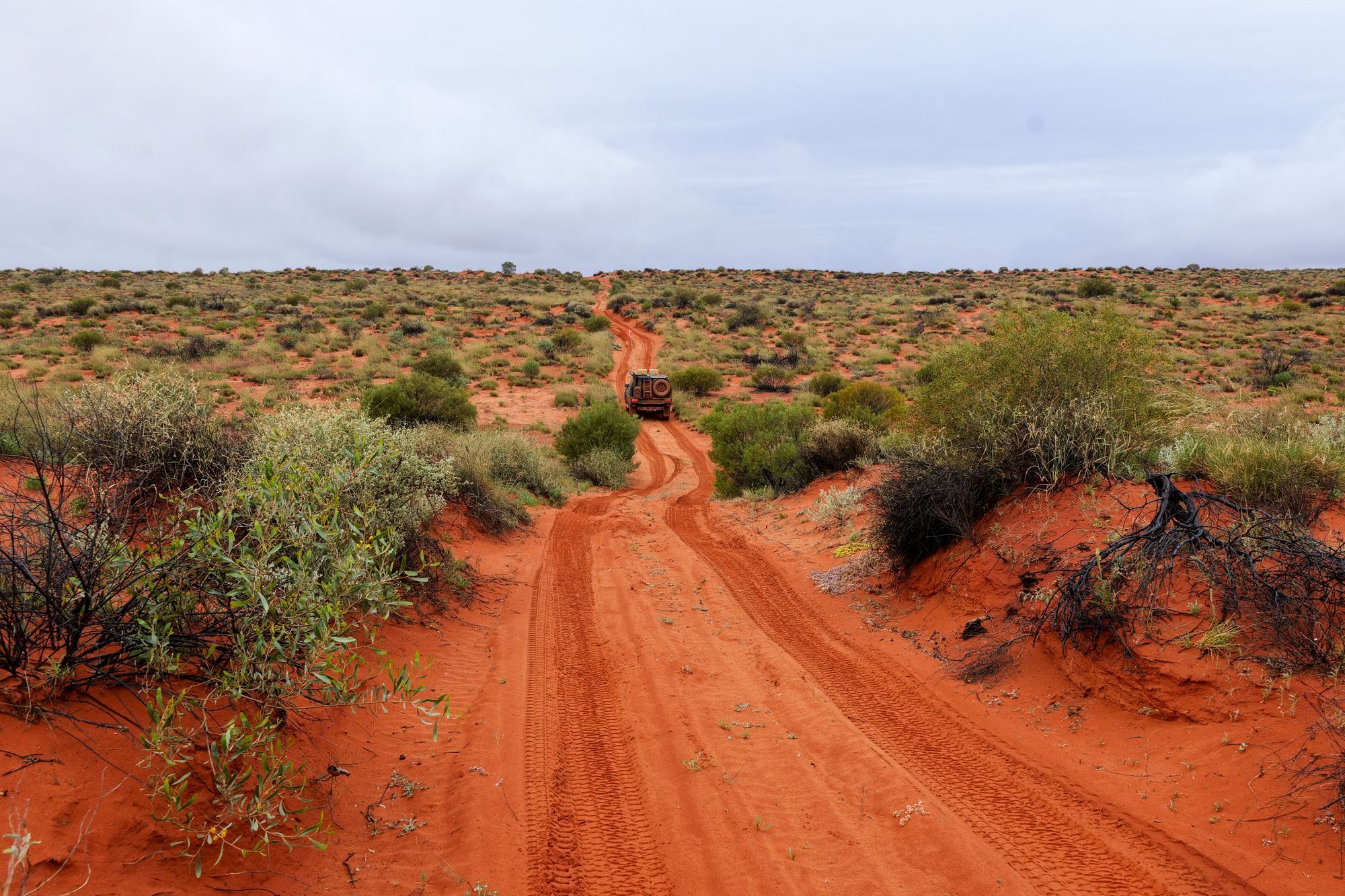
- Unsealed roads: this is the clause that catches most people. Sixt bans all non-4WD vehicles from unsealed roads; Hertz allows them only to reach accommodation and national parks, or where roads are under repair.
- Remote tracks: even 4WDs may be barred or uncovered on routes such as the Tanami Track, Gulf Track and Cape York, and beach driving is often banned. K'gari has its own rules and permits; see what to book ahead.
- Night driving: Sixt does not cover damage from animal strikes in remote areas between sunset and sunrise.
Budget for fuel, tolls and one-way fees as well as the daily rate; our trip cost guide has wider figures.
How far apart are Australia's major cities?
Much further than most visitors expect. Driving between state capitals often takes one to several days.
| Route | Road distance |
|---|---|
| Sydney to Melbourne | about 880 km |
| Sydney to Brisbane | about 920 km |
| Melbourne to Adelaide | about 730 km |
| Brisbane to Cairns | about 1,700 km |
| Adelaide to Alice Springs | about 1,530 km |
| Alice Springs to Darwin | about 1,500 km |
| Adelaide to Perth | about 2,560 km |
| Sydney to Perth | about 3,940 km |
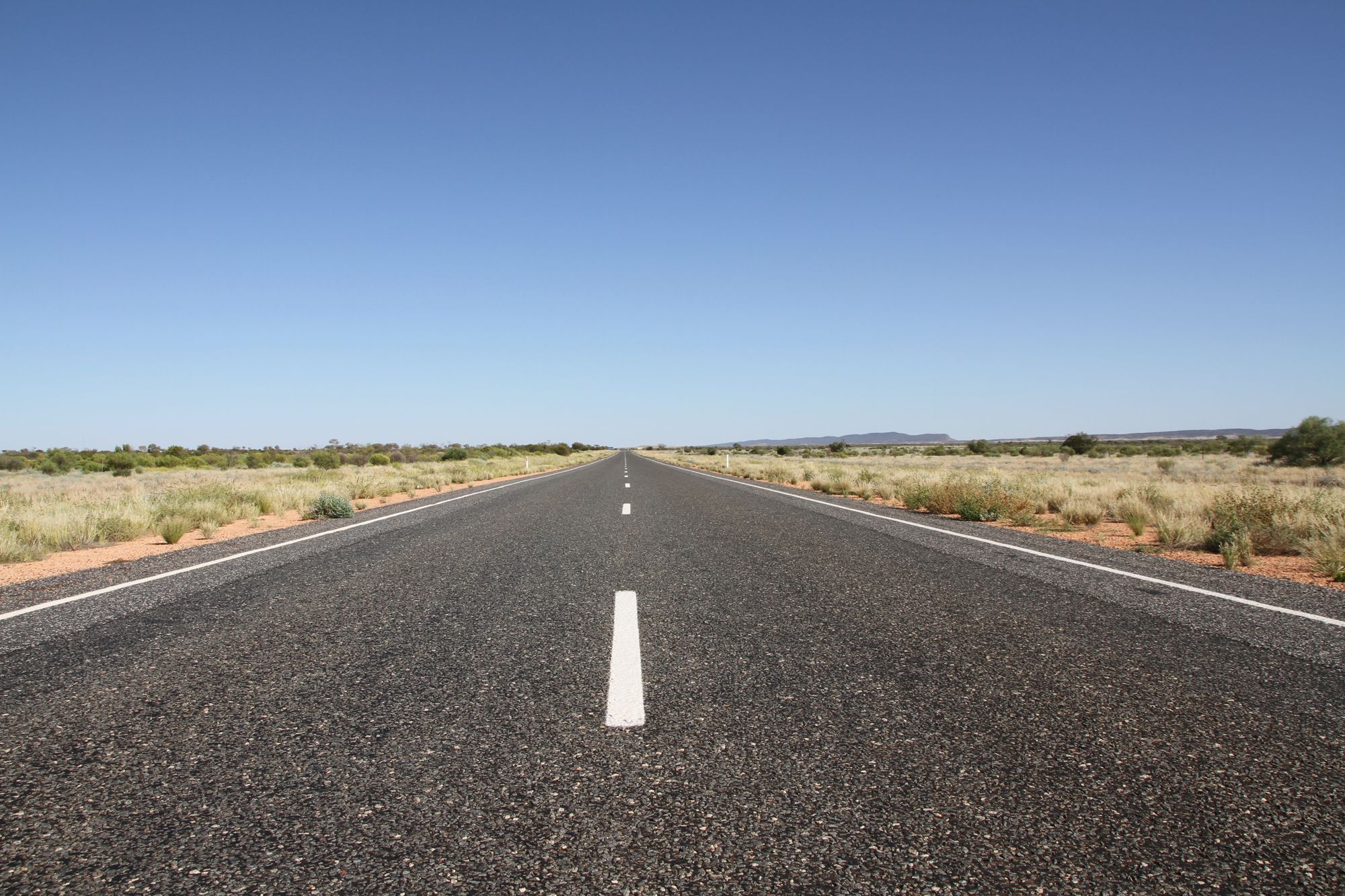
Figures are by the main highway and vary with your route. For shorter hops, such as Alice Springs to Uluru, see how many days you need. On the Adelaide to Perth run you cross the Nullarbor, including the 90 Mile Straight on the Eyre Highway: 146.6 km without a bend.
How do you stay safe driving in the outback?
Plan fuel, water and communications before you leave, and tell someone your route and when you expect to arrive.
- Fuel and water: fill up whenever you can, and carry enough water and food to last a few days if you break down, as the Royal Flying Doctor Service advises.
- Stay with your vehicle: if you break down or get lost, do not walk for help. The car is your shade and is far easier for rescuers to spot.
- Communications: carry a satellite phone or a 406 MHz personal locator beacon (PLB) on remote routes. AMSA says to try two-way contact first and activate a PLB only in a life-threatening situation. Register any beacon you own with AMSA.
- Road trains: these trucks can be as long as 10 cars. Passing one at 100 km/h can take up to 2.5 km, so only overtake on a long, clear straight. When one passes you, hold your speed and stay on the road.
- Wildlife: kangaroos, emus and cattle are most active around dawn and dusk. If one crosses, brake in a straight line rather than swerving, which can roll the car. See our guide to dangerous animals for the rest of the wildlife.
- Floods: never drive into floodwater, and check state road reports before unsealed routes.
- Fatigue: stop at least every 2 hours. In holiday periods, volunteer-run Driver Reviver stops in NSW offer free tea, coffee and a biscuit.
If you are heading to the Red Centre check your rental terms before leaving the highway, as many side roads in the Northern Territory are not.
What should you do after a car crash in Australia?
Stop, help as far as you safely can, and call 000 if anyone is hurt. Ask for an ambulance first, then police. Where mobile coverage is poor, the Royal Flying Doctor Service advises dialling 112.
- Make the scene safe: switch off the engine and turn on hazard lights.
- Exchange details: give your name and address, the registration number and the owner's details (the rental company) to the other drivers.
- When police come: in NSW, police attend if someone is injured, trapped or killed, a driver may be impaired, someone fails to exchange details, or a bus or truck must be towed.
- Report it: in NSW, if police do not attend but a car is towed or property is damaged, report it on 131 444 within 24 hours.
- Call your rental company straight away, as your rental agreement will set out what you must report.
Facts checked October 2026. Licence rules, speed limits, tolls and rental conditions change; confirm on the official state transport page and your rental agreement before you drive.
- Drivers visiting Australia or New Zealand (Austroads)
- Driving with an overseas or interstate licence in NSW (NSW Government)
- Overseas drivers help centre (VicRoads, Transport Victoria)
- Driving in Queensland on an interstate or overseas licence (Queensland Government)
- Driving in the NT for new residents and visitors (NT Government)
- Driving with your overseas licence in SA (Government of South Australia)
- Driving in Tasmania on an interstate or overseas licence (Transport Tasmania)
- International drivers: road rules (My Licence, Government of South Australia)
- Speed limits (NT Government)
- Hook turns (Transport Victoria)
- Travelling on toll roads (Service NSW)
- Outback survival: safe motoring (Royal Flying Doctor Service)
- Distress beacons brochure (Australian Maritime Safety Authority)
- What to do at a road crash (NSW Government)