Seeing a koala asleep in a gum tree is easier than most visitors think. Wild koalas live along the east and south-east coast, from near Cairns to South Australia, and a few places are almost guaranteed. Here is where to find them in the wild, which sanctuaries are worth your money, and how to keep the koalas safe.
Are koalas bears, and are they endangered?
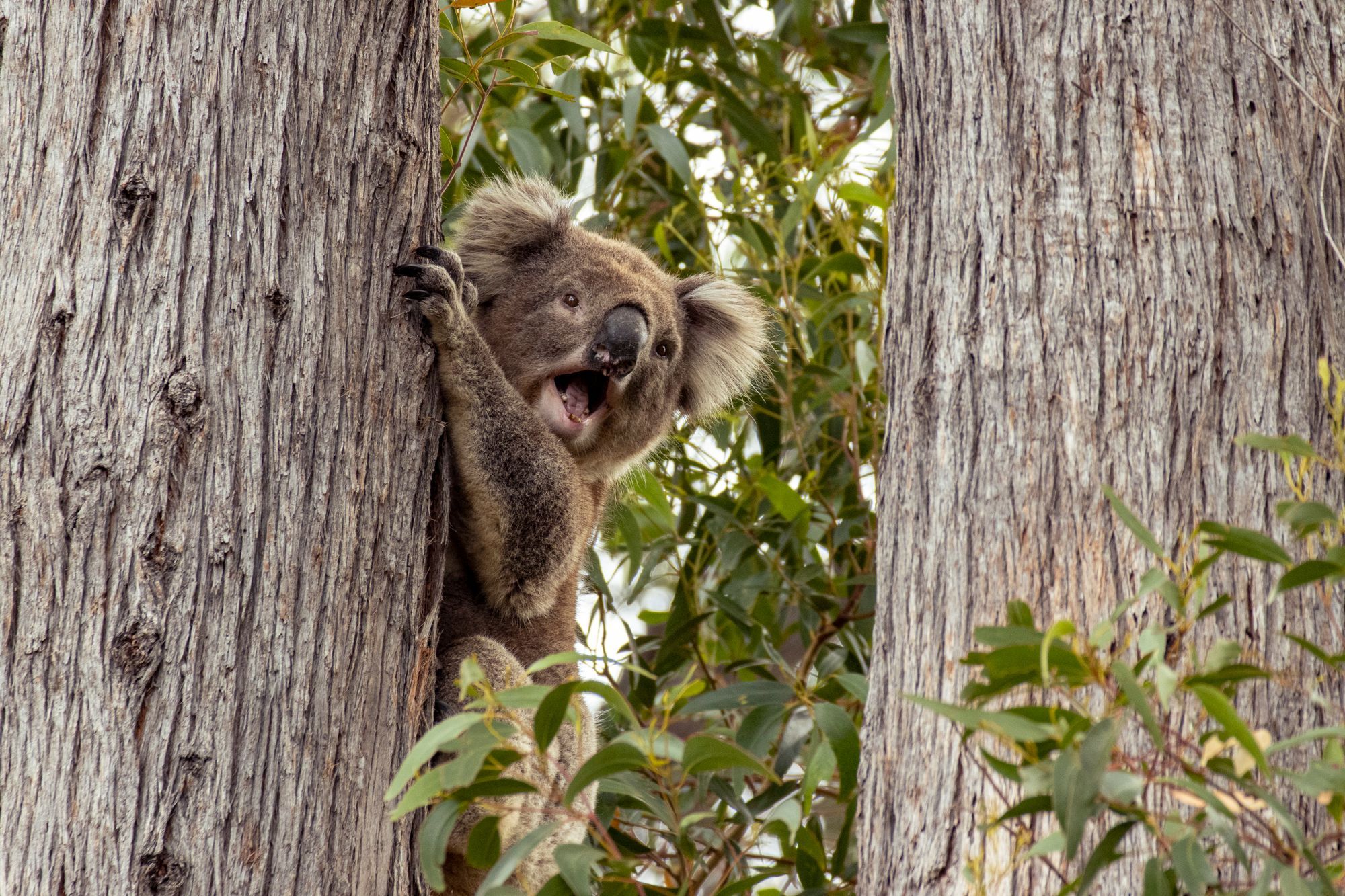
No, koalas are not bears. They are marsupials, and the young are raised in a pouch. They eat eucalyptus leaves, which give so little energy that a koala sleeps about 18 to 22 hours a day. That is why most of the koalas you see will be asleep in a fork of a tree.
In February 2022 the federal government moved koalas in Queensland, New South Wales and the ACT from Vulnerable to Endangered under national environment law. Populations in Victoria and South Australia are considered stable and are not listed. The main threats are habitat clearing, climate change, drought and bushfire, disease such as chlamydia, car strikes and dog attacks.
Where is the best place to see koalas in Australia?
For wild koalas, the most reliable spots are Kennett River on the Great Ocean Road, Raymond Island in Gippsland and the Forts Walk on Magnetic Island. For a guaranteed close look, a good sanctuary such as Lone Pine in Brisbane or the Koala Hospital in Port Macquarie is the answer. If you are still choosing which states to visit, our guide to where to go in Australia compares the regions.
| Place | State | Wild or sanctuary | Tip |
|---|---|---|---|
| Kennett River | Victoria | Wild | Scan the gums around the village |
| Raymond Island | Victoria | Wild | Free ferry for walkers, 1.2 km loop |
| Koala Conservation Reserve, Phillip Island | Victoria | Reserve in natural bush | Treetop boardwalks, A$17.50 adult |
| Healesville Sanctuary | Victoria | Sanctuary | See the wildlife hospital too |
| Forts Walk, Magnetic Island | Queensland | Wild | Go early, before the heat |
| Noosa National Park | Queensland | Wild | Try the Noosa Hill Walk |
| Lone Pine Koala Sanctuary | Queensland | Sanctuary | No holding since July 2024 |
| Currumbin Wildlife Sanctuary | Queensland | Sanctuary | Not-for-profit with a wildlife hospital |
| Port Stephens Koala Sanctuary | New South Wales | Sanctuary | 225 m Skywalk in the canopy |
| Koala Hospital, Port Macquarie | New South Wales | Hospital | Book tickets online |
| Cleland Wildlife Park | South Australia | Sanctuary | About 20 minutes from Adelaide |
| Hanson Bay Wildlife Sanctuary | South Australia | Sanctuary | Guided koala walks on Kangaroo Island |
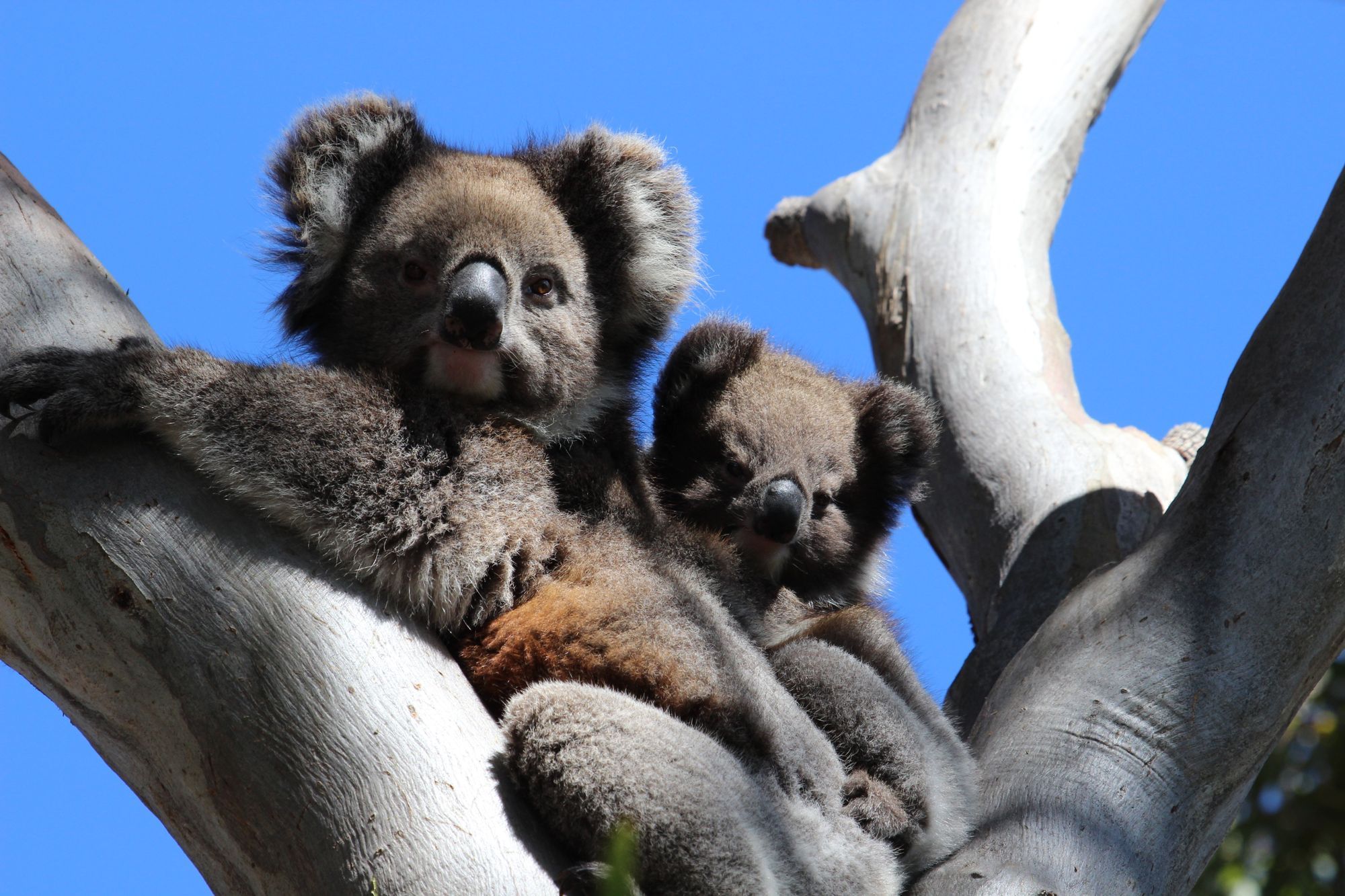
Where can you see wild koalas in Victoria?
Victoria is the easiest state for wild koalas, and its populations are healthy. Three places stand out.
- Kennett River: a small village on the Great Ocean Road where koalas feed in the trees of the Great Otway National Park. Walk slowly and look up.
- Raymond Island: a five-minute ferry from Paynesville, free for walkers and cyclists. The 1.2 km Koala Trail starts at Ferry Park and takes about 40 minutes.
- Phillip Island: the Koala Conservation Reserve has an 800 m Tree Top Koala Boardwalk that puts you level with the branches. Entry is A$17.50 for adults and it opens 10am to 5.30pm. Pair it with the evening penguin parade.
Where can you see wild koalas in Queensland and NSW?
In Queensland, the best bet is the Forts Walk on Magnetic Island, off Townsville. The park service says wild koalas are often easily seen resting in trees along the track. It is 4 km return, takes about two hours and ends with a steep climb up steps, so start early when it is cooler and wildlife is more active.
In Noosa National Park, koalas are often seen along the Noosa Hill Walk and sometimes on the other tracks. Combine a koala walk with the coastal track and a swim, and check our list of Queensland rainforest walks for more trails.
In New South Wales, wild koalas are harder to find because numbers have fallen. The Port Stephens Koala Sanctuary at One Mile is a good compromise: its 225 m Skywalk runs through the canopy, home to wild and recovering koalas, and you can watch treatment in its working hospital.
Which koala sanctuaries are worth visiting?
The best sanctuaries put koala care and rescue first and photos second. These are well established.
- Lone Pine Koala Sanctuary, Brisbane: opened in 1927 and recognised by Guinness World Records as the world's first and largest koala sanctuary. Koala Moments, a short photo encounter, costs A$35 and Koala Close Up with a carer starts at A$39, both on top of a day pass.
- Currumbin Wildlife Sanctuary, Gold Coast: a not-for-profit that runs the Currumbin Wildlife Hospital, where you can see vets at work.
- Koala Hospital, Port Macquarie: run by Koala Conservation Australia, open daily 8.30am to 4pm except Christmas Day. You can see resident koalas, the koala clinic and the Koalaseum.
- Healesville Sanctuary: about an hour from Melbourne in the Yarra Valley, run by Zoos Victoria. Its Australian Wildlife Health Centre treats sick and injured native animals.
- Cleland Wildlife Park: in the Adelaide Hills at Crafers. The public Koala Close-Up lets you stand beside a koala and give it a gentle pat.
- Hanson Bay Wildlife Sanctuary, Kangaroo Island: guided koala walks on the island's south coast cost from about A$40.
Can you hold a koala in Australia?
Only in some states. Koala holding is banned in New South Wales and Victoria on welfare grounds. Queensland and South Australia still allow it at some licensed wildlife parks. In South Australia, Gorge Wildlife Park runs public holding sessions at 11.30am and 2.30pm, and Cleland offers a private hold experience.
Fewer venues offer it each year. Lone Pine, Queensland's best-known sanctuary, stopped koala holding on 1 July 2024, and welfare groups are calling for a Queensland ban. Koalas are solitary animals and handling can stress them, so a close-up encounter with a keeper, without holding, is the kinder choice.
How do you spot a koala in the wild?
Look up, slowly. A sleeping koala looks like a grey ball wedged in a fork of a gum tree, and it barely moves.
- Go early: mornings are cooler and wildlife is more active.
- Bring binoculars: koalas often sit high in the canopy.
- Follow other people's eyes: on popular walks, a small group staring upwards usually means a koala.
- Expect low koalas in summer: in hot weather koalas often rest lower in trees, which is normal.
Join a local guided walk if you have only one chance. Guides know which trees the koalas are using that week.
How should you behave around wild koalas?
Keep koalas wild: stay back, keep quiet and never wake, touch, feed or give water to a koala. These are the park rules on Magnetic Island, and they apply everywhere.
- Keep dogs on leads: dog attacks are one of the most preventable threats to koalas.
- Drive slowly at dawn, dusk and night: koalas often cross roads at these times and are highly vulnerable to cars. Watch for koala warning signs.
- Give them space: do not crowd under a koala's tree or make noise to wake it.
The same respect applies to all wildlife. Our guide to visiting Australia respectfully covers wildlife and Country, and where to see sea turtles uses the same principles in the ocean.
What should you do if you find an injured koala?
Call a wildlife rescue line straight away and do not handle the koala yourself. Only licensed carers can take koalas into care.
- Queensland: 1300 ANIMAL (1300 264 625).
- New South Wales: the WIRES Rescue Line, 1300 094 737.
- Victoria: Wildlife Victoria, (03) 8400 7300.
While you wait, keep dogs and people away, give the koala shade if it is in the sun, and stay nearby until help arrives. Signs of a sick koala include sitting on the ground for a long time, inflamed eyes, a wet, dirty bottom, or not reacting when approached. Save the number for the state you are visiting before you drive.
Facts checked October 2026. Prices, opening hours and animal experiences change often; confirm with the park or sanctuary before you visit.
- Koalas: conservation status and threats (Department of Climate Change, Energy, the Environment and Water)
- Koala facts (National Geographic)
- Forts walk, Magnetic Island National Park (Queensland Parks and Wildlife Service)
- Noosa National Park (Queensland Parks and Wildlife Service)
- Kennett River (Great Ocean Road Coast and Parks Authority)
- Raymond Island Koala Trail (Visit Gippsland)
- Koala Conservation Reserve (Phillip Island Nature Parks)
- Koala experiences (Lone Pine Koala Sanctuary)
- Koala Hospital, Port Macquarie (Koala Conservation Australia)
- Koala experiences (Cleland Wildlife Park, Government of South Australia)
- Sick, injured, orphaned or dead koalas (Queensland Government)
- Help injured koalas (NSW Department of Climate Change, Energy, the Environment and Water)