Australia is often called a young country, but people have lived here for at least 65,000 years. The modern nation was shaped in just over two centuries of colonisation, convicts, gold, Federation, war and migration. Here is the short version, with the key dates and the debates you will hear about on your trip.
How old is Australia's human history?
People have lived in Australia for at least 65,000 years. That date comes from Madjedbebe, a rock shelter on Mirarr Country surrounded by Kakadu National Park in the Northern Territory. Researchers dated a dense layer of tools and other remains there in 2017, working under an agreement that gave the Mirarr Traditional Owners control over the dig and its findings.
Before that study, many archaeologists put first arrival closer to 47,000 years ago, and some still debate the exact figure. What is not in doubt is the depth of continuous culture. Aboriginal and Torres Strait Islander peoples are hundreds of distinct nations, each with its own Country, languages, law and stories. Many communities speak of the Dreaming rather than the older English word "Dreamtime", and terms differ from nation to nation.
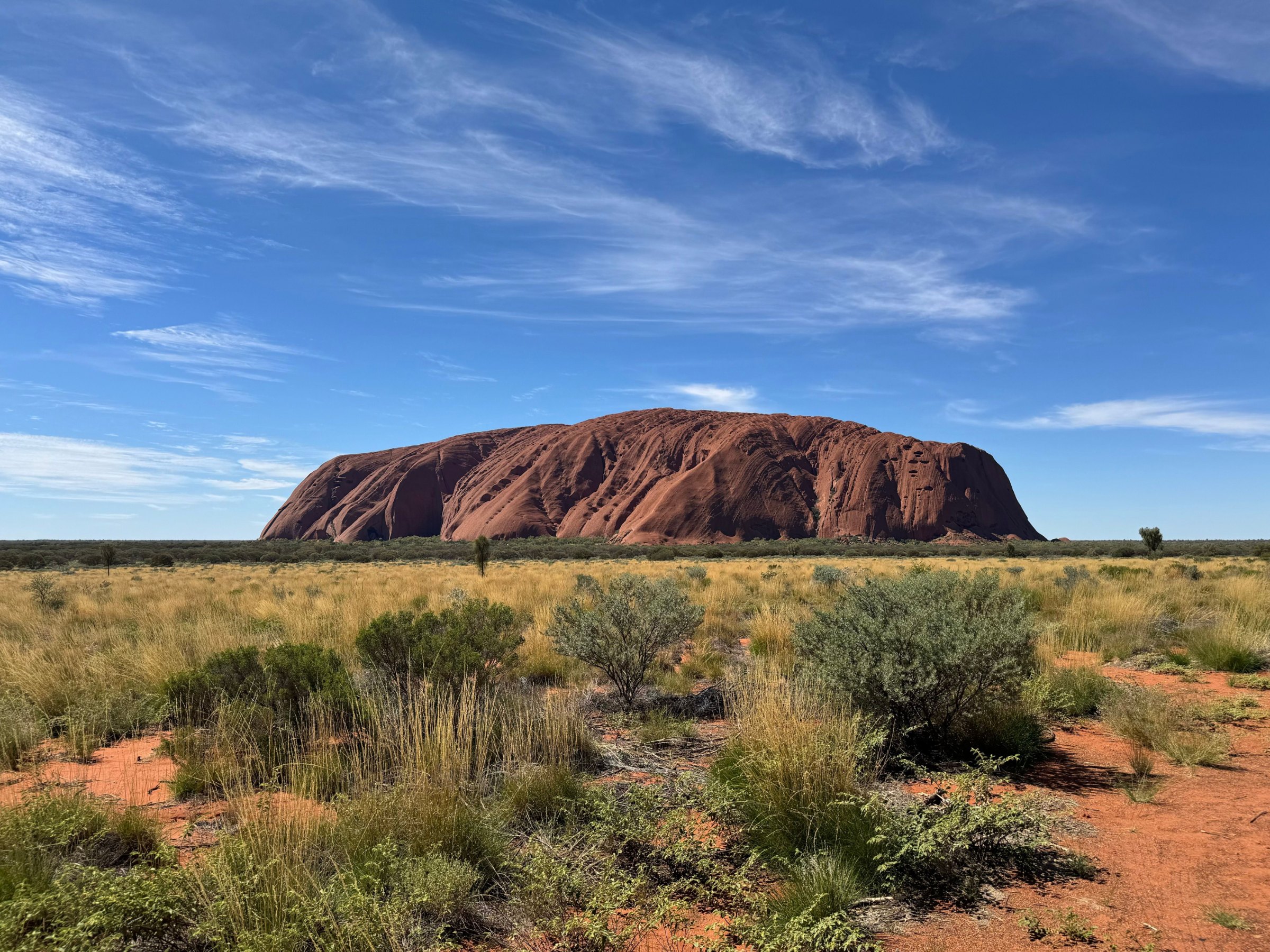
For many visitors, the most direct way into this history is on Country with Traditional Owners, at places like Uluru and Kata Tjuta.
Who discovered Australia?
First Nations peoples were here tens of thousands of years before any European ship, so "discovery" only describes the European side of the story. The first recorded European contact was Dutch.
- 1606: Willem Janszoon's Duyfken charted part of the west coast of Cape York. His crew clashed with Wik people, and the Duyfken Chart is the first known map of any part of Australia.
- 1616: Dirk Hartog landed on what is now Dirk Hartog Island, off Western Australia, and left an inscribed pewter plate.
- 1642: Abel Tasman sighted the land he called Van Diemen's Land, today's Tasmania.
- 1688 and 1699: the Englishman William Dampier reached the west coast, later making landfall at Shark Bay.
- 1770: James Cook, in HMB Endeavour, spent eight days at Kamay (Botany Bay), where he met Gweagal people, then mapped the east coast.
On 22 August 1770 Cook wrote that he claimed the east coast for Britain on an island in the Torres Strait, naming it New South Wales. The Kaurareg, Traditional Owners of that island, say no such ceremony took place there, and historians still discuss what happened.
When and why did Britain colonise Australia?
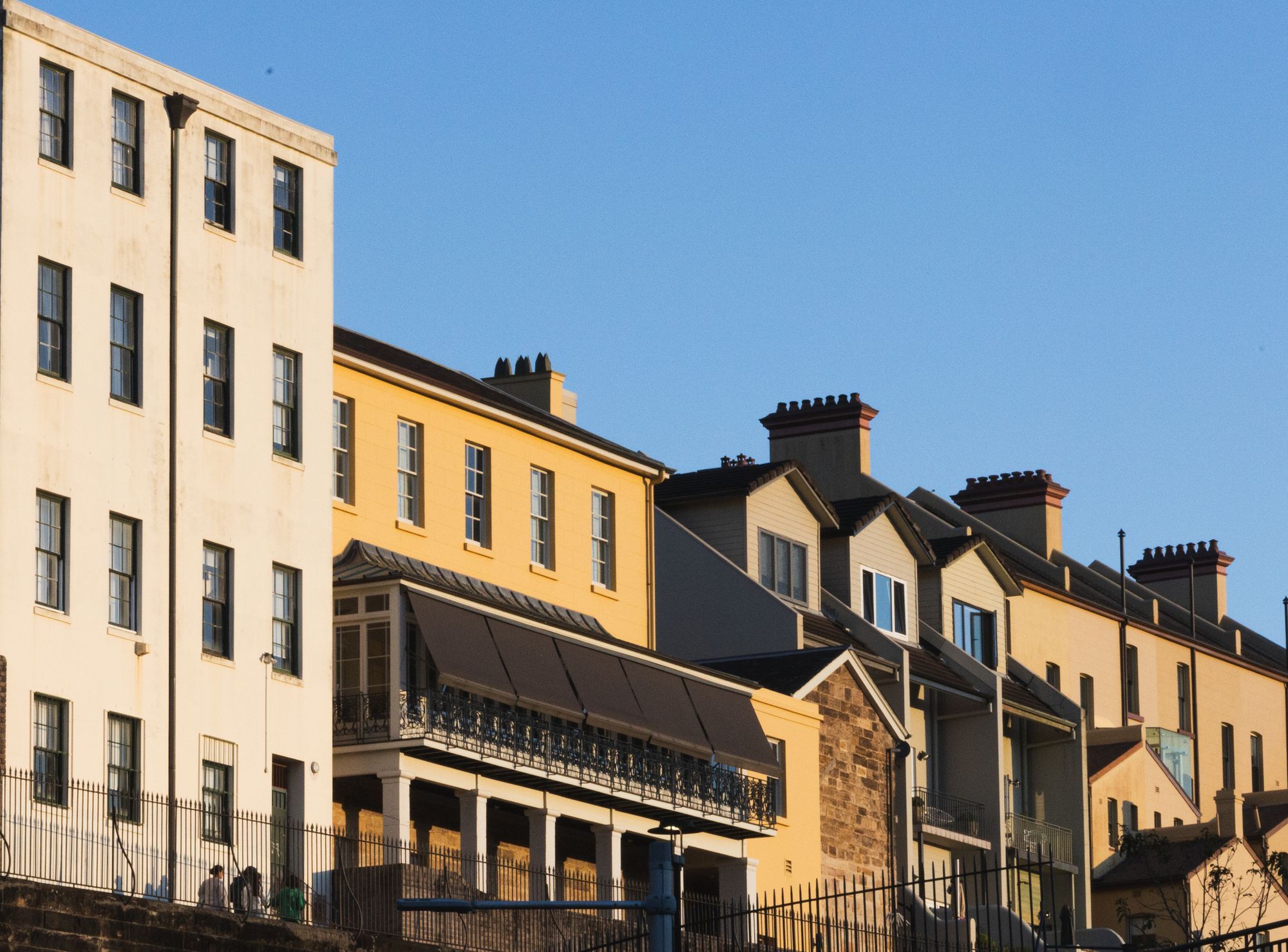
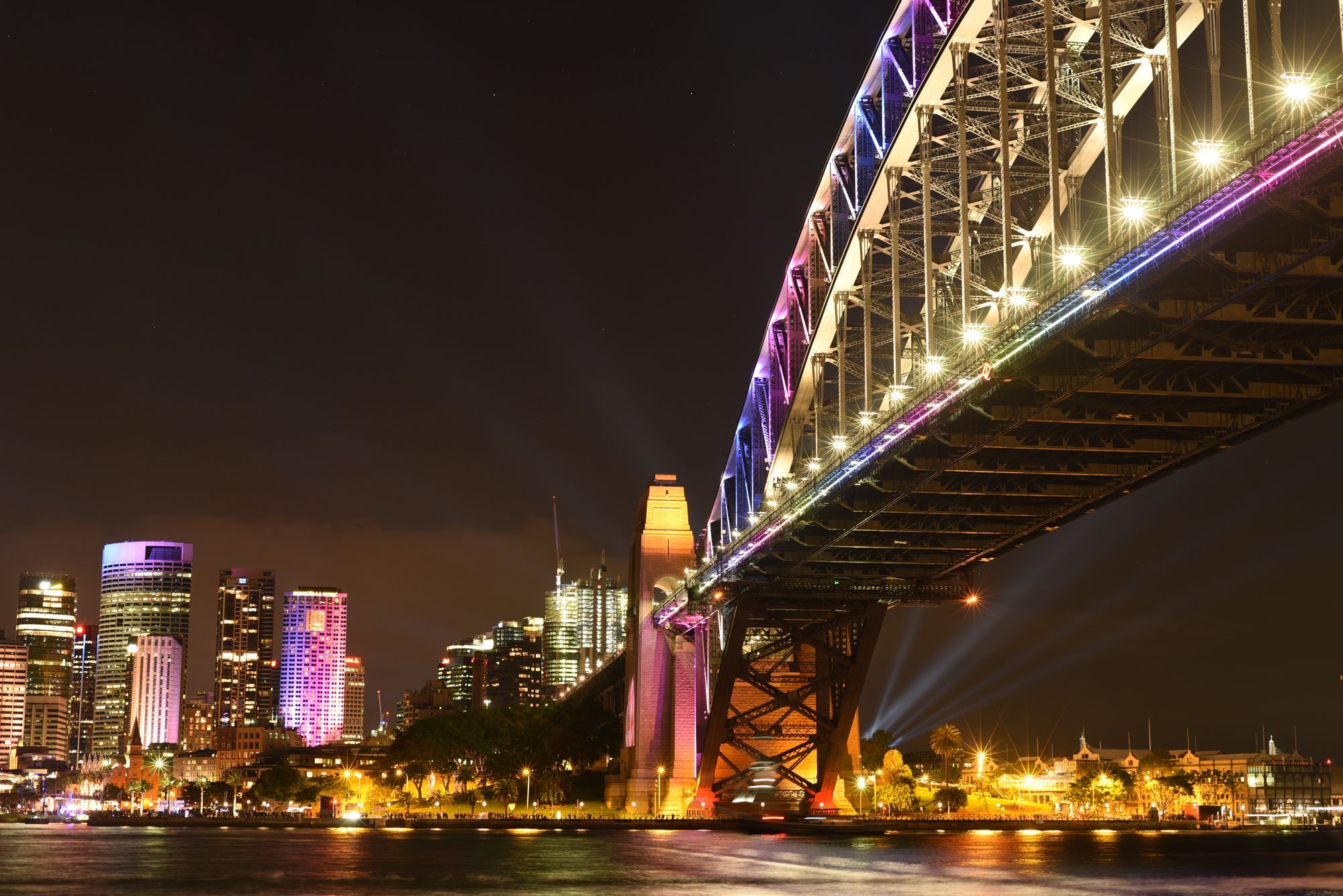
Britain founded its first colony on 26 January 1788, when Captain Arthur Phillip and the 11 ships of the First Fleet set up a convict settlement at Sydney Cove, now Circular Quay in New South Wales. The main reason was a prison crisis: after losing its American colonies in 1783, Britain needed somewhere new to send convicts.
The land was not empty. Sydney is the Country of the Eora nation, and colonisation brought violence, disease and the loss of land across the continent as settlement spread. Today 26 January is Australia Day, a public holiday. Many First Nations people and others mark it instead as a day of mourning, survival or invasion, and debate about the date returns every year.
What was the convict era in Australia?
For 80 years Britain used Australia as a prison. Between 1788 and 1868 more than 162,000 convicts were transported, to New South Wales, Van Diemen's Land (now Tasmania) and Western Australia. Many had committed only minor crimes.
The last convict ship, the Hougoumont, reached Fremantle in Western Australia on 9 January 1868 with 279 convicts. Transportation to New South Wales had ended in 1840, and to Van Diemen's Land in 1853.
What was the Australian gold rush?
The gold rush began in 1851, when Edward Hargraves was credited with finding gold near Bathurst in New South Wales. Within months there were larger finds at Ballarat, Bendigo and Castlemaine in Victoria, and in the 1850s Victoria produced more than a third of the world's gold.
Migrants poured in from Britain, Europe, North America and China. Australia's population roughly quadrupled between 1851 and 1871, from about 430,000 to 1.7 million. Chinese miners were the largest non-European group on the fields, with an estimated 20,000 in Victoria by 1855, and they faced heavy discrimination.
When did Australia become a country?
Australia became a nation on 1 January 1901, when six self-governing British colonies joined as the Commonwealth of Australia. The Governor-General, Lord Hopetoun, proclaimed it in Centennial Park, Sydney, and Edmund Barton became the first prime minister.
One of the new parliament's first laws was the Immigration Restriction Act 1901, the basis of the White Australia policy. It used a dictation test, in any language an official chose, to keep out non-European migrants.
What role did Australia play in the world wars?
Australia fought in both world wars as part of the British Empire and its allies, at a very high human cost.
- First World War: 416,809 Australians enlisted from a population of about 4.9 million, and more than 60,000 died. The landing at Gallipoli on 25 April 1915 is remembered each year on Anzac Day.
- Second World War: about one million people served and more than 39,000 died. War reached home on 19 February 1942, when Japanese aircraft bombed Darwin, the first of 97 air raids on northern Australia.
Many towns have a war memorial, and Anzac Day dawn services are held across the country.
What changed in Australia after 1945?
After 1945 Australia transformed itself through migration. The government launched a post-war immigration drive in 1945, and about two million migrants arrived between 1945 and 1965, including displaced people from Europe and British "Ten Pound Poms" on assisted passages.
- 1962: Aboriginal and Torres Strait Islander people gained the right to vote in federal elections.
- 1966 to 1973: reforms in 1966 began to remove race from migrant selection, and the Whitlam government formally abandoned the White Australia policy in 1973.
- 27 May 1967: a referendum passed with a 90.77% Yes vote, the highest ever. It let the Commonwealth make laws for Aboriginal people and allowed them to be counted in the population. It did not grant the vote, which had come earlier.
What are the big moments of recent Australian history?
The biggest recent moments mostly concern the relationship between First Nations peoples and the wider country.
- Mabo (1992): on 3 June 1992 the High Court upheld the land claim of Eddie Koiki Mabo and other Meriam people of Mer in the Torres Strait. It ruled that Australia was not terra nullius, "land belonging to no one", when the British arrived, and the Native Title Act followed in 1993.
- Sydney 2000: Sydney hosted the Summer Olympic Games.
- The Apology (2008): on 13 February 2008 Prime Minister Kevin Rudd apologised in Parliament to the Stolen Generations, the Aboriginal and Torres Strait Islander children forcibly removed from their families. It followed the 1997 Bringing Them Home report.
- The Voice referendum (2023): on 14 October 2023 Australians voted on recognising First Peoples in the Constitution through an Aboriginal and Torres Strait Islander Voice to advise Parliament. It was defeated, with 60.06% No and 39.94% Yes, and no state voted Yes. Supporters saw it as overdue recognition; opponents raised concerns ranging from the detail of the model to whether it would divide Australians, and some First Nations people argued for treaty first.
To travel with this history in mind, our guide to visiting Australia respectfully covers Country, sacred sites and cultural protocols.
Key dates at a glance
| Date | Event |
|---|---|
| At least 65,000 years ago | People living at Madjedbebe, northern Australia |
| 1606 | Janszoon's Duyfken charts Cape York: first recorded European contact |
| 1616 | Dirk Hartog lands off Western Australia |
| 1770 | Cook at Kamay (Botany Bay); claims the east coast on 22 August |
| 26 January 1788 | First Fleet sets up a colony at Sydney Cove |
| 1851 | Gold rushes begin in New South Wales and Victoria |
| 9 January 1868 | Last convict ship reaches Fremantle |
| 1 January 1901 | Federation: the Commonwealth of Australia |
| 25 April 1915 | Anzac landing at Gallipoli |
| 19 February 1942 | Bombing of Darwin |
| 27 May 1967 | Referendum passes with 90.77% Yes |
| 1973 | White Australia policy formally abandoned |
| 3 June 1992 | High Court's Mabo decision |
| 13 February 2008 | National Apology to the Stolen Generations |
| 14 October 2023 | Voice referendum defeated |
Facts checked October 2026. Dates and figures follow the National Museum of Australia, AIATSIS, the Australian War Memorial and the Australian Electoral Commission. Archaeological dates are revised as research continues.
- Kakadu find confirms earliest Australian occupation (University of Queensland)
- Janszoon maps northern Australian coast (National Museum of Australia)
- Dirk Hartog lands off Western Australia (National Museum of Australia)
- Cook claims Australia (National Museum of Australia)
- Contested possession (Australian Museum)
- Convict transportation ends (National Museum of Australia)
- Gold rushes (National Museum of Australia)
- Federation (National Museum of Australia)
- Enlistment statistics, First World War (Australian War Memorial)
- Australia's involvement in the Second World War (Anzac Portal, Department of Veterans' Affairs)
- The 1967 Referendum (National Archives of Australia)
- The Mabo case (AIATSIS)
- Apology to Australia's Indigenous Peoples (AIATSIS)
- 2023 Referendum national results (Australian Electoral Commission)