Byron Bay sits on mainland Australia's most easterly point, with a lighthouse on the cape, whales passing in winter and a hinterland of rainforest and small towns behind it. Here is how to get there, which beaches to swim at, what to do and how long to stay.
Where is Byron Bay and how do you get there?
Byron Bay is on the far north coast of New South Wales, close to the Queensland border. Most visitors fly into one of two airports and drive the rest.
- Ballina Byron Gateway Airport: about 30 minutes south of town, with direct flights from Sydney and Melbourne on Jetstar, Qantas and Virgin Australia. There is no walk-up shuttle desk, so pre-book a transfer, taxi or hire car.
- Gold Coast Airport: at Coolangatta, just over the border, roughly 45 minutes to an hour north of Byron by road. It has domestic and international flights, which makes it handy if you are arriving from overseas.
- By road: Brisbane is under two hours away. From Sydney it is just over eight hours of driving, best split over several days. Our guide to driving in Australia covers the rules.
A car is useful for the hinterland, but you can manage the town and its beaches on foot or by bike.
What are the best things to do in Byron Bay?
Start with the cape. The Walgun Cape Byron walking track is a 3.7 km loop through rainforest, grassland and clifftops to Cape Byron Lighthouse. NSW National Parks rates it grade 3 and suggests a good two hours, as there are steep sections and plenty of stairs.
- The lighthouse: first lit in 1901, it stands on Australia's most easterly mainland point. The lawn is open 8am to sunset and the Maritime Museum 10am to 4pm daily. Guided tours, including sunrise tours, run through the park.
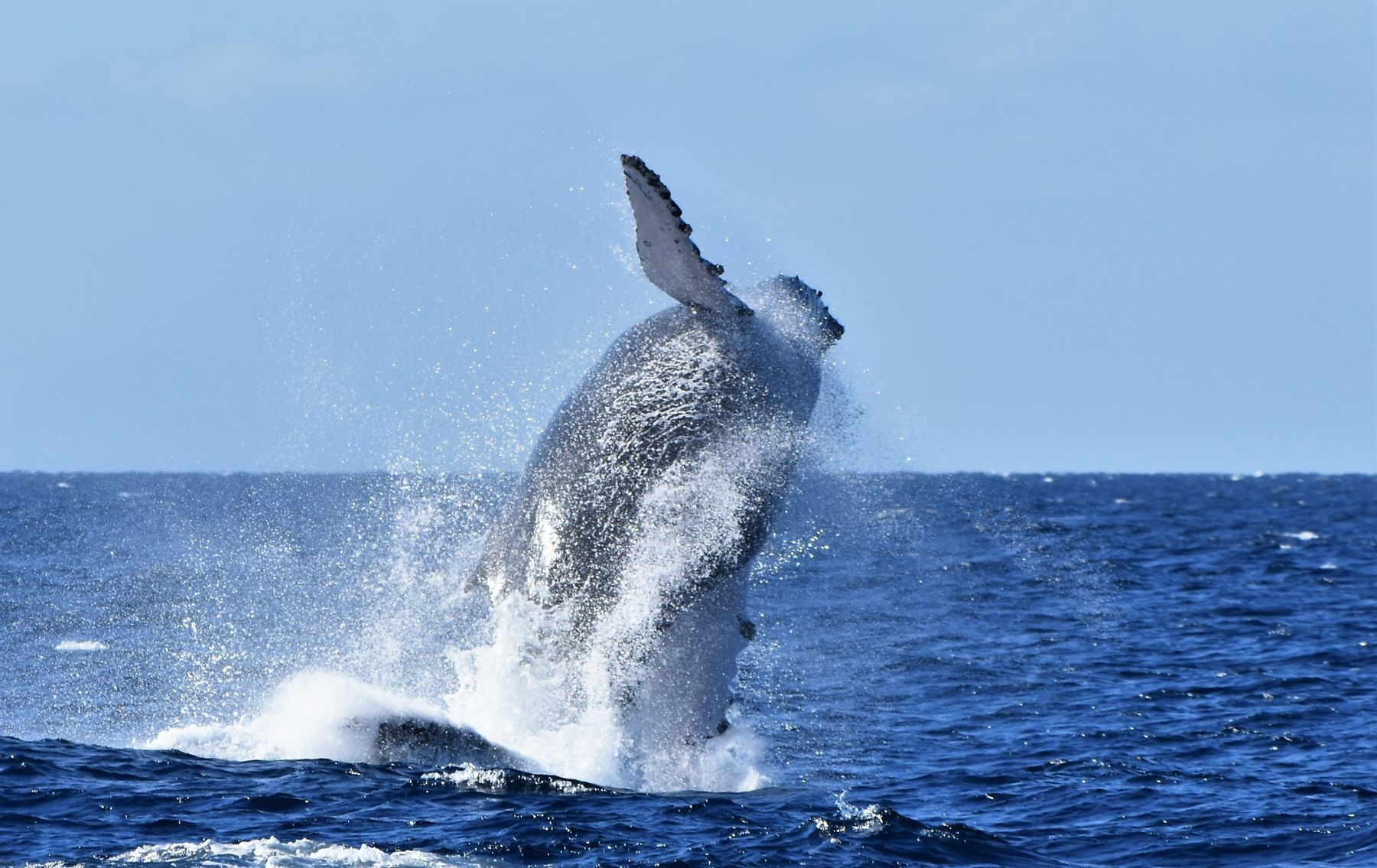
- Whales and dolphins: the whale migration passes the cape from May to November. Bring binoculars. Dolphins, turtles and rays are often seen from the track year-round.
- Diving and snorkelling: Julian Rocks, known by its Bundjalung name Nguthungulli, is a nature reserve a short boat ride offshore. Warm and cool currents meet here, so tropical and temperate fish mix with sharks, rays and turtles. Taking or harming animals is banned. Local dive shops run boat trips for certified divers and snorkellers.
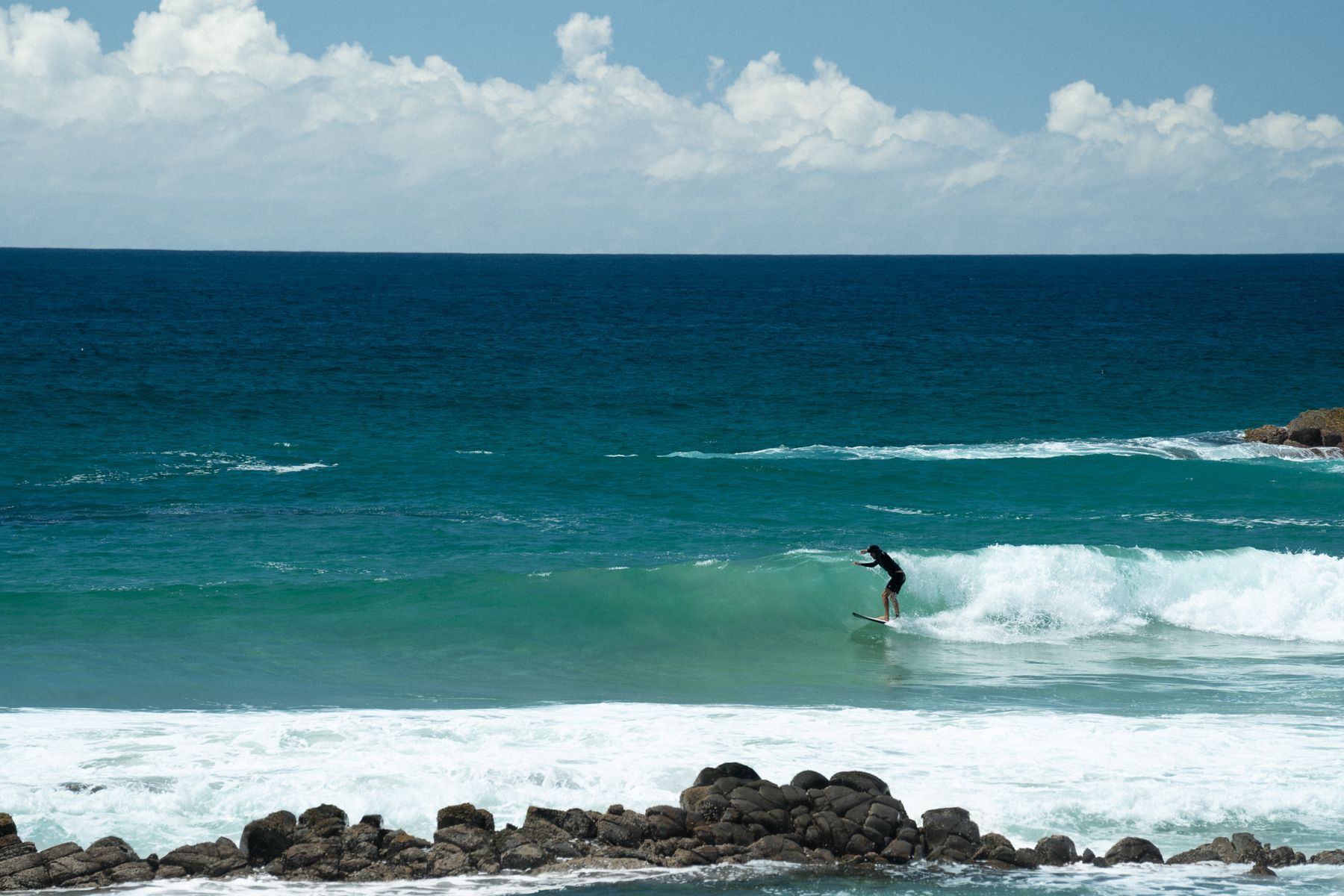
- Surf lessons: beginner schools work the gentler beaches near town. See where to surf in Australia for Byron's breaks by level.
- Sea kayaking: guided kayak tours paddle out from the bay, and dolphins often swim nearby, though no operator can promise a sighting.
- From the air: tandem hang gliding over the cape runs with a licensed operator.
Parking at the lighthouse costs A$10 per vehicle per hour, with a one-hour limit per day, so many people walk up from town instead.
Which Byron Bay beaches are best for swimming?
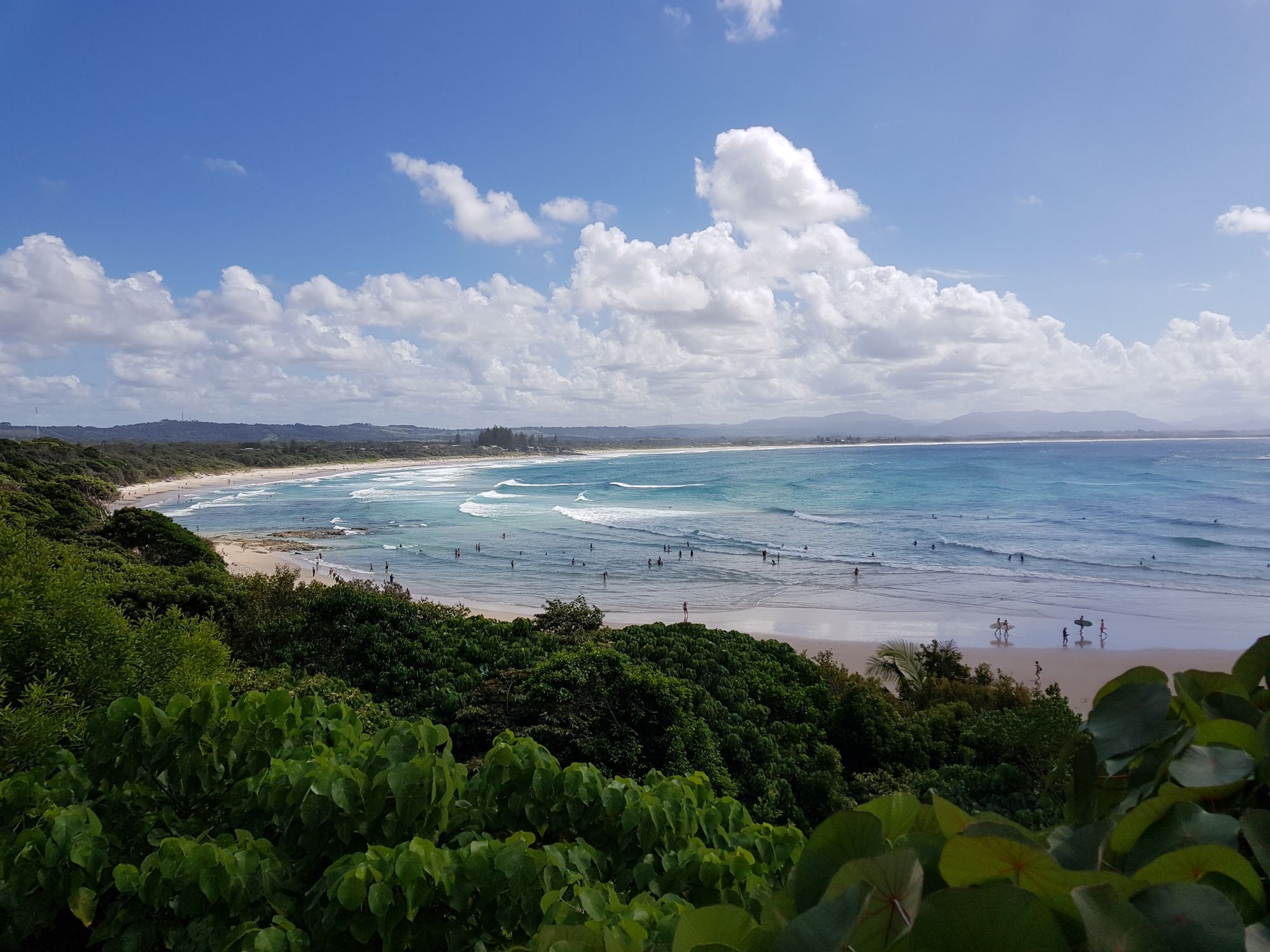
Main Beach is the safest bet, because it is the only Byron beach with lifeguards all year. Most other beaches are patrolled only in the summer and Easter school holidays.
| Beach | Best for | Patrolled? |
|---|---|---|
| Main Beach | Swimming in town, sunset, markets nearby | Year-round lifeguards, plus volunteer patrols at weekends in season |
| Clarkes Beach | Swimming, beginner surfing | Summer and Easter school holidays |
| The Pass | Surfing, watching longboarders | Summer and Easter school holidays |
| Wategos | North-facing bay, picnics, the cape walk | Summer and Easter school holidays |
| Tallow Beach | Long walks, quieter sand in Arakwal National Park | Summer and Easter school holidays |
| Belongil Beach | Quiet walks north of town | Not patrolled (emergency beacon at Kendall Street) |
| Broken Head | Rainforest backdrop, fewer people | Summer school holidays only |
Patrol dates are set each season by Byron Shire Council, and lifeguards work 9am to 5pm on patrol days. Check the dates before you go.
Is it safe to swim at Byron Bay?
Yes, if you swim at a patrolled beach between the red and yellow flags. Byron's open beaches can have strong rip currents, and conditions change quickly.
- Never swim alone, and never run or dive into the water.
- Learn to spot a rip before you go in, and ask the lifeguards about the day's conditions.
- Check the Beachsafe website or app for patrols and hazards.
- At unpatrolled beaches, emergency response beacons at Belongil, Tallow (Clifford Street) and Brunswick Heads connect straight to emergency services. Otherwise call 000.
Our article on ocean safety in Australia explains rips, stingers and sharks in more detail.
What is there to do in the Byron hinterland?
Plenty: the green hills behind Byron hold country towns, weekly markets and World Heritage rainforest.
- Bangalow: a village of old shopfronts and cafes, with a market on the fourth Sunday of each month.
- Mullumbimby: a working local town north-west of Byron, with a farmers market on Friday mornings from 7am to 11am.
- Nightcap National Park: part of the Gondwana Rainforests of Australia World Heritage Area. The Minyon Falls lookout looks over the falls and rainforest towards Wollumbin, an ancient shield volcano. The Minyon Falls walking track is 13 km return and takes 3 to 4 hours.
- Byron markets: the Byron Community Market runs on the first Sunday of each month, the Byron Farmers Market every Thursday morning, and a twilight market on Saturdays from 4pm, October to May.
Whose Country is Byron Bay on?
Byron Bay is on Bundjalung Country. The Bundjalung of Byron Bay, also known as the Arakwal people, are Traditional Owners of the town and cape, and the Jali people are associated with the coast to the south.
Arakwal National Park, which takes in about 3 km of Tallow Beach and its dunes, came from a 2001 agreement between the NSW Government and the Arakwal community. It is jointly managed by the Arakwal people and NSW National Parks. Many local places now carry Bundjalung names alongside English ones, such as Walgun for Cape Byron and Nguthungulli for Julian Rocks.
To learn on Country, look for tours led by local First Nations guides, such as Arakwal Bundjalung woman Delta Kay's Explore Byron Bay walks. Our guides to Aboriginal cultural tours and visiting Australia respectfully have more.
Is Byron Bay worth visiting?
Yes, for the cape, the beaches and the hinterland, but go in with realistic expectations. Byron is small and very popular, so it gets crowded in summer and on long weekends, and accommodation is expensive for a regional town.
Parking is the most common complaint. Town pay parking costs A$5 an hour or A$25 a day, from 9am to 6pm every day, paid by meter or the PayStay app. National park car parks at The Pass and Cosy Corner charge A$5 an hour, separately. Staying within walking distance of town, or in a nearby town such as Bangalow or Brunswick Heads, saves a lot of driving.
When is the best time to visit Byron Bay?
Autumn and spring are the sweet spot, with fewer people than summer and whales offshore in spring. Each season has its trade-offs.
- Summer (December to February): peak beach weather and peak crowds, with the most beaches patrolled during the school holidays.
- Autumn (March to May): calmer after the summer rush, though Easter holidays are busy.
- Winter (June to August): mild days, quieter beaches and whales passing the cape.
- Spring (September to November): the whale migration continues, but Schoolies brings big crowds to town in late November.
For the national picture, see our month-by-month guide to Australia.
How many days do you need in Byron Bay?
Three days is ideal for a first visit. Spend one on the cape walk, lighthouse and town beaches, one on the water diving, surfing or kayaking, and one in the hinterland at Bangalow and Minyon Falls.
With only a day, walk the cape loop early, swim at Main Beach and stay for sunset. With a week, add the Gold Coast or follow the coast south on one of the best road trips in Australia.
Facts checked October 2026. Patrol dates, parking fees, market days and park opening hours change; confirm with Byron Shire Council and NSW National Parks before you travel.
- Walgun Cape Byron State Conservation Area (NSW National Parks and Wildlife Service)
- Walgun Cape Byron walking track (NSW National Parks and Wildlife Service)
- Arakwal National Park (NSW National Parks and Wildlife Service)
- Nightcap National Park (NSW National Parks and Wildlife Service)
- Minyon Falls walking track (NSW National Parks and Wildlife Service)
- Cape Byron Marine Park (NSW Department of Primary Industries)
- Julian Rocks Nguthungulli Nature Reserve (NSW Government)
- Cape Byron Lighthouse (Lighthouses of Australia)
- Beaches and lifeguard patrols (Byron Shire Council)
- Where can I park? (Byron Shire Council)
- Ballina Byron Gateway Airport (Ballina Shire Council)
- Byron Bay (Destination NSW)
- Byron Bay area markets (Destination NSW)