Two hours west of Sydney by train, the Blue Mountains drop off sandstone cliffs into deep valleys of eucalypt forest. You can see the Three Sisters, ride Scenic World and walk to a waterfall in one day, if you plan around the trains, the weather and the track closures.
Why are the Blue Mountains blue?
The blue comes from the way air scatters sunlight, and the eucalypt forests probably add to it. Blue light scatters most, so distant hills anywhere look bluish. In 1955 the University of Sydney physicist Harry Messel suggested that fine droplets of oil released by eucalypts scatter light especially well here. He called it a guess, and Blue Mountains City Library notes that no complete answer has been settled.
Those forests are the reason the area is protected. The Greater Blue Mountains Area was inscribed on the World Heritage List in 2000. It covers about 1.03 million hectares across seven national parks and the Jenolan Karst Conservation Reserve. UNESCO lists 91 eucalypt taxa here, about 13% of the world's total.
How do you get to the Blue Mountains from Sydney?
The easiest way is the train. Regular daily services on the Blue Mountains Line run from Central Station to Wentworth Falls, Leura and Katoomba, and the trip takes about 2 hours. Transport for NSW says visitors can pay with an Opal card or contactless payment. Local buses link the villages and lookouts.
- By car: take the M4 and the Great Western Highway west. NSW National Parks puts the drive to Katoomba at about 1.5 to 2 hours, longer at weekends and on public holidays. Our guide to driving in Australia covers licences and road rules.
- By tour: many coach and small-group tours run day trips from Sydney. They suit visitors short on time, but check how long you get at each stop.
If you are pairing the mountains with the city, our Sydney first-timer's guide has a 3-day plan.
What is there to see at Echo Point and the Three Sisters?
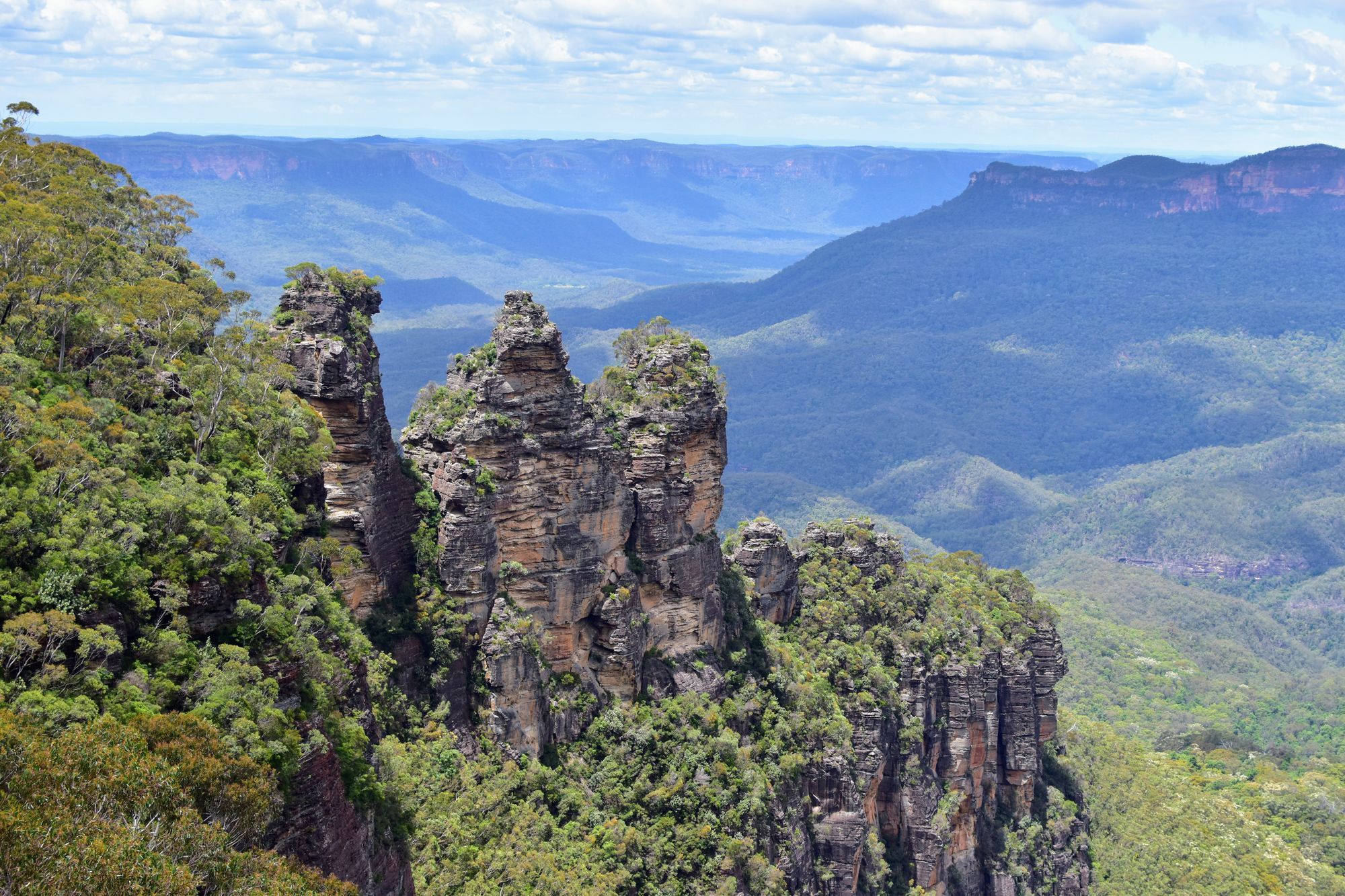
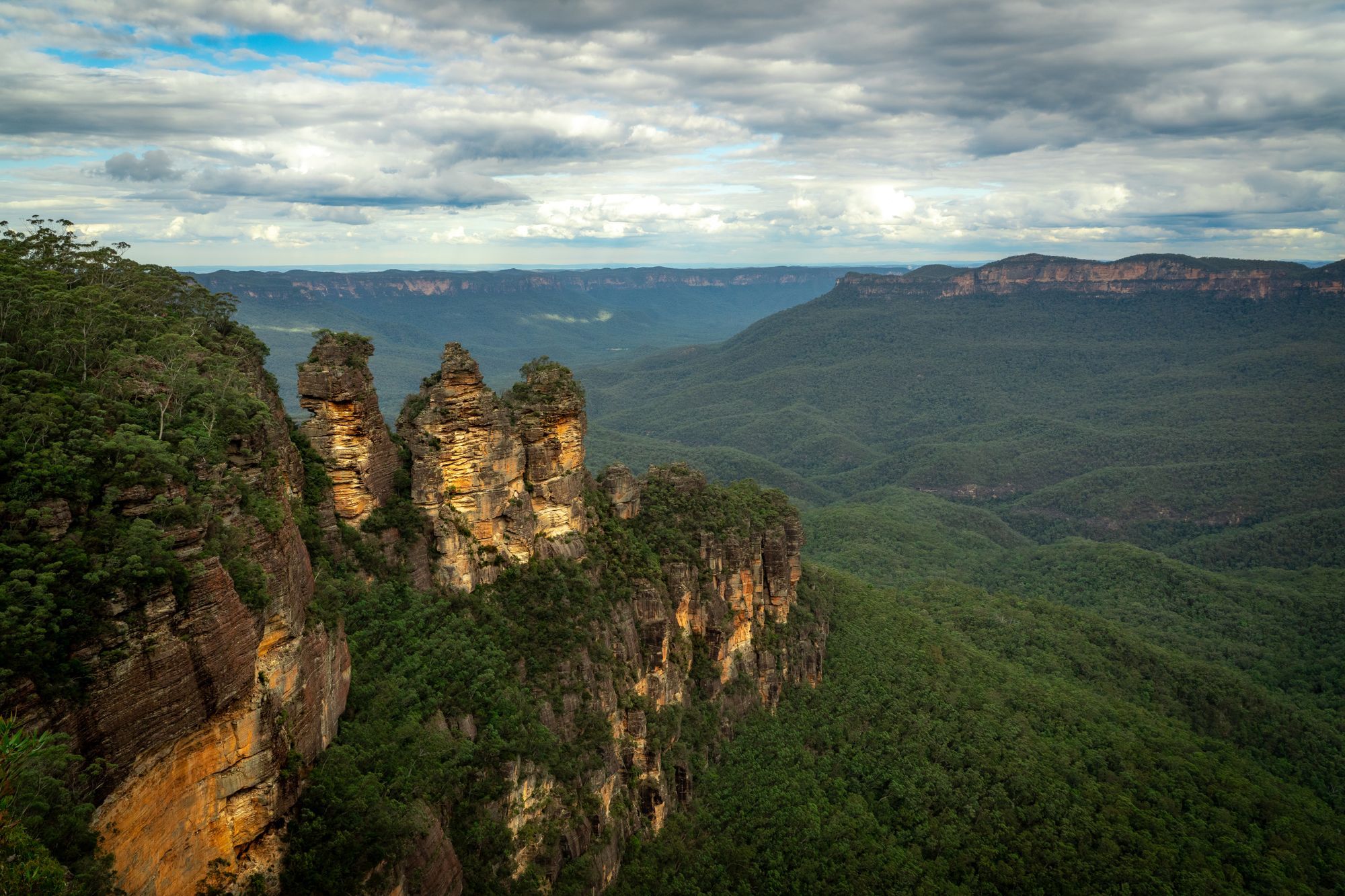
Echo Point in Katoomba is the main lookout, facing the Three Sisters, the Jamison Valley, the Ruined Castle and Mount Solitary. The Three Sisters are three weathered sandstone peaks, and the site is a declared Aboriginal Place on the Country of the Gundungurra and Darug peoples, its traditional custodians.
NSW National Parks notes that there are different versions of the Aboriginal story of the Three Sisters. Rather than repeat one, we suggest hearing it from Gundungurra or Darug people themselves. Our guide to Aboriginal cultural tours explains how to find First Nations-led experiences, and visiting Australia respectfully covers the basics on Country.
The lookout is easy to reach and the Echo Point Visitor Centre opens 9am to 4pm daily. From here the short Three Sisters Walk leads towards the formation, the Giant Stairway drops into the valley and the Prince Henry Cliff Walk runs along the cliff edge.
Is Scenic World worth it?
Yes, if you want to reach the valley floor without the long climb back. Scenic World, a private attraction near Echo Point, has four rides and walks: the Scenic Railway, which it calls the world's steepest passenger railway at a 52° incline, the Skyway cable car, the Cableway and a rainforest boardwalk.
- Price: adult day passes are from A$64 on the official website; under-3s go free.
- Hours: 10am to 4pm on weekdays and 9am to 5pm at weekends.
Scenic World is also where the Giant Stairway walk ends. NSW National Parks warns walkers that the last railway up can leave before 4pm, so check the time before you set off.
What are the best walks in the Blue Mountains?
The best walks for a first visit are the Three Sisters Walk, the Prince Henry Cliff Walk and the Grand Canyon Track. Grades and times below are from NSW National Parks; grade 1 is the easiest.
| Walk | Length | Grade | Time |
|---|---|---|---|
| Three Sisters Walk, Echo Point | 0.8 km return | 1 | 25–45 min |
| Fairfax Heritage Track, Blackheath | 1.8 km one way | 1 (wheelchair accessible) | 30–45 min |
| Wentworth Falls Track | 1.4 km return | 3 | 45 min–1 h |
| Prince Henry Cliff Walk | 7 km one way | 3 | 3–4 h |
| Grand Canyon Track, Blackheath | 6.3 km loop | 3 | 3–4 h |
| Echo Point to Scenic World via Giant Stairway | 4.7 km one way | 4 | 2–3 h |
| National Pass, Wentworth Falls | 4.5 km loop | 4 (partly closed) | 2.5–3.5 h |
- Prince Henry Cliff Walk: follows the cliff edge from Katoomba Cascades to Gordon Falls near Leura, with lookouts all the way. Do one section and catch the train back.
- Giant Stairway: 998 steel and stone steps down from Echo Point, then a valley walk to Scenic World. Ride the railway up or climb the Furber Steps.
- Grand Canyon Track: a cool, ferny slot canyon near Blackheath. The creek can flood after heavy rain.
- Wentworth Falls: the short track passes Jamison and Wentworth lookouts, then about 200 steps down to Fletchers Lookout. The National Pass, cut into the cliff below, is closed between Valley of the Waters and Slacks Stairs after a rockfall, with no reopening date given.
For more trails in and around the city, see our Sydney walks guide.
Is Jenolan Caves open?
No. Jenolan Caves is closed to visitors for major road repairs, and the official website lists a planned reopening in early 2027. Heavy rain damaged the Two Mile section of Jenolan Caves Road in April 2024. The caves sit in the Jenolan Karst Conservation Reserve, part of the World Heritage area, so check the official site before you plan a visit in 2027.
Can you do the Blue Mountains as a day trip?
Yes. A day trip covers the highlights if you catch an early train and stay around Katoomba, Leura and Wentworth Falls. A simple plan:
- Morning: train to Katoomba, then Echo Point and the Three Sisters Walk before the tour buses arrive.
- Midday: Scenic World, or the Giant Stairway if your legs are up to it.
- Afternoon: walk part of the Prince Henry Cliff Walk to Leura, a village with cafes and a train station, or stop at Wentworth Falls on the way back.
Stay a night if you want Blackheath and Govetts Leap. The lookout faces the Grose Valley and Bridal Veil Falls, which drops 180 m to the base of the cliff. The flat Fairfax Heritage Track runs there from the Blue Mountains Heritage Centre, open 9am to 4pm daily. Govetts Leap was listed as affected by closures in October 2026, so check alerts first. An overnight stay also lets you fit in the Grand Canyon Track and a quiet sunrise. For more of New South Wales, see our region guide.
When is the best time to visit the Blue Mountains?
Autumn and spring are the best times for walking. NSW National Parks says the area works year-round, but each season is different:
- Autumn (March to May): cooler days and clear skies, good for longer walks.
- Winter (June to August): misty mornings are common, and fog can hide the views entirely. Bring warm layers and keep plans flexible.
- Spring (September to November): wildflowers from early spring into summer.
- Summer (December to February): hot days suit shady rainforest gullies, but this is the heart of bushfire season.
The statutory Bush Fire Danger Period in NSW runs from 1 October to 31 March, and dates can be varied locally. Tracks and lookouts can close for fire danger or bad weather at any time of year.
How do you stay safe on Blue Mountains walks?
Check the official alerts on the morning you go, and turn back if conditions change. Most problems come from steep stairs, wet rock, heat and walkers running out of daylight.
- Alerts: NSW National Parks lists closures for each track and lookout. Rockfalls, fire bans and storm damage close sections at short notice.
- Fire danger: check the NSW Rural Fire Service rating on the day. At Catastrophic, the advice is to leave bush fire risk areas, so do not go walking.
- Weather: it can be much cooler than Sydney. Carry water, layers and a rain jacket, and avoid creeks and canyons after heavy rain.
- Phones: mobile reception is limited in the park. Download the Emergency Plus app before you go and call 000 in an emergency.
- Timing: start long or one-way walks early, and know your last train or last Scenic World ride.
Facts checked October 2026. Track closures, ticket prices and opening hours change often; check NSW National Parks alerts, Scenic World and Jenolan Caves before you travel.
- Greater Blue Mountains Area (UNESCO World Heritage Centre)
- Why are the Blue Mountains blue? (Blue Mountains City Library)
- Katoomba area visitor info (NSW National Parks and Wildlife Service)
- Echo Point lookout, Three Sisters (NSW National Parks and Wildlife Service)
- Three Sisters walk (NSW National Parks and Wildlife Service)
- Echo Point to Scenic World via Giant Stairway (NSW National Parks and Wildlife Service)
- Prince Henry Cliff walk (NSW National Parks and Wildlife Service)
- Grand Canyon track (NSW National Parks and Wildlife Service)
- National Pass (NSW National Parks and Wildlife Service)
- Govetts Leap lookout (NSW National Parks and Wildlife Service)
- Scenic World Blue Mountains: passes and hours (Scenic World)
- Jenolan Caves closure and reopening update (Jenolan Caves Reserve Trust)
- Best ways for visitors to pay (Transport for NSW)
- Fire danger ratings and total fire bans (NSW Rural Fire Service)