For 80 years, Britain shipped convicted men, women and children to the other side of the world. The prisons, barracks, roads and farms they built now make up one of Australia's World Heritage listings. Here is the history in brief, and how to visit all 11 sites.
Why did Britain send convicts to Australia?
Britain sent convicts to Australia because its prisons were full and it had lost its old dumping ground, America. After the American Revolution, transportation stopped from 1776, and prisoners were crammed into old ships, called hulks, on the Thames. The National Museum of Australia notes that the hulks became so disease-ridden that a third of prisoners died on board.
The answer was a penal colony at the far end of the earth. The First Fleet of 11 ships reached Sydney Cove in 1788, on the Country of Aboriginal peoples who had lived there for millennia. The colony's arrival began a long, often violent process of dispossession, which our history of Australia covers in more detail.
How many convicts were sent to Australia, and for what crimes?
Between about 162,000 and 166,000 convicts were transported to Australia from 1788 to 1868, depending on the source. The National Museum of Australia says "more than 162,000"; UNESCO says around 166,000 men, women and children, and Museums of History NSW counts more than 840 convict ships.
- Crimes: theft was by far the most common, from pickpocketing and shoplifting to stealing horses or sheep. The State Library of NSW notes that even stealing a handkerchief could get you transported.
- Rarer offences: forgery, bigamy, manslaughter, rape and murder, plus a small number of political prisoners.
- Peak: 1833, when about 7,000 convicts arrived in a single year.
- The end: transportation to New South Wales stopped in 1840 and to Van Diemen's Land (Tasmania) in 1853. Western Australia took about 10,000 convicts from 1850, and the last ship arrived in 1868.
What was life like for convicts in Australia?
For most convicts, life meant hard work rather than a cell. Many were assigned to free settlers as farm hands, builders or servants, and by the mid-1830s most convicts were in private employment. Others worked in government gangs, building the roads, bridges and barracks you can still see today.
Good behaviour could earn a ticket of leave. Holders could work for themselves and own property, but had to stay in a set district and report to a magistrate. Others won a pardon, or a certificate of freedom once their sentence was served.
Those who reoffended faced secondary punishment: chain gangs, flogging, solitary cells, or transfer to remote stations such as Norfolk Island, Port Macquarie, Moreton Bay and, later, Port Arthur and Cockatoo Island. First Nations people were also held at some of these places; Cockatoo Island's managers record that Aboriginal people were imprisoned there in the 19th and early 20th centuries.
What happened to women convicts?
About 25,000 women were transported, around 12% of all convicts, and roughly half went to Van Diemen's Land. Many were assigned as domestic servants. Women who were unassigned, pregnant or being punished were held in female factories, which worked as prison, workhouse, hospital and nursery in one.
The best preserved is the Cascades Female Factory in South Hobart, open from 1828 to 1856. It once had five yards; three survive. Australia's heritage department notes that many hundreds of babies died there, and the site tells the women's stories with care.
What are the 11 Australian Convict Sites?
The Australian Convict Sites are 11 places inscribed together on the UNESCO World Heritage List in 2010. Five are in Tasmania, four in New South Wales, one on Norfolk Island and one in Western Australia. Together they show how transportation worked, from government houses to punishment stations.
| Site | State | What it was | Visit tips |
|---|---|---|---|
| Kingston and Arthur's Vale Historic Area | Norfolk Island | Penal settlement, 1788 to 1855 | Fly from Sydney, Brisbane or Auckland |
| Old Government House and Domain | NSW (Parramatta) | Governors' country residence, convict-built | Thursday to Sunday; adults A$15 |
| Hyde Park Barracks | NSW (Sydney) | Barracks for male convicts from 1819 | Free entry; pre-book online |
| Cockatoo Island Convict Site | NSW (Sydney Harbour) | Prison for reoffenders, 1839 to 1869 | Free; F3 or F8 ferry |
| Old Great North Road | NSW (near Wisemans Ferry) | Convict-built road to the Hunter Valley | 9 km Devines Hill loop walk |
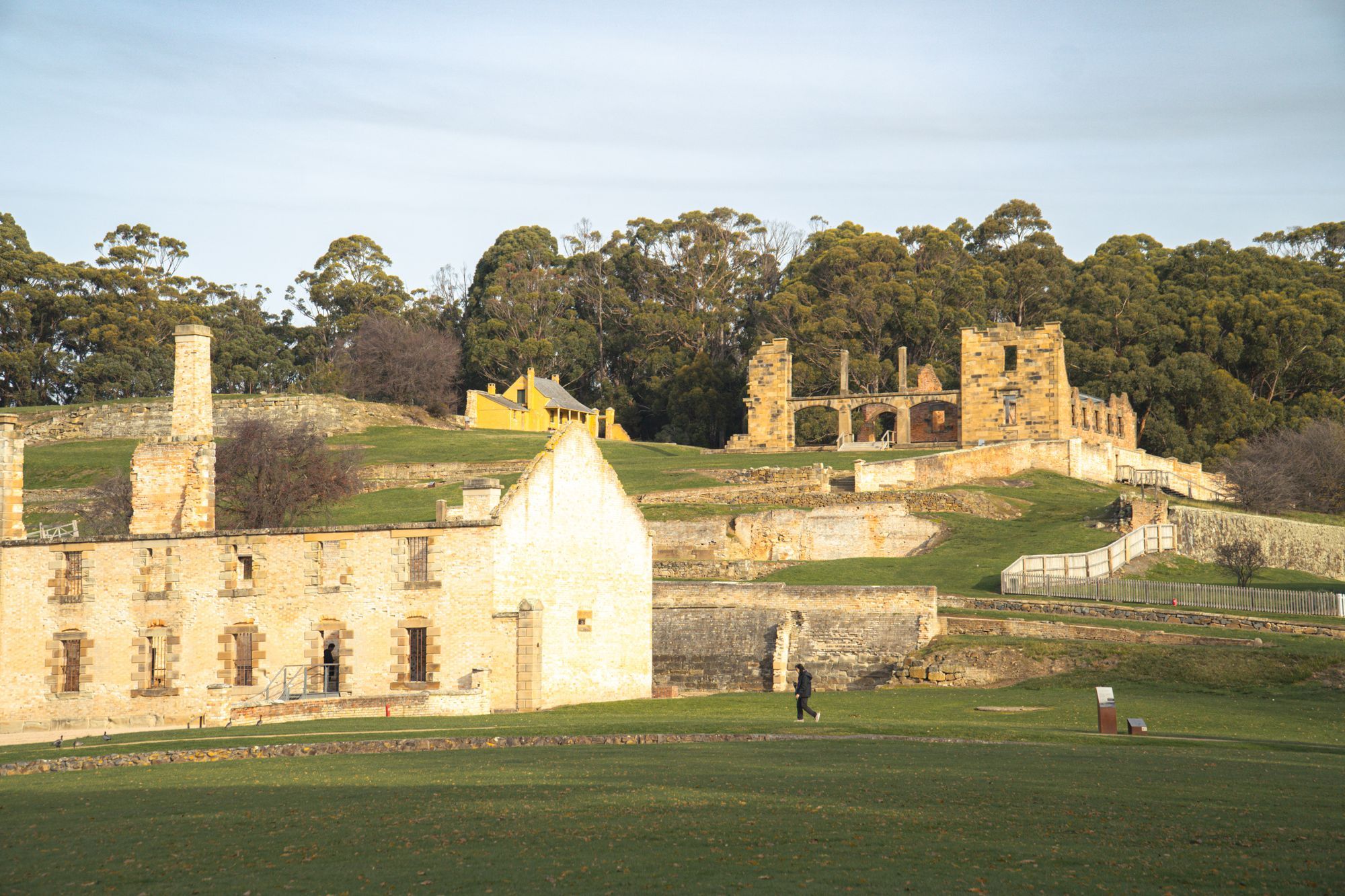
| Port Arthur Historic Site | Tasmania | Penal settlement, 1833 to 1877 | Adults A$55 for two days |
| Coal Mines Historic Site | Tasmania | Punishment station and mine from 1833 | Free; 25 minutes from Port Arthur |
| Cascades Female Factory | Tasmania (Hobart) | Female factory, 1828 to 1856 | Adults A$35; daily tours |
| Darlington Probation Station | Tasmania (Maria Island) | Convict and probation station | Ferry from Triabunna; parks pass |
| Brickendon and Woolmers Estates | Tasmania (Longford) | Farms worked by assigned convicts | Link them on the 2.8 km farm walk |
| Fremantle Prison | Western Australia | Convict-built prison, in use to 1991 | Tours from A$25 |
How do you visit the convict sites in and around Sydney?
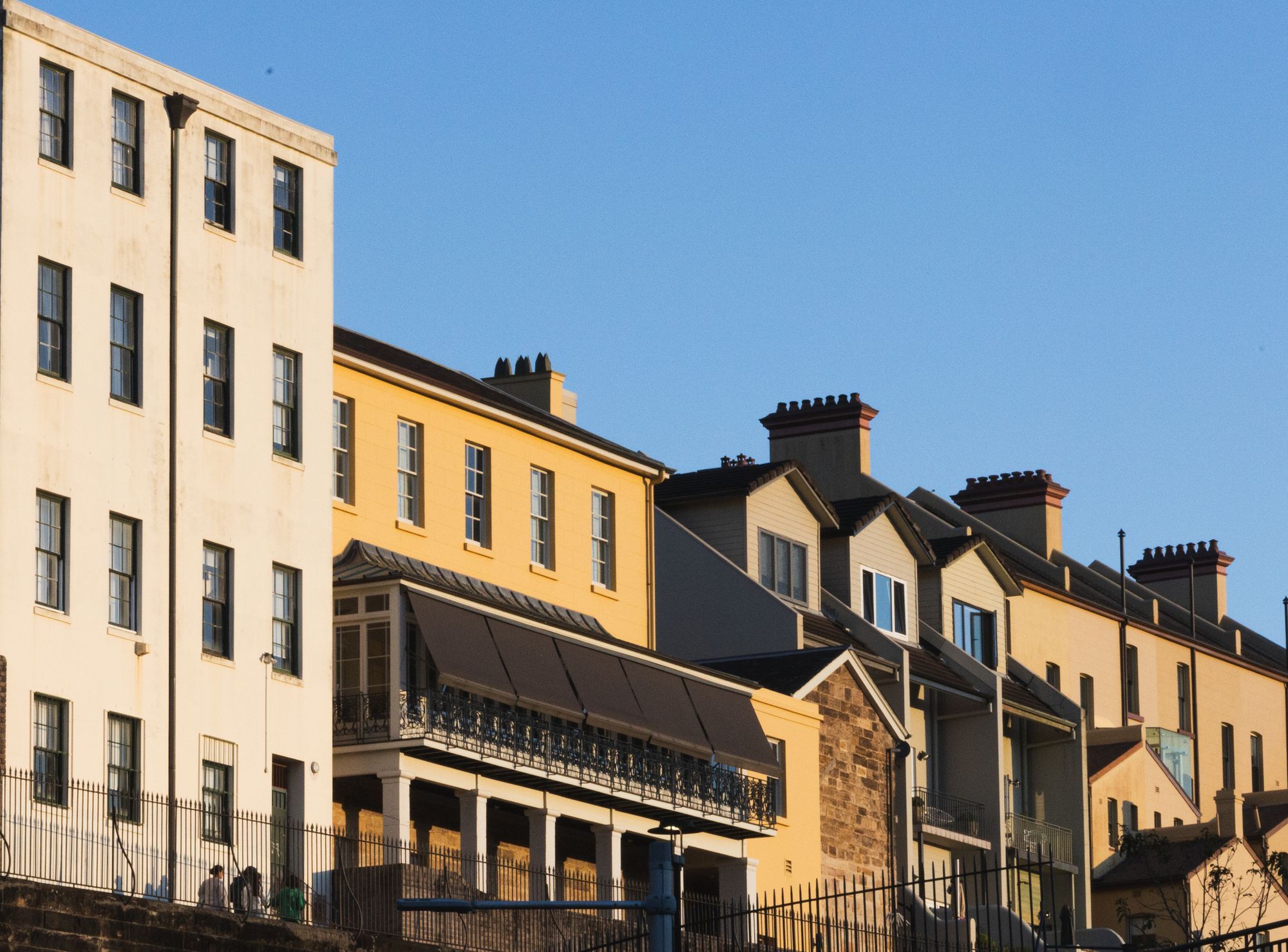
Three of the four New South Wales sites are an easy day out from central Sydney by public transport, and the fourth needs a car.
- Hyde Park Barracks: on Macquarie Street in the city, designed by Francis Greenway and opened in 1819. Entry is free, but pre-booking is recommended. A self-guided audio tour takes about 90 minutes.
- Cockatoo Island (Wareamah): take the F3 or F8 ferry from Circular Quay or Barangaroo. Entry is free, the island is open seven days a week, and you can camp on the waterfront. The island's managers note it connects to the waters and homelands of the Wallumedegal, Wangal, Cammeraygal and Gadigal peoples.
- Old Government House, Parramatta: billed by the National Trust as the oldest surviving public building in Australia, built by convicts between 1799 and 1818. It opens Thursday to Sunday; adults pay A$15. Walk from Parramatta station or take the river ferry to Charles Street wharf.
- Old Great North Road: built by convict gangs from 1826 to link Sydney with the Hunter Valley. The best-preserved stretch is in Dharug National Park, where the Devines Hill loop is a 9 km, grade 4 walk of 3.5 to 4.5 hours.
How do you visit the convict sites in Tasmania?
With five of the 11 sites, Tasmania is the heart of Australia's convict story, and a car makes it easy to see them all in a few days.
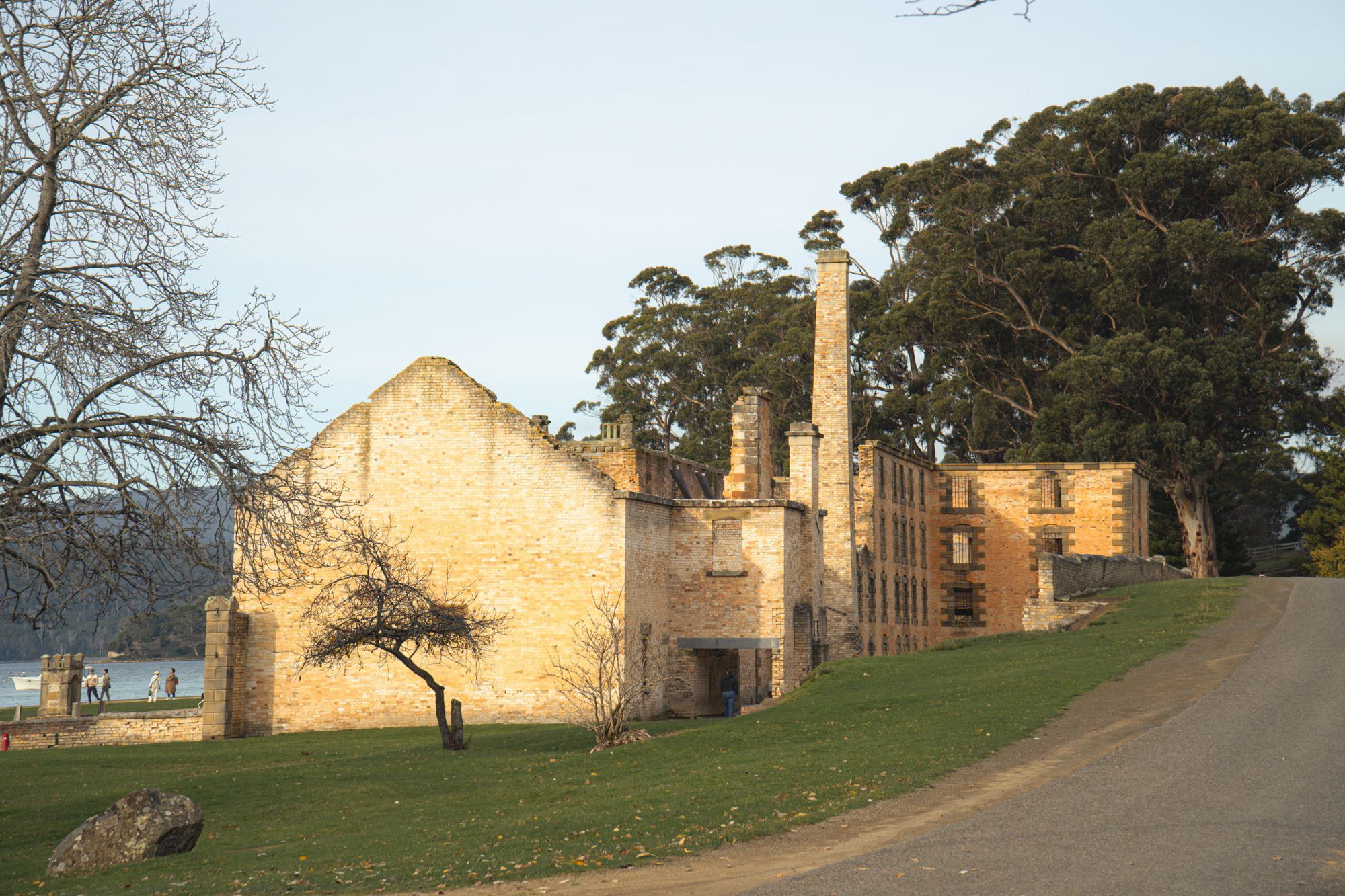
- Port Arthur: on the Tasman Peninsula south-east of Hobart, the most famous site. Adult entry is A$55, valid for two consecutive days, and includes a 20-minute harbour cruise and an audio guide. Prices are set until 30 June 2028.
- Coal Mines Historic Site: near Saltwater River, 25 minutes' drive from Port Arthur. Entry is free and no booking is needed. The ruins include 18 solitary cells.
- Cascades Female Factory: in South Hobart, open daily from 9.30am to 4.30pm. Site entry is A$35 for adults, with daily guided tours and a dramatised tour about seven convict women.
- Darlington, Maria Island: the most intact convict probation station in Australia. Book the passenger ferry from Triabunna (about 45 minutes) ahead, buy a Tasmanian parks pass and bring food: there are no shops, cafes or cars on the island.
- Brickendon and Woolmers: neighbouring farms near Longford, about 15 minutes from Launceston, held by the Archer family for six generations. Woolmers charges A$49 per adult, Brickendon about A$25 to A$28, and the 2.8 km Convict Farm Walk links the two.
Combine the Tasman Peninsula with its sea cliffs and walks; our guide to Tasmania hiking trails covers the Three Capes and more.
How do you visit Fremantle Prison and Norfolk Island?
Fremantle Prison is in the port city of Fremantle, south-west of Perth in Western Australia. Convicts began building it in 1852, and it stayed a maximum-security jail until 1991. Day tours run hourly from 10am to 5pm and cost A$25 for adults; the Convict Prison tour takes 1 hour 15 minutes and includes many stairs. The Tunnels Tour, which goes underground, costs A$70.
Kingston and Arthur's Vale is on Norfolk Island, an Australian external territory in the Pacific. It was a penal settlement from 1788 to 1855, notorious for its harshness, though from 1840 to 1844 commandant Alexander Maconochie trialled a reform regime there. Flights run from Sydney, Brisbane and Auckland; check entry rules with Norfolk Island Tourism before you book.
Do many Australians descend from convicts?
Yes. An estimated one in five Australians has convict ancestry, and in Tasmania the share was estimated at 74% in 2009, according to an article by historians in The Conversation. Once seen as a stain, convict ancestry is now often a point of pride, and family history is a common reason people visit these sites.
If you are tracing a convict ancestor, find out where they served first. Standing in the barracks, cell block or farm where they worked is often the most moving part of a trip.
Remember that these places also mark the start of colonisation for First Nations peoples. For context on visiting Country with care, see visiting Australia respectfully.
Facts checked October 2026. Opening hours, ferry timetables and prices change; confirm on each site's official website before you travel.
- Australian Convict Sites (UNESCO World Heritage Centre)
- Australian Convict Sites World Heritage property (Department of Climate Change, Energy, the Environment and Water)
- Australian convict sites (Museums of History NSW)
- Convict transportation peaks (National Museum of Australia)
- The convict experience (State Library of New South Wales)
- Hyde Park Barracks: plan your visit (Museums of History NSW)
- Cockatoo Island: plan your trip (Sydney Harbour Federation Trust)
- Old Government House, Parramatta (National Trust of Australia NSW)
- Old Great North Road World Heritage walk (NSW National Parks and Wildlife Service)
- Port Arthur Historic Site retail pricing 2026–28 (Port Arthur Historic Site Management Authority)
- Cascades Female Factory hours and admission (Port Arthur Historic Site Management Authority)
- Maria Island National Park (Tasmania Parks and Wildlife Service)
- Fremantle Prison tour prices (Fremantle Prison)