The Dreaming is the English name most often used for the laws, stories and beliefs that Aboriginal peoples hold about how the world was made and how to live in it. It is not one story, not a myth from long ago and not the same everywhere. Here is what visitors should understand before they go, and where to learn it from the people who hold it.
What is the Dreaming?
The Dreaming is a broad English term for Aboriginal peoples' understanding of how the world came to be, and the law that still governs it. The stories tell how Ancestral Beings travelled across the land, shaping hills, waterholes and rivers, and laying down rules for kinship, behaviour, ceremony and caring for Country.
Crucially, the Dreaming is not just about the past. The First Nations not-for-profit Common Ground notes that it did not happen at "the beginning of time" and that it covers past, present and future at once. Anangu at Uluru describe their own system, Tjukurpa, as the source of their religion, law and moral code.
There are hundreds of Aboriginal nations, and AIATSIS counts more than 250 Indigenous languages in Australia. Each nation has its own stories and law, so there is no single "Dreaming" shared by everyone. This article focuses on Aboriginal traditions; Torres Strait Islander peoples have their own distinct cultures and beliefs.
Why do many people avoid the word "Dreamtime"?
Because it suggests something unreal. Parks Australia's Tjukurpa fact sheet puts it plainly: the word Dreamtime implies the beliefs are imaginary, yet "Tjukurpa is no dream", and Anangu languages have no matching word.
The English term came from early anthropology. Francis Gillen, the Alice Springs stationmaster who spoke Arrernte, used "dream times" to translate the Arrernte word Altyerrenge. His colleague, the biologist Baldwin Spencer, popularised it in his 1896 account of the Horn Expedition. Later, the anthropologist W.E.H. Stanner helped "the Dreaming" enter everyday English, and wrote that it "was, and is, everywhen", to show that it cannot be fixed in time.
Today many communities prefer "the Dreaming" or, better still, the term in their own language. "Dreamtime" is still common on signs and in tours, so you will hear it, but if you are unsure, use the local word or simply say "the Dreaming".
What is the Dreaming called in Aboriginal languages?
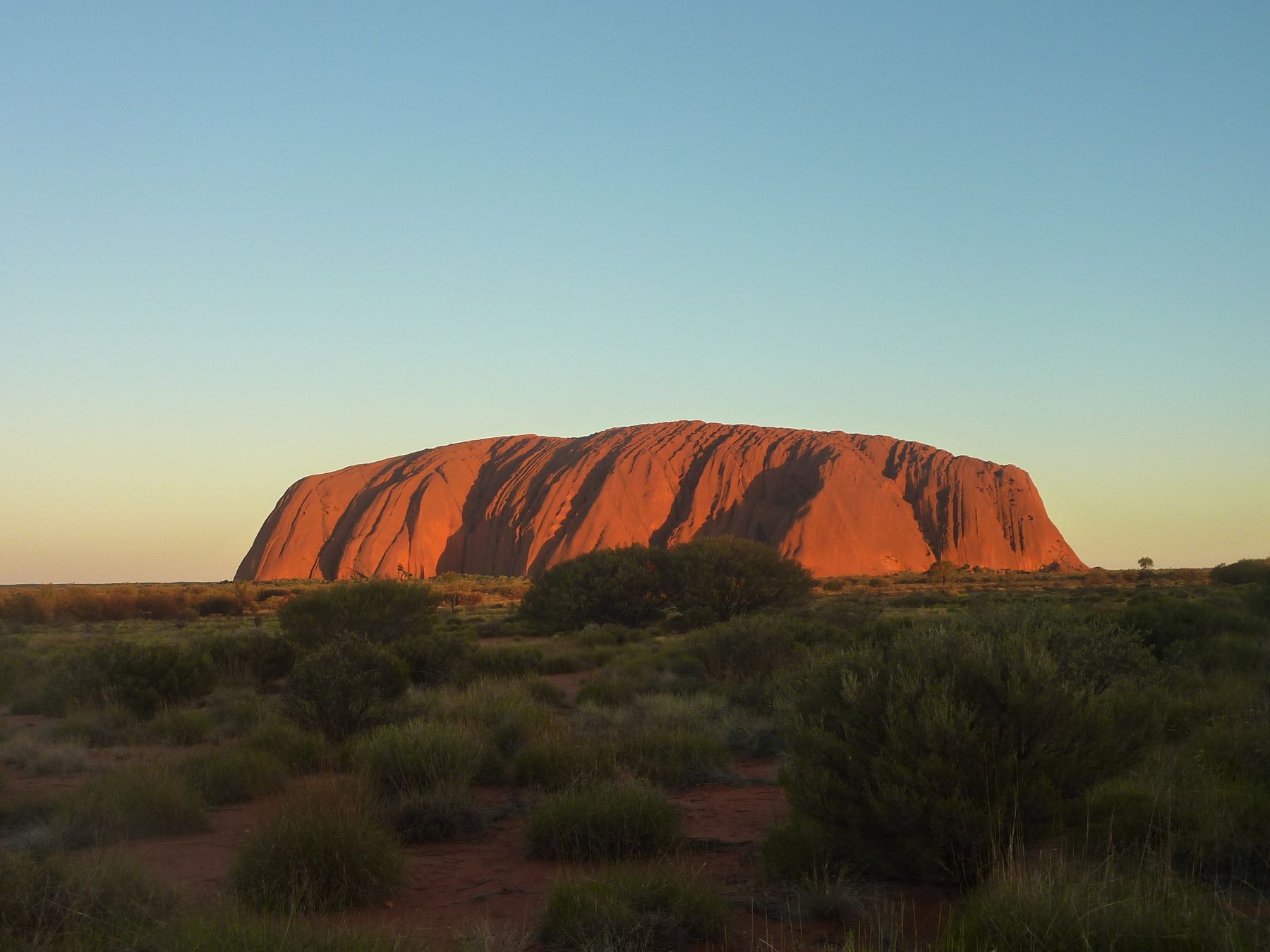
Each language has its own word, and none means exactly the same as the English. Three you are likely to meet in Central Australia are below; spellings vary between sources.
| Term | Language group | Region |
|---|---|---|
| Tjukurpa | Anangu (Pitjantjatjara and Yankunytjatjara) | Uluru-Kata Tjuta and the APY Lands, Central Australia |
| Jukurrpa | Warlpiri | Tanami Desert, Northern Territory |
| Altyerre (also Altyerr) | Arrernte | Alice Springs (Mparntwe) and surrounds |
| The Dreaming / Dreamtime | English | Used across Australia, with the limits above |
In the Top End you will hear other words again. In Kakadu, for example, the park's visitor guide calls the ancestral beings Nayuhyungki, the first people.
What are songlines?
Songlines are the routes the Ancestral Beings travelled, recorded in song, story, dance and art. National Museum of Australia curator Margo Neale describes them as "pathways or corridors of knowledge that crisscross the continent", and as the knowledge system that governs all of Aboriginal life.
A songline works like a map and a library at once. Its verses name waterholes, landmarks and food sources in order, so knowing the song helps you cross Country. Different groups may hold different sections of the same line, which links neighbouring nations through shared responsibility.
What are some well-known Dreaming stories?
A few stories are shared publicly by their custodians, usually in a short, open version. Always attribute them to the community they belong to.
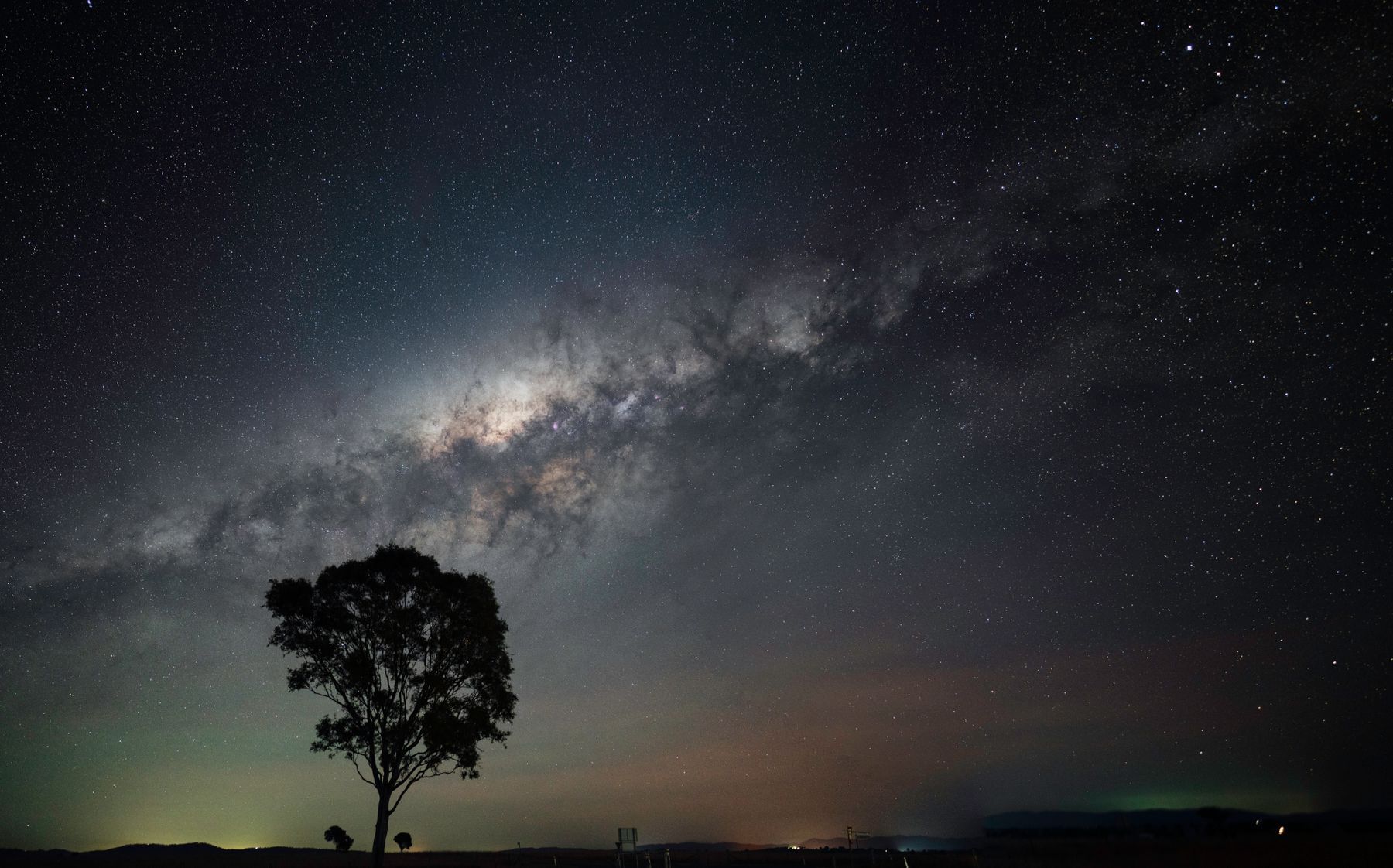
- The Seven Sisters: a group of female Ancestral Beings pursued across the desert by a powerful, shape-shifting man, linked to the Pleiades star cluster. The National Museum of Australia's exhibition Songlines: Tracking the Seven Sisters was initiated in 2010 by Anangu Elders from the APY Lands and led by senior custodians. It opened in Canberra on 15 September 2017 and follows songlines across three states, three deserts and about 500,000 km², with Martu, Ngaanyatjarra and APY artists. It has since toured to France, Germany, Finland, the UK and India.
- The Rainbow Serpent: the English name for creator beings linked to water in many parts of Australia. In Kakadu, Parks Australia explains that she is known as Almudj in Kundjeyhmi and Ngalyod in Kunwinjku, and that Bininj/Mungguy believe she is still present, resting, and should never be disturbed. Stories differ greatly between nations.
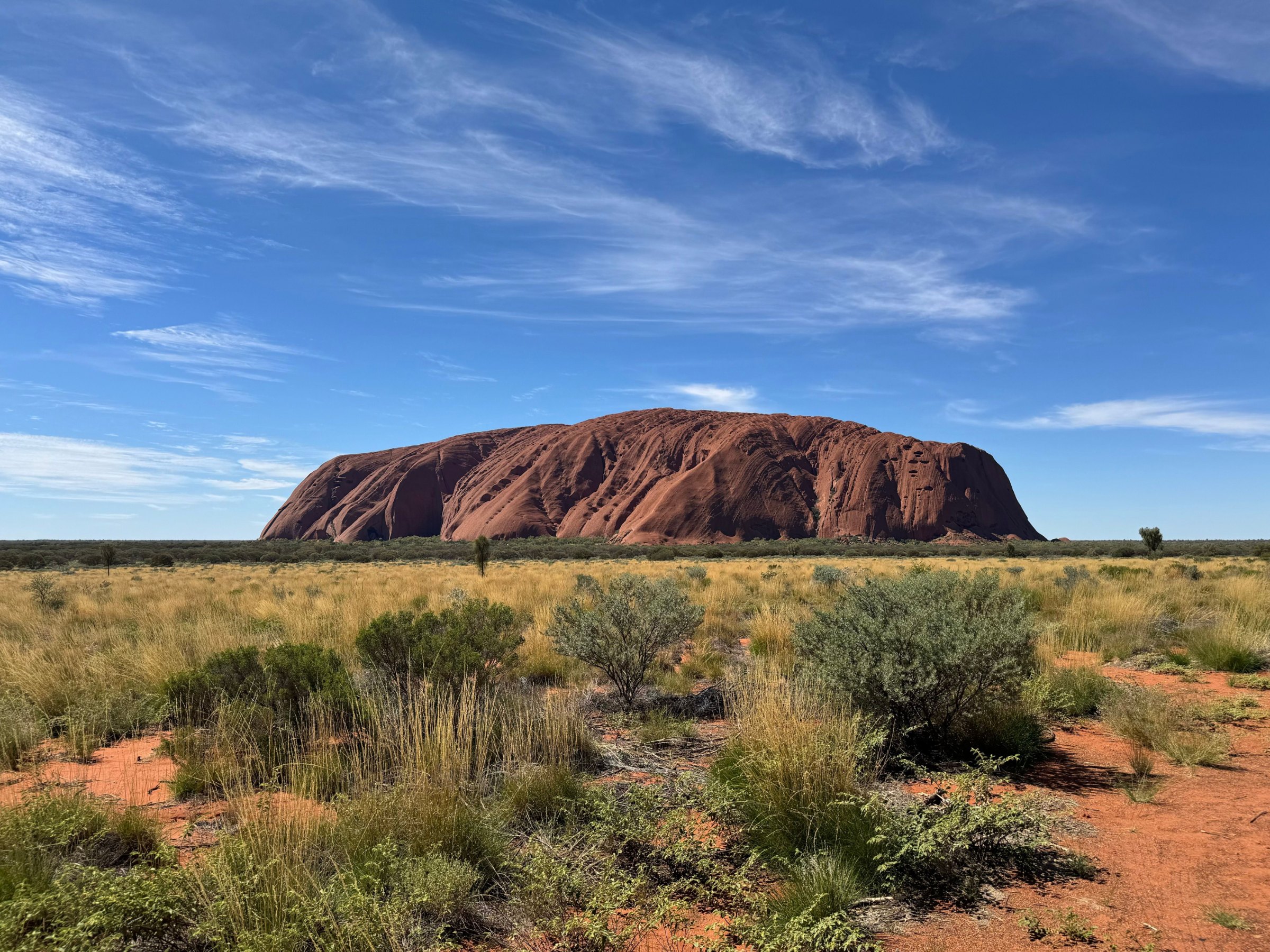
- Kuniya and Liru: at Uluru, Anangu share the Tjukurpa of Kuniya, the woma python, and Liru, a venomous snake, whose paths crossed near Mutitjulu Waterhole. Parks Australia asks visitors not to retell or reproduce these stories, so hear them on the Kuniya walk instead.
Who is allowed to tell Dreaming stories?
Only the people who hold the rights to them. Stories are owned and cared for by particular families, clans or individuals, often tied to one site or one stretch of a songline. At Uluru, access to deeper knowledge comes through birthplace, inherited rights and progress through ceremony.
Some knowledge is restricted by gender, sometimes called men's business and women's business. Certain objects, designs and sites may only be seen by initiated men or women, and some rock art in Kakadu is viewed only by senior men or women. Visitors hear the public layer, which is still rich and real.
For travellers this means a few simple rules:
- Do not retell a story you heard on tour as if it were yours to share.
- Respect signs at sensitive sites. At Uluru, photographing culturally sensitive sites is prohibited, and the details at these sites are described as "equivalent to sacred scripture" for Anangu.
- Ask before photographing people, and buy art from Aboriginal-owned art centres.
Our guide to visiting Australia respectfully covers more of the etiquette.
How are the Dreaming, law, land and art connected?
They are one system. The Dreaming is the law, the land is where that law is written, and art, song and dance are how it is kept and taught. Anangu say their land is mapped through Tjukurpa events, so a rock face or a waterhole is also a record of what happened there and how people should behave.
Tjukurpa is memorised, not written down, and passing it to the right people is a cultural duty. Ceremony, song, dance, painting and story carry it between generations. That is why many paintings from the deserts carry a Dreaming name in their title, and why some designs may only be painted by certain people. It is also why closing the Uluru climb mattered: for Anangu, the rock is a place governed by law, not a viewpoint.
Where can visitors learn about the Dreaming?
The best place is on Country, with Traditional Owners or the rangers who work with them. In the Northern Territory, four good places to start are:
- Ranger-guided Mala walk, Uluru: free, 2 km return and about 1.5 hours, from the Mala car park. It starts at 8 am from October to April and 10 am from May to September, and rangers share the Tjukurpa of rock formations along the way.
- Kuniya walk to Mutitjulu Waterhole: a short, flat walk where the Kuniya and Liru story is explained on Country.
- Uluru-Kata Tjuta Cultural Centre: enter through the Tjukurpa tunnel, visit the Anangu-owned Maruku Arts and Walkatjara Arts, and allow two to three hours. Filming is not allowed inside.
- Kakadu: in the dry season, rangers give talks on art and culture at Ubirr and Burrungkuy (Nourlangie), and the Warradjan Aboriginal Cultural Centre explains Bininj/Mungguy culture. Do not take photos inside Warradjan.
You need a park pass to enter Uluru-Kata Tjuta National Park; our booking guide covers the cost. For trail details and heat rules, see Red Centre walks. Away from the Outback, state museums and the National Museum of Australia in Canberra share First Nations stories with community permission, and many Aboriginal-owned tour companies run cultural walks in the cities.
Facts checked October 2026. Walk times, closures and photography rules can change at the request of Traditional Owners; check with Parks Australia or the cultural centre before you visit.
- Tjukurpa fact sheet (Parks Australia, Uluru-Kata Tjuta National Park)
- Kuniya and Liru stories (Parks Australia)
- Ranger-guided Mala walk (Parks Australia)
- Photography at Uluru-Kata Tjuta (Parks Australia)
- Cultural Centre fact sheet (Parks Australia)
- Kakadu National Park visitor guide (Parks Australia)
- Songlines: Tracking the Seven Sisters (National Museum of Australia)
- Songlines exhibition opens in Canberra (National Museum of Australia)
- Songlines: the foundational Australian story (National Museum of Australia)
- Dreamtime and the Dreaming: who dreamed up these terms? (The Conversation)
- The Dreaming (Common Ground)
- Living languages (AIATSIS)